Cream Formulation Questions: Solubility, Penetration, Mixing
Question
I am developing a cream formulation with the following ingredients:
- White Cumin: 0.3%
- Pure EGCG: 2%
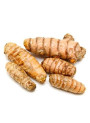
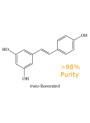
- Resveratrol long max: 5%
- Genistein: 0.5%
- Silymarin: 1%
- Niacinamide: 5%
- Acetyl glucosamine: 4%
- Magnesium Ascorbyl Phosphate: 5%
- Prebio-care: 5%
- Rhamnose: 5%
- Tea Tree Oil: 0.5%
- Superoxide Dismutase: 5%
- lipid soft f: 5%
- Moist 72: 2%
- double hya: 4%
- EDTA: 0.2%
- Satin Cream Maker: 1.5%
- water: 51%
I have the following questions:
- White Cumin is described as oil-soluble but also soluble in glycol. Silymarin is described as mixable in oil. Can I dissolve both White Cumin and Silymarin in lipid soft f, or do I need to add another oil?
- I have difficulty choosing a penetration enhancer because the formula contains active ingredients that are soluble in both water and oil. Which penetration enhancer should I use, or how many types should I include, to ensure that actives in both water and oil phases penetrate well?
- For dispersing Pure EGCG and Genistein, what mixing speed should I use? Is continuous stirring sufficient?
- Regarding the mixing procedure, is my understanding correct?
- Mix oil-soluble parts together: White Cumin, Silymarin, lipid soft f = Phase A
- Mix water-soluble parts together + Satin Cream Maker = Phase B
- Combine Phase A and Phase B.
- Then add Pure EGCG, Genistein, Resveratrol longmx while mixing.
Thank you.
Answer
Formulation Advice
Based on the ingredients you plan to use and your questions, here is some advice for your cream formulation:
1. Solubility of White Cumin and Silymarin in LipidSoft F
- White Cumin (Tetrahydrodiferuloylmethane): The description states that White Cumin powder can be dissolved in Glycol, Propanediol, and oil. So, yes, it can be dissolved in an oil phase like LipidSoft F.
- Silymarin (Silybum Marianum Extract): The description for Silymarin states that it can be mixed in oil. Therefore, it can also be dissolved in LipidSoft F.
So, you can dissolve both White Cumin and Silymarin in LipidSoft F as part of your oil phase. You do not necessarily need to add another oil specifically for this purpose, as long as the total amount of the oil phase is sufficient to dissolve these ingredients at their specified concentrations.
2. Choosing a Penetration Enhancer
Your formula contains a mix of water-soluble actives (Niacinamide, Acetyl Glucosamine, Magnesium Ascorbyl Phosphate, Prebio-care, Rhamnose, Double Hyaluron Liquid, Superoxide Dismutase/AppleZin) and oil-soluble or solvent-requiring actives (White Cumin, Silymarin, Resveratrol, Tea Tree Oil). To enhance the penetration of both types of ingredients, you need a penetration enhancer that is compatible with both phases or a combination of enhancers.
Ethoxydiglycol is a suitable option as it acts as both a solvent and a carrier, soluble in water, glycols, and natural oils. The description for Resveratrol specifically recommends using Ethoxydiglycol to help it penetrate the skin more effectively. Using Ethoxydiglycol at an appropriate rate (check current regulations, typically up to 2.6% for leave-on products) can help improve the delivery of various actives in your formula.
Another option is Tetrahydropiperine, a natural penetration enhancer, but it needs to be pre-dissolved in a solvent like Propylene Glycol, Fractionated Coconut Oil, or Glycerin before adding to the formula. Given the complexity of your formula with both water and oil phases, Ethoxydiglycol might be simpler to incorporate.
Consider adding Ethoxydiglycol to your water phase or incorporating it into a pre-dissolving step for the less soluble actives like Resveratrol.
3. Mixing Pure EGCG and Genistein
- Pure EGCG: The description states that Pure EGCG is a light powder that can be dispersed in cream or gel texture and has low solubility in water. It recommends blending until dispersed.
- Genistein: The description does not provide specific mixing instructions, but as a powder extract, it will also need to be properly dispersed or dissolved.
For powders with low water solubility like Pure EGCG and potentially Genistein, simple stirring might not be sufficient to achieve a uniform dispersion and prevent sedimentation over time. High-shear mixing (using a homogenizer or a mixer capable of high speeds, but below the 2500 rpm limit for Satin Cream Maker) is generally recommended to ensure these powders are finely dispersed throughout the cream base. If high-shear mixing is not possible, ensure thorough and continuous mixing during the addition of these powders to minimize clumping, although this may not guarantee long-term stability of the dispersion.
It is best to disperse these powders in a small amount of the water phase or a suitable solvent (like Ethoxydiglycol if used) before adding them to the main cream base, ensuring the cream base is below 40°C when adding heat-sensitive actives like EGCG.
4. Mixing Steps Confirmation
Your proposed mixing steps are a good starting point, but they can be refined for better incorporation and stability of all ingredients, especially the powders and those requiring specific solvents.
Here is a suggested revised mixing procedure:
- Phase A (Oil Phase): Combine LipidSoft F, White Cumin, Silymarin, and Tea Tree Oil. Heat gently if needed to dissolve the powders (White Cumin, Silymarin), ensuring the temperature does not exceed 80°C for Silymarin and LipidSoft F. Mix until clear.
- Phase B (Water Phase): Combine Water, Disodium EDTA, Niacinamide, Acetyl Glucosamine, Magnesium Ascorbyl Phosphate, Prebio-care, Rhamnose, Double Hyaluron Liquid, and Moist 72. Mix until all powders are dissolved. Add Satin Cream Maker to this phase and mix until it is fully dispersed and the water phase starts to thicken slightly.
- Phase C (Actives requiring special handling): In a separate container, dissolve Resveratrol in Ethoxydiglycol (if using). Disperse Pure EGCG and Genistein in a small amount of water from Phase B or a suitable solvent. Ensure these dispersions/solutions are lump-free.
- Emulsification: Slowly add Phase A (Oil Phase) to Phase B (Water Phase) while mixing continuously. Increase mixing speed (but keep below 2500 rpm to avoid damaging Satin Cream Maker) as the emulsion forms and thickens into a cream. Continue mixing until the cream is uniform.
- Cooling and Final Additions: Allow the cream to cool down to below 40°C. Once cooled, add Phase C (Resveratrol solution, EGCG/Genistein dispersion) and Superoxide Dismutase (AppleZin). Mix gently but thoroughly until all ingredients are evenly distributed in the cream. Ensure the pH is within the optimal range for your ingredients (e.g., MAP prefers pH 7-9, Niacinamide pH 3-8, Acetyl Glucosamine pH 3-7, Rhamnose pH 5-9, Prebio-care pH 4-10, Double Hyaluron pH 3-9). You may need to adjust the pH at the end if necessary, considering the optimal range for the most sensitive actives.
This revised procedure ensures that oil-soluble and water-soluble ingredients are properly prepared before emulsification and that powders and heat-sensitive actives are incorporated correctly into the final cream base.
Related Products Mentioned
Ethoxydiglycol (e.q. Transcutol)
Disodium EDTA
Tea Tree Oil (Extra Grade, Terpinen‑4‑OL >43%, Australian)

Satin Cream Maker™

MOIST72™
Double Hyaluron Liquid
Trans-Resveratrol (Powder, 98%)
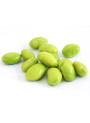
Soy Extract (Genistein 98%)
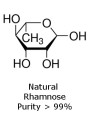
Rhamnose (rhamnose sugar)
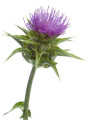

LipidSoft™ F (Ethyl Linoleate)
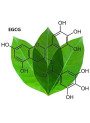
Pure-EGCG™ (Green Tea Extract, 98% EGCG)