Cream Formulation Review
Question
Could you please review this list of ingredients for a cream formulation? I would like to know the appropriate usage percentage for each ingredient, and if any ingredients should be added or removed for this cream formula. The ingredients are: 1. Cetearyl Alcohol 2. Isopropyl Myristate 3. Glyceryl Monostearate 4. Cyclomethicone 5. Glycerin 6. Brij721 7. Brij72 8. Astaxanthin 9. Phenoxyethanol. Thank you.
Answer
Okay, I can help review the ingredients you've listed for your cream formulation. Based on the ingredients provided and information from the product database, here is an assessment and some recommendations.
Here are the ingredients you listed:
- Cetearyl Alcohol
- Isopropyl Myristate
- Glyceryl Monostearate
- Cyclomethicone
- Glycerin
- Brij 721
- Brij 72
- Astaxanthin
- Phenoxyethanol
Based on the product information, here are the typical usage rates and functions:
- Cetearyl Alcohol: This acts as a thickener and provides an emollient feel. It helps increase the viscosity and body of the cream. Recommended usage is typically 1-20%. It needs to be heated and mixed into the oil phase. Note that it can cause a white cast if used at high concentrations without proper formulation.
- Isopropyl Myristate: This is a light emollient ester that helps with spreadability and reduces the greasy feel of oils. Recommended usage is 1-50%, but be cautious with higher percentages as it can be comedogenic for some skin types. It is mixed in the oil phase.
- Glyceryl Monostearate SE (Self-Emulsifying): This functions as a thickener and a self-emulsifying agent. It helps stabilize the emulsion. Recommended usage is 1-10%. It needs to be heated and mixed into the oil phase. While it is self-emulsifying, it is often used with other emulsifiers for better stability, especially with a high oil phase.
- Cyclomethicone (Cyclopentasiloxane): This is a lightweight, volatile silicone that provides a smooth, silky feel and helps with spreadability. It evaporates quickly, leaving a non-greasy finish. Recommended usage in creams/lotions is typically 1-20%. It is mixed in the oil or silicone phase.
- Glycerin: This is a humectant that attracts and holds moisture, providing hydration to the skin. Recommended usage is 1-100%, but it is typically used at lower concentrations (e.g., 5-10%) in creams. It is mixed in the water phase.
- Brij 721 and Brij 72: These ingredients were not found directly in the product database. Based on their common names in cosmetic chemistry, Brij series are typically PEG-based fatty alcohol ethers that function as emulsifiers. Brij 721 (PEG-21 Stearyl Ether) and Brij 72 (PEG-2 Stearyl Ether) are non-ionic emulsifiers. Their role would be to help mix the oil and water phases together to form a stable cream emulsion. The required percentage would depend on the total oil phase percentage and the desired HLB (Hydrophilic-Lipophilic Balance) of the emulsifier system. You would likely need a combination of emulsifiers with different HLB values to create a stable emulsion.
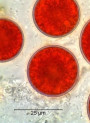
- Astaxanthin (10% Algae Extract, Oil): This is a powerful antioxidant. The product description indicates it's an oil-soluble extract suitable for oil-based formulas. The usage rate would depend on the desired concentration of Astaxanthin in the final product, keeping in mind the extract is 10% active. It should be added to the oil phase.
- Phenoxyethanol (Extra Pure): This is a preservative used to prevent microbial growth in the product. Recommended usage is 0.5-1.0%. It can be added in any step, but the temperature should be below 80°C.
Formula Assessment and Recommendations:
- Missing Water Phase: Your list includes oil-soluble ingredients, thickeners, emollients, a humectant, an antioxidant, and a preservative, but it is missing the crucial water phase (e.g., purified water, floral water). A cream is an emulsion of oil and water, so the water phase is essential.
- Emulsifier System: You have listed Glyceryl Monostearate SE and potentially Brij 721 and Brij 72. This suggests an attempt to create an emulsifier system. Glyceryl Monostearate SE can act as a primary emulsifier or co-emulsifier. If Brij 721 and Brij 72 are indeed emulsifiers, you will need to determine the correct ratio of oil phase to water phase and the appropriate percentages of each emulsifier to achieve a stable emulsion with the desired texture. This often requires calculating the required HLB for your oil phase and selecting emulsifiers that blend to that HLB.
- Ingredient Compatibility: The ingredients listed are generally compatible for use in a cream formulation.
- Usage Percentages: You need to determine the percentage for each ingredient, ensuring the total adds up to 100% including the water phase. The percentages should be within the recommended ranges provided above. Start with lower percentages for thickeners and emollients and adjust based on the desired texture. For active ingredients like Astaxanthin, follow the supplier's recommended usage for the desired effect.
- Potential Additions:
- Water Phase: Absolutely essential.
- Chelating Agent: Such as Disodium EDTA, helps improve the stability of the formula by binding metal ions. Typically used at 0.05-0.2%.
- pH Adjuster: Ingredients like Citric Acid or Sodium Hydroxide may be needed to adjust the final pH of the cream to be suitable for skin (typically pH 4.5-6.5).
- Other Active Ingredients: Depending on the desired benefits (e.g., whitening, anti-aging, soothing), you might add other active ingredients.
- Fragrance/Essential Oils: If desired, add at the end of the formulation process.
- Potential Removals: Based on the list, no ingredients necessarily need to be removed, but the percentages and the overall emulsifier system need careful consideration. If you find the texture too heavy or greasy, you might reduce the percentage of emollients like Isopropyl Myristate or Cetearyl Alcohol.
General Formulation Guidance:
- Typically, cream formulations involve heating the water phase and oil phase separately, combining them while hot, and mixing until an emulsion forms. Thickeners and emulsifiers are usually added to the phase they are soluble in (oil or water) before combining.
- Active ingredients and preservatives are usually added during the cooling phase, below a certain temperature (e.g., below 40-50°C for heat-sensitive ingredients like Astaxanthin, below 80°C for Phenoxyethanol).
- Always perform small test batches to check stability, texture, and efficacy before making a large batch.
To provide more specific percentage recommendations, you would need to decide on the desired texture (light lotion, rich cream) and the total percentage of your oil phase.
Related Products Mentioned
Glycerin (USP/Food Grade)
Phenoxyethanol (Extra Pure)
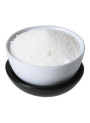
Cetearyl Alcohol (50/50, e.q. Lanette O)
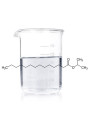
Isopropyl Myristate (Deodorized)
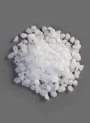
Cetearyl Alcohol (30/70, eq. Lanette D)