Cream Formulation Review: Mixing Steps, Ingredient Solubility, and Stability
Question
I am trying to formulate a cream with the following ingredients and percentages:
- MSH White: 2%
- Pure Melatonin: 3%
- Palmaria Palmata Extract: 5%
- Resveratrol LongMax: 5%
- Cetyl Tranexamate: 5%
- Silymarin: 1%
- Activated Resorcinol: 1%
- Yeast Resurface: 3%
- Disodium EDTA: 0.2%
- Satin Cream Maker: 1%
- Phenoxyethanol SA: 0.5%
- LipidSoft F: 8%
- Butylene Glycol: 5%
- Water: Balance
- DMI: 3%
My proposed mixing steps are:
A. Oil phase: Mix MSH White + Silymarin + LipidSoft F and heat until dissolved. Let cool.
B. Separate: Take some LipidSoft F to dissolve Melatonin. Set aside. (I'm unsure if it will dissolve, and if using Ethoxydiglycol at 3% for Melatonin requires exceeding the recommended level, so I don't fully understand Melatonin dissolution.)
C. Glycol phase: Dissolve Cetyl Tranexamate + Butylene Glycol.
D. Water phase: Dissolve Yeast Resurface, Palmaria Palmata Extract in water (add Disodium EDTA 0.2% to water first).
E. Combine C + D, then add Satin Cream Maker, DMI.
F. Slowly add A into E, then add Resveratrol LongMax and mix to disperse, followed by B.
G. Add Phenoxyethanol SA.
I have a few questions:
- Please review if this cream can actually be made and if the steps are correct.
- What can be used to dilute 3% Melatonin?
- Do you have any recommendations regarding the mixing process? Thank you.
Answer
Cosmetic Cream Formulation Review
Thank you for providing your detailed cream formulation and mixing steps. This formulation includes several beneficial active ingredients. Based on the properties of these ingredients, the formulation is generally feasible, but some adjustments to the mixing steps are recommended to ensure optimal stability and efficacy.
Review of Your Proposed Steps and Recommended Adjustments
Here is a review of your steps and suggestions for improvement:
Step A (Oil Phase): You propose heating MSH White, Silymarin, and LipidSoft F. While MSH White and Silymarin can withstand some heat (up to 80°C for Silymarin, >= 60°C for MSH White), Activated Resorcinol, also typically part of the oil phase, should avoid heat.
- Recommendation: Dissolve MSH White and Silymarin in LipidSoft F with gentle heating (ideally below 70°C). Once dissolved, cool this oil phase completely before dissolving Activated Resorcinol in it without heat.
Step B (Melatonin Dilution): You attempted to dissolve Melatonin in LipidSoft F and noted difficulty. Melatonin is soluble in some oils and glycols like Ethoxydiglycol and 1,3-Propanediol. Dissolving 3% Melatonin in Ethoxydiglycol might require a concentration of Ethoxydiglycol that exceeds the recommended limit for leave-on products (2.6%).
- Recommendation: It is more effective and within recommended usage rates to dissolve 3% Pure Melatonin in 1,3-Propanediol. Prepare this as a separate pre-mix.
Step C (Glycol Phase): Dissolving Cetyl Tranexamate in Butylene Glycol with heat (60-80°C) is correct.
Step D (Water Phase): Dissolving Disodium EDTA in water first is correct. Adding Yeast Resurface and Palmaria Palmata Extract to the water phase is also correct, but ensure the water temperature is below 40°C as these ingredients are heat-sensitive.
Step E: Combining the glycol and water phases and adding Satin Cream Maker and DMI is acceptable.
Step F: Adding the oil phase (A) to the water/glycol/emulsifier phase (E) is the correct method for emulsification with Satin Cream Maker. However, adding Resveratrol LongMax and the Melatonin pre-mix at this stage is too early as they are heat-sensitive and should be added in the final cooling phase (below 40°C).
Step G: Adding Phenoxyethanol SA at the end is correct, provided the temperature is below 60°C and the pH is within its effective range (2.0-6.0).
Recommended Mixing Procedure
Here is a suggested revised mixing procedure:
- Water Phase: Dissolve Disodium EDTA in water. Add Yeast Resurface and Palmaria Palmata Extract. Mix gently until dissolved/dispersed. Keep temperature below 40°C.
- Glycol Phase: Heat Butylene Glycol to 60-80°C and dissolve Cetyl Tranexamate.
- Oil Phase: Dissolve MSH White and Silymarin in LipidSoft F with gentle heating (60-70°C). Cool this phase. Dissolve Activated Resorcinol in the cooled oil phase without heat.
- Melatonin Pre-mix: Dissolve Pure Melatonin in 1,3-Propanediol. Set aside.
- Combine Water and Glycol: Add the Glycol Phase (Step 2) to the Water Phase (Step 1). Add Satin Cream Maker and DMI. Mix gently until Satin Cream Maker is dispersed.
- Emulsification: Slowly add the cooled Oil Phase (Step 3) to the combined water/glycol/emulsifier phase (Step 5) while mixing gently (below 2500 rpm) until a cream forms.
- Cooling and Final Additions: Continue mixing gently until the cream cools below 40°C. Add Resveratrol LongMax and the Melatonin pre-mix (Step 4). Mix until dispersed.
- Preservative: Add Phenoxyethanol SA. Mix gently. Check and adjust pH to 4.5-5.5 for optimal stability of most active ingredients.
- Packaging: Package the finished product in opaque, air-tight containers to protect light and air-sensitive ingredients like Melatonin and Resveratrol LongMax.
Melatonin Dilution (Question 2)
To dilute 3% Pure Melatonin, 1,3-Propanediol is a suitable solvent. Dissolving 3% Melatonin in a small amount of 1,3-Propanediol before adding it to the final cream base is recommended. Using Ethoxydiglycol at a concentration high enough to dissolve 3% Melatonin might exceed its recommended usage limit in a leave-on product.
General Mixing Recommendations (Question 3)
- Always observe the recommended mixing temperatures for each ingredient, especially heat-sensitive actives.
- Ensure thorough mixing at each stage, but avoid excessive speed when using polymer-based emulsifiers like Satin Cream Maker.
- Control the final pH of the product to be within the optimal range for your active ingredients (around 4.5-5.5 is generally suitable for this formulation).
- Protect the finished product from light and air by choosing appropriate packaging.
- Using purified water and Disodium EDTA helps prevent ingredient degradation caused by metal ions.
By following these guidelines, you should be able to successfully create your cream formulation.
Related Products Mentioned
Ethoxydiglycol (e.q. Transcutol)
Disodium EDTA

Satin Cream Maker™
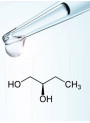
Butylene Glycol
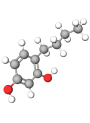
MSH White™ (Undecylenoyl phenylalanine)
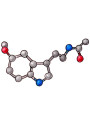
Pure-Melatonin™ (Odorless, White Powder)

Phenoxyethanol SA (eq. Optiphen Plus)

Yeast Resurface

LipidSoft™ F (Ethyl Linoleate)
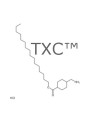
TXC™ (Cetyl Tranexamate HCl)
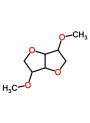
Dimethyl Isosorbide (DMI)
