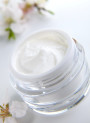
Cream Formulation: Texture, Stability, and Emulsification Issues
Question
I would like to inquire about the following formula. Do I need an emulsifier for this formula? The current result is not a thick cream as desired, and the oil seems to be separating from the cream. Since the oil amount is very small, it appears as many small dots similar to air bubbles throughout the cream. The cream texture looks like foam. Is this texture correct?
Formula:
- Soy Extract 10%
- NAG 4%
- Safe-B3 5%
- Waterlock 1%
- Aloe Extra 3%
- Natto Gum 5%
- Vitamin E 1%
- Glycerin 4%
- Ethoxydiglycol 5%
- Luxury Cream Maker 2%
- Preservative 1%
- Water (remaining amount)
- Fragrance
Mixing Steps:
- Separate ingredients into water and oil phases.
- Oil phase: Vitamin E + Fragrance + Luxury Cream Maker.
- Water phase: Mix everything else together.
- Pour the water phase into the oil phase.
I am considering adding the following ingredients when I make it again:
- Glyceryl Stearate SE
- Propylene Glycol
- Dimethicone (Medium, Low-Odor)
- LipidSoft™ Palm (Ethylhexyl Palmitate)
- Rich Cream Maker™ (might not add)
Answer
Hello! Regarding the formula and steps you provided, I understand the issue with the cream texture not being thick and experiencing oil separation.
Here is the answer to your questions:
Do I need an oil-water emulsifier?
Yes, if your formula contains both oil-based ingredients (like Vitamin E, fragrance, and potentially other emollients you might add) and water-based ingredients, using an emulsifier is essential to help the two phases combine well and form a stable cream texture. Your current formula already includes "Luxury Cream Maker," which acts as an emulsifier.
Why is the cream not thick and oil is separating?
The problems you described (not thick texture, oil separation, small bubbles like foam) indicate that the emulsification process was likely incomplete or unsuccessful. Even with an emulsifier present, creating a stable cream requires other factors:
- Temperature: Most emulsifiers work best and create a stable cream structure when both the water phase and the oil phase are heated to the appropriate temperature (often around 70-80°C, depending on the specific emulsifier) before combining them.
- Mixing Method: Slowly pouring one phase (e.g., the oil phase containing the emulsifier) into the other phase (the water phase) while continuously stirring or blending is the correct method. However, this must be done while both phases are still hot, and sufficient mixing force (e.g., using a high-shear mixer or stick blender for small batches) is needed to disperse the oil droplets finely within the water phase.
- Mixing During Cooling: After combining the phases, you must continue mixing or stirring as the cream cools down to allow the emulsion structure to set and stabilize, preventing separation.
The issue with bubbles might be air incorporated during mixing, or it could be related to the instability and separation, causing separated oil droplets to appear like small bubbles.
Is this cream texture correct?
A cream texture with oil separation and a foamy appearance is not correct or stable. A successful cream should be homogenous, smooth, and remain combined without separation upon standing.
Ingredients you are considering adding (Glyceryl Stearate SE, Propylene Glycol, Dimethicone, LipidSoft™ Palm, Rich Cream Maker™):
- Glyceryl Stearate SE: This is a good emulsifier and thickener that can significantly improve cream stability and viscosity. It is often used in formulas requiring high stability. It typically requires heat for emulsification.
- Dimethicone and LipidSoft™ Palm (Ethylhexyl Palmitate): These are emollients (oils) that belong in the oil phase. Adding them will increase the oil load in your formula, which will likely require a higher amount of emulsifier to stabilize the emulsion.
- Propylene Glycol: This is a humectant and solvent that is water-soluble. It does not directly help with emulsification or significantly thicken the cream for a heavy texture.
- Rich Cream Maker™: If you aim for a heavier, richer cream texture, Rich Cream Maker™ is designed specifically for this purpose. You might consider using this instead of or in addition to Luxury Cream Maker, following the usage instructions for each.
Recommendations for your next attempt:
I recommend following the correct emulsification procedure:
- Separate all ingredients into a water phase (containing water-soluble/dispersible ingredients, humectants, some actives) and an oil phase (containing oils, oil-soluble actives like Vitamin E, fragrance, and all emulsifiers).
- Heat both phases simultaneously to the temperature recommended for your emulsifier (usually around 70-80°C).
- Slowly pour the hot oil phase into the hot water phase (or vice versa, depending on the emulsifier type and desired emulsion type, but oil-in-water is common for creams) while continuously blending with a high-shear mixer (like a stick blender for small batches).
- Continue blending until the cream starts to form and cool down (you can place the container in an ice bath to speed up cooling).
- Once the cream has cooled below 40°C, add heat-sensitive ingredients like preservatives, fragrance, and some extracts, and mix well.
Following the correct procedure should help you achieve a stable cream texture. If you want a thicker texture, consider increasing the amount of a suitable emulsifier/thickener or adding more oil phase ingredients (emollients) and ensuring you use enough emulsifier to stabilize the increased oil load.
I hope this advice is helpful! Please feel free to ask if you have any more questions.
Related Products Mentioned
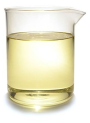
Vitamin E (Tocopheryl Acetate)
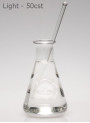
Dimethicone (Light/50, Low-Odor)
LipidSoft™ Palm (Ethylhexyl palmitate)