Creating a Lightweight, Well-Absorbing Cream Base Texture
Question
Regarding the creation of a cream base texture similar to that achieved with LECIGEL (Sodium acrylates copolymer (and) Lecithin), how can I create a lightweight, well-absorbing cream base using MySkinRecipes ingredients? Specifically, I understand that using Satin Cream Maker (Sodium Acrylates Copolymer) and Phospholipid (Hydrogenated Lecithin) can achieve a similar effect.
What is the recommended formulation (approximate percentages) and the detailed mixing procedure, including the type of equipment and mixing speed/time required to ensure the Phospholipid is fully incorporated? What are the key characteristics of the resulting texture, its limitations regarding pH, cost implications, and compatibility with other ingredients like Cell-Energy (Adenosine)?
Answer
Regarding your question about LECIGEL, the staff is familiar with this ingredient. While we may not sell LECIGEL specifically, which has the INCI name Sodium acrylates copolymer (and) Lecithin, our team has provided information on how to create a similar base texture using ingredients available from us.
Based on the staff's response, a similar lightweight, well-absorbing cream base can be created using:
- Satin Cream Maker (Sodium Acrylates Copolymer)
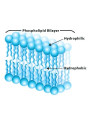
- Phospholipid (Hydrogenated Lecithin)
The recommended formula is approximately 2% Satin Cream Maker and 2% Phospholipid (Hydrogenated Lecithin), with the rest being water, active ingredients, and preservatives.
To achieve the desired texture, sufficient mixing power is required (e.g., Overhead stirrer with a disperse head at least 1500 rpm). The mixing steps are as follows:
- Combine water-soluble ingredients in the water phase.
- Combine oil-soluble ingredients in the oil phase.
- Add Satin Cream Maker to the water phase and mix until a cloudy gel forms.
- Add the oil phase to the gel and mix to form a cream.
- Finally, add Phospholipid (Hydrogenated Lecithin) to the cream and mix at high speed (at least 1500 rpm) for at least 15 minutes to ensure it is fully incorporated.
This base provides a lightweight feel and enhances skin absorption. However, it's important to maintain the pH between 3.5-6.5, as Phospholipid can degrade outside this range. The cost of this base will also be relatively high due to the price of Phospholipid.
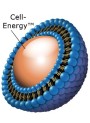
Regarding compatibility, both Sodium Acrylates Copolymer and Lecithin (and thus this base) are compatible with Cell-Energy (Adenosine).
We hope this information is helpful!