Creating Whipped Cream-Like Foam in Face & Body Wash
Question
I want to create a face and body wash with a rich, soft, fine, and stable foam similar to whipped cream. I plan to use Cocamidopropyl Hydroxysultaine (Coco-Foam™), Sodium Cocoyl Isethionate (BabyFoam™), and Sodium Methyl Cocoyl Taurate (Creamy Foamer™) and combine them with Cocamidopropyl Betaine (CocoBetaine) and Lauryl Glucoside. What are the safe percentages for these ingredients to achieve the desired foam texture?
Answer
Achieving a Whipped Cream-Like Foam in Cleansers
You're looking to create a face and body wash with a rich, soft, fine, and stable foam similar to whipped cream, using surfactants like Cocamidopropyl Hydroxysultaine (Coco-Foam™), Sodium Cocoyl Isethionate (BabyFoam™), and Sodium Methyl Cocoyl Taurate (Creamy Foamer™), and combining them with Cocamidopropyl Betaine (CocoBetaine) and Lauryl Glucoside.
Based on the properties of these surfactants:
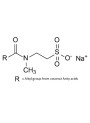
- Sodium Methyl Cocoyl Taurate is an excellent choice for generating a dense, creamy, and stable lather, which aligns well with your goal.
- Cocamidopropyl Betaine and Lauryl Glucoside are valuable co-surfactants. Cocamidopropyl Betaine is amphoteric and helps boost foam volume, improve stability, and enhance mildness. Lauryl Glucoside is a mild non-ionic surfactant that also contributes to foam stability and gentleness.
Combining an anionic surfactant like Sodium Methyl Cocoyl Taurate with amphoteric (Cocamidopropyl Betaine) and non-ionic (Lauryl Glucoside) surfactants is a common and effective strategy to achieve desirable foam characteristics and mildness in a cleansing product.
Important Consideration: pH and Foam Texture
While surfactants like Sodium Cocoyl Isethionate and Sodium Methyl Cocoyl Taurate can produce creamy foam, achieving a foam texture exactly like whipped cream often involves formulations with a higher pH. However, for a face and body wash, especially for sensitive skin, it is crucial to formulate at a skin-compatible pH, typically around 5.5. A high pH can be irritating.
At a skin-friendly pH, you can still achieve a rich, dense, and stable foam with the suggested surfactant blend, although it might not be as stiff as a high-pH whipped cream foam. The focus should be on creating a luxurious and effective lather that is also gentle on the skin.
Formulation Guidance and Safe Percentages
The safe and effective percentage of each surfactant depends on the total concentration of active surfactant matter (ASM) in your formula and the desired performance. For face and body washes, the total active surfactant concentration is typically between 10% and 20%.
To ensure mildness, particularly when using anionic surfactants, it is highly recommended to include a significant proportion of mild co-surfactants like Cocamidopropyl Betaine and Lauryl Glucoside. A common approach for mild formulations is to have the secondary/amphoteric/non-ionic surfactants make up a substantial portion (e.g., 30-50% or more) of the total active surfactant blend.
Finding the optimal percentages requires experimentation based on your specific formulation goals for foam quality, viscosity, and mildness.
Alternative Option: Sulfate Free Shampoo Base
As suggested by the staff, using a pre-made base like Sulfate Free Shampoo Base (pH 7, Clear, Foaming) can be a convenient way to create a gentle, high-foaming cleanser. This base is designed to be mild and produce stable foam, and you can customize it further by adding other ingredients.
In summary, a blend of Sodium Methyl Cocoyl Taurate, Cocamidopropyl Betaine, and Lauryl Glucoside can provide a rich, creamy foam for a mild face and body wash when formulated at a skin-compatible pH. Experimentation with ratios and total concentration will help you achieve the desired foam characteristics while maintaining skin safety.
Relevant products mentioned:
Related Products Mentioned
Cocamidopropyl Betaine