Custom Serum Formulation for Oily, Acne-Prone, Aging Skin: Ingredient Compatibility, Mixing, and Preservation
Question
Based on my skin concerns (oily, sensitive, minor acne, large pores, dullness, and premature aging), I have developed a custom serum formula using an Aloe Vera Gel base with the following ingredients:
- Vitamin B3 (Niacinamide)
- Zinc PCA
- Licorice Extract
- MSM
- Witch Hazel (Alcohol Free) Plus Allantoin
- Green Tea Extract
- Glucosamine (N-acetyl-D)
- Nanowhite
- Matrixyl™ 3000
- Argireline®
- Snail Secretion
- Please review this formula for suitability and ingredient compatibility, especially regarding my concern about Vitamin C sensitivity (present in Nanowhite) and the compatibility of MSM with Vitamin C.
- What is the correct mixing method for these ingredients, particularly when combining powder and liquid components in an Aloe Vera Gel base?
- If I want to store this serum at room temperature, is adding a preservative necessary? If so, what type and concentration (e.g., Phenoxyethanol 0.5-1.0%) is recommended, and how should it be incorporated into the mixing process?
Answer
Formula Analysis and Recommendations
Based on the revised formula you've developed for your skin concerns (oily, sensitive, minor acne, large pores, dullness, and premature aging), it is a promising formula with ingredients that can effectively address these issues.
Here is an analysis of the formula and additional recommendations:
Formula and Ingredient Analysis
Your revised formula includes ingredients well-suited to address your skin problems:
For Acne, Oiliness, Large Pores, and Inflammation:
- Vitamin B3 (Niacinamide): Helps reduce oiliness, calm acne inflammation, minimize pores, and strengthen the skin barrier, making skin more resilient and less prone to sensitivity.
- Zinc PCA: Controls oil production, helps reduce acne breakouts, and aids in healing acne lesions.
- Licorice Extract: Possesses anti-inflammatory properties, reduces redness, and helps control skin oiliness.
- MSM: Contributes to oil control, anti-inflammatory effects, and may help with acne. Note: The product description for MSM indicates it's not suitable for use with Vitamin C in the same formula as it can accelerate Vitamin C oxidation. This is a potential conflict with Nanowhite.
- Witch Hazel (Alcohol Free) Plus Allantoin: Helps tighten pores, reduces irritation, and provides hydration.
- Green Tea Extract: A potent antioxidant, reduces inflammation, helps control oil, and may reduce acne.
For Dullness, Dark Spots, and Uneven Skin Tone:
- Vitamin B3 (Niacinamide): Helps brighten skin and reduce post-acne marks and redness.
- Glucosamine (N-acetyl-D): Works synergistically with Niacinamide to improve skin tone and radiance.
- Nanowhite: A blend focused on skin brightening. However, you are concerned about Vitamin C sensitivity, and Nanowhite contains Vitamin C. Based on the previous conversation, true Vitamin C allergy is rare, and past reactions might have been due to other ingredients. If you remain unsure and have very sensitive skin, you might consider using only Vitamin B3 and Glucosamine for brightening as previously suggested. Additionally, be aware that MSM may cause Vitamin C to degrade faster in the same formula, potentially reducing Nanowhite's effectiveness.
For Wrinkles and Premature Aging:
- Matrixyl™ 3000: A peptide blend that stimulates collagen synthesis, reduces wrinkles, and improves skin elasticity.
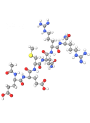
- Argireline®: A peptide that helps reduce muscle contractions responsible for expression lines, particularly on the forehead and around the eyes. It is often used with Matrixyl 3000 for enhanced anti-aging effects.
- Vitamin B3 (Niacinamide): Stimulates collagen and ceramide production, improving skin firmness and elasticity.
- MSM: May assist in collagen synthesis.
- Green Tea Extract: High in antioxidants, protecting skin from free radical damage that contributes to aging, and helps improve skin elasticity.
- Snail Secretion: Stimulates skin cell regeneration, reduces irritation, provides moisture, and contains components beneficial for collagen and elasticity.
Overall, this formula contains ingredients that work well together to address your concerns regarding oiliness, acne, pores, dullness, and wrinkles. The main points to consider are the use of Nanowhite regarding your Vitamin C sensitivity concern and the potential compatibility issue with MSM.
Mixing Method
Simply mixing and stirring/shaking may not be the best method for all ingredients. Generally, you should follow these steps:
- Weigh the powder ingredients (e.g., Vitamin B3, Zinc PCA, MSM, Glucosamine) and other water-soluble ingredients into the Aloe Vera Gel base.
- Stir or use a small mixer to ensure the powder ingredients are fully dissolved in the base.
- Add other liquid ingredients (e.g., Licorice Extract, Nanowhite, Matrixyl 3000, Argireline, Witch Hazel, Green Tea Extract, Snail Secretion) in sequence.
- Mix thoroughly until everything is well combined.
- Important: Many ingredients, such as Matrixyl 3000, Argireline, Green Tea Extract, Snail Secretion, and Witch Hazel, should be added in the final step after the base has cooled to below 40°C to preserve their efficacy.
Always check the specific product information for each ingredient for the most suitable temperature and mixing instructions.
Adding a Preservative for Room Temperature Storage
If you intend to store the product at normal room temperature, it is essential to add a preservative to prevent microbial growth. This is crucial for the product's safety and shelf life.
Propylene Glycol is a humectant and solvent, not a primary preservative at typical cosmetic concentrations.
Phenoxyethanol is a widely used, safe, and effective preservative suitable for this formula. We recommend using Phenoxyethanol (Extra Pure) at a suggested rate of 0.5-1.0% of the total formula weight. Using 1.0% is generally recommended for broad-spectrum protection.
To incorporate Phenoxyethanol, add it in the final step of mixing when the formula's temperature is below 80°C. The formula's pH should ideally be within the 2-9 range for Phenoxyethanol effectiveness, although the optimal pH for most active ingredients in your formula is between 4-7.
Conclusion
Your revised formula has good potential to address your skin concerns, particularly oiliness, acne, pores, and wrinkles. You should carefully consider the use of Nanowhite if you are still concerned about Vitamin C sensitivity or its compatibility with MSM.
The correct mixing method involves dissolving powder ingredients in the water base first and then adding other ingredients according to appropriate temperatures and steps.
Furthermore, it is absolutely necessary to add a preservative like Phenoxyethanol at a suitable concentration (recommended 1.0%) to ensure the product remains safe and stable when stored at room temperature.
Related Products Mentioned
Acetyl Hexapeptide-8 (eq Argireline)
Pal-GHK, Pal-GQPR (eq Matrixyl 3000)
Safe-B3™ (Vitamin B3, Niacinamide)
Phenoxyethanol (Extra Pure)

Pure MSM™ (Methylsulfonylmethane)
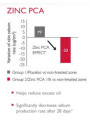
Zinc PCA
Snail Secretion