Cyclodextrins: Solubility, Stability, Dosage, and Encapsulation Properties
Question
Could you provide information on various types of Cyclodextrins (Beta, Cationic, Dimethyl Beta, Alpha, Gamma, Methyl Beta, Hydroxypropyl Beta) regarding their solubility in different solvents (Water, PG, DPG, Alcohol, Oil), typical dosage ranges, stability, and how they are used for encapsulation?
Answer
Cyclodextrin Information
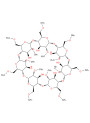
Cyclodextrins are cyclic oligosaccharides used primarily for encapsulation, which helps improve the solubility, stability, and bioavailability of various ingredients. Different types have varying solubility profiles.
Beta Cyclodextrin
- Solubility: Slightly soluble in water (not more than 1.8%). If high water solubility is needed, Hydroxypropyl Beta Cyclodextrin is recommended instead. Solubility in PG/DPG/Alcohol is not specified in the product description, but generally, Beta Cyclodextrin has limited solubility in organic solvents compared to modified versions.
- Dosage: Specific dosage depends on the ingredient being encapsulated and the desired effect. Product descriptions do not provide a general dosage percentage. It is used by those with specific knowledge in encapsulation.
- Stability/Encapsulation: Used for encapsulating ingredients to increase bioavailability. It can help increase the stability of some ingredients with low stability.
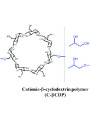
Cationic Cyclodextrin (Water-Soluble)
- Solubility: Soluble in water.
- Dosage: Specific dosage depends on the ingredient being encapsulated and the desired effect. Used by those with specific knowledge in encapsulation.
- Stability/Encapsulation: Used for encapsulating ingredients for better solubility, increased bioavailability, and increased stability of some ingredients with low stability.
(Heptakis) 2,6-Dimethyl Beta Cyclodextrin
- Solubility: Soluble in oil. Solubility in water, PG, DPG, or alcohol is not specified, but its primary characteristic mentioned is oil solubility, making it suitable for increasing the solubility of oil-soluble substances.
- Dosage: Specific dosage depends on the ingredient being encapsulated and the desired effect. Used by those with specific knowledge in encapsulation.
- Stability/Encapsulation: Used for encapsulating ingredients for better solubility, increased bioavailability, and increased stability of some ingredients with low stability. Suitable for increasing the solubility of oil-soluble substances.
Alpha Cyclodextrin (a-Cyclodextrin)
- Solubility: Generally more water-soluble than Beta Cyclodextrin. Solubility in PG/DPG/Alcohol is not specified in the product description.
- Dosage: Specific dosage depends on the application. Product descriptions mention research results in helping to lose weight by reducing absorption, suggesting potential use in dietary supplements, but specific cosmetic dosage is not provided. Used by those with specific knowledge in encapsulation.
- Stability/Encapsulation: Used for encapsulating ingredients.
Gamma Cyclodextrin (γ-Cyclodextrin)
- Solubility: Generally more water-soluble than Beta Cyclodextrin and Alpha Cyclodextrin. Solubility in PG/DPG/Alcohol is not specified in the product description.
- Dosage: Specific dosage depends on the ingredient being encapsulated and the desired effect. Used by those with specific knowledge in encapsulation.
- Stability/Encapsulation: Used for encapsulating ingredients for better solubility, increased bioavailability, and increased stability of some ingredients with low stability.
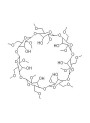
Methyl Beta Cyclodextrin (MβCD)
- Solubility: Soluble in water, ethanol, and methanol. Solubility in PG/DPG is not specified but is likely soluble given its solubility in other organic solvents.
- Dosage: Specific dosage depends on the ingredient being encapsulated and the desired effect. Used by those with specific knowledge in encapsulation.
- Stability/Encapsulation: Used for encapsulating ingredients for better solubility, increased bioavailability, and increased stability of some ingredients with low stability.
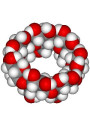
Hydroxypropyl Beta Cyclodextrin
- Solubility: Dissolves easily in water. Solubility in PG/DPG/Alcohol is not specified, but its modification enhances water solubility significantly compared to native Beta Cyclodextrin.
- Dosage: Specific dosage depends on the ingredient being encapsulated and the desired effect. Used for people with specific knowledge in encapsulation only.
- Stability/Encapsulation: Used for encapsulating ingredients for better solubility to increase bioavailability, especially for ingredients that are difficult to dissolve. Also used for increasing the stability of some ingredients that have low stability.
In summary, the choice of cyclodextrin depends heavily on the solubility of the ingredient you wish to encapsulate and the desired final formulation. For water-soluble applications, Hydroxypropyl Beta Cyclodextrin, Methyl Beta Cyclodextrin, or Cationic Cyclodextrin are generally preferred over native Beta Cyclodextrin due to their higher water solubility. For oil-soluble substances, (Heptakis) 2,6-Dimethyl Beta Cyclodextrin may be suitable. Specific dosage and formulation details require specialized knowledge in encapsulation techniques.
Related Products Mentioned
Hydroxypropyl Beta Cyclodextrin

Beta Cyclodextrin
Methyl Beta Cyclodextrin (MβCD)
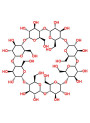
Gamma Cyclodextrin (γ-Cyclodextrin)
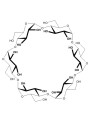
Alpha Cyclodextrin (a-Cyclodextrin)