Dermatix Ultra Formulation: Clarity of Polymethylsilsesquioxane and Rose Hip Oil Usage
Question
Dermatix Ultra Formulation Questions
I would like to inquire about a formulation similar to Dermatix Ultra. Based on the ingredients I found and a suggested formula from previous posts, I have the following questions:
Original Ingredients Found:
- Cyclopentasiloxane
- Phenyl Trimethicone
- PolySilicone-11
- Dimethicone
- Polymethylsilsesquioxane
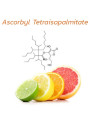
- Tetrahexyldecyl Ascorbate
Suggested Formula:
- Cyclopentasiloxane (qs to 100%)
- Phenyl Trimethicone 20%
- Silicone Film (Long-Wear, Hard, Dimethicone Base) 10%
- Dimethicone (Heavy, Low-Odor) 10%
- Polymethylsilsesquioxane 2%
- Tetrahexyldecyl Ascorbate 2%
My first question is: The formula contains
Polymethylsilsesquioxaneat 2%, but why is the original gel formula clear whenPolymethylsilsesquioxanepowder is white and powdery?Additional question: If I add
Rose Hip Oil(Chile, Extra Virgin Organic Fresh) to enhance the effectiveness, what percentage should I use to achieve results in reducing post-surgical scars?
Answer
Dermatix Ultra Formulation Questions
Regarding your questions about the Dermatix Ultra formulation:
Polymethylsilsesquioxane and Gel Clarity
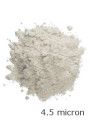
Polymethylsilsesquioxane is indeed a white powder. However, it is available in various particle sizes, including very fine ones (like 2 microns or 4.5 microns). When a powder with a very small particle size is dispersed evenly in a clear base, such as a silicone gel, at a low concentration (like the 2% in the formula you provided), the particles are too small to scatter light significantly. This allows the overall mixture to remain clear or translucent, rather than appearing opaque white like the powder itself. The key is the fine particle size and proper dispersion within the silicone matrix.
Adding Rose Hip Oil for Scar Reduction
Rose Hip Oil is known for its skin repair properties and ability to help reduce the appearance of scars. The product description indicates it can be used at a rate of 1-100% in cosmetic formulations, mixed into the oil phase. For targeting scar reduction after surgery, you would typically use a concentration that provides a noticeable effect. While you can use it up to 100% as a pure oil, a concentration in the range of 5-20% is often sufficient and commonly used in formulations aimed at skin repair and scar improvement. You can adjust the percentage within the 1-100% range based on desired feel and efficacy, keeping in mind that higher concentrations may increase the oiliness of the final product.
Related Products Mentioned
Dimethicone (Heavy/60k, Low-Odor)
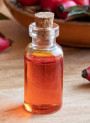
Rosehip Oil (Virgin, Fresh)