Difference and Interchangeability of DPG and DPM (PPG-2 Methyl Ether) as Fragrance Solvents
Question
What are the differences between Dipropylene Glycol (DPG) and Dipropylene Glycol Monomethyl Ether (DPM), are they interchangeable as fragrance dispersants/solvents, and is DPM the same as PPG-2 Methyl Ether?
Answer
Difference between Dipropylene Glycol (DPG) and Dipropylene Glycol Monomethyl Ether (DPM)
Regarding your questions:
Difference between Dipropylene Glycol (DPG) and Dipropylene Glycol Monomethyl Ether (DPM):
- Dipropylene Glycol (DPG) is a type of glycol commonly used as a solvent and carrier in fragrance and cosmetic formulations. It is known for its low odor, low toxicity, and good solvency for many fragrance materials. It helps to dilute and stabilize fragrance oils and control their evaporation rate.
- Dipropylene Glycol Monomethyl Ether (DPM) is a different chemical belonging to the glycol ether family. It also acts as a solvent and coupling agent in various applications, including some cosmetic and cleaning products. DPM has different solvency characteristics and a faster evaporation rate compared to DPG.
While both can function as solvents for fragrance materials, they have different chemical structures and physical properties. Therefore, they are not directly interchangeable in formulations. Substituting one for the other would likely affect the solubility of fragrance components, the evaporation profile, and potentially the overall performance and stability of the final product.
Is Dipropylene Glycol Monomethyl Ether the same as PPG-2 Methyl Ether?
- Yes, Dipropylene Glycol Monomethyl Ether is chemically known as PPG-2 Methyl Ether. These are two names for the same compound.
In summary, while both DPG and DPM are solvents, they are distinct chemicals with different properties and uses in formulations. DPG is a very common carrier for fragrances due to its specific characteristics, while DPM (PPG-2 Methyl Ether) is a different solvent typically used in other applications or for different formulation goals.
Updated Review: May 2026
This section was added after reviewing the original answer against current product availability and formulation knowledge at the stated point in time.
Update 2026-05-24
The original distinction remains valid: Dipropylene Glycol (DPG) and Dipropylene Glycol Monomethyl Ether are not the same ingredient. Both can be used as solvent/carrier-type materials for fragrance, but they do not give identical performance and should not be substituted 1:1 without testing.
DPG is generally used as a low-odor fragrance carrier/base and can help slow fragrance evaporation, so it is commonly chosen when a longer-lasting scent profile is desired. PPG-2 Methyl Ether, also called Dipropylene Glycol Monomethyl Ether or DPM, is a glycol ether solvent with different solvency, water-compatibility, evaporation, odor, and dry-down behavior.
Yes, Dipropylene Glycol Monomethyl Ether corresponds to PPG-2 Methyl Ether in cosmetic INCI naming, but please check the supplier specification/CAS because commercial glycol ether grades can be supplied as isomer mixtures. Do not confuse PPG-2 Methyl Ether/DPM with PPG-3 Methyl Ether/TPM; they are related but different materials.
If changing from DPG to PPG-2 Methyl Ether, test clarity, odor, evaporation speed, fragrance strength, formula stability, skin feel, and packaging compatibility before production. Use each material according to the current product documentation, the fragrance IFRA guidance, and the cosmetic regulations of the country where the product will be sold.
References: COSMILE Europe lists PPG-2 Methyl Ether as a cosmetic ingredient functioning as fragrance functional and solvent; SpecialChem identifies PPG-2 Methyl Ether as Dipropylene glycol monomethyl ether with CAS references including 13429-07-7 / 34590-94-8; CIR safety assessment: Robinson et al., Final Report on the Safety Assessment of PPG-2 Methyl Ether, PPG-3 Methyl Ether, and PPG-2 Methyl Ether Acetate, International Journal of Toxicology, 2009.
Related Products Mentioned
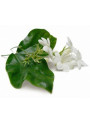
Jasmine Sambac Absolute (1% in Dipropylene glycol)

Dipropylene glycol