Dissolving Oil-Soluble Actives in Water-Based Serum Formulation
Question
I have questions about formulating a water-based serum, specifically regarding oil-soluble ingredients:
For oil-soluble ingredients, such as Activated Resorcinol™ powder, what should be used as a solvent? Can emollients like LipidSoft or various glycols be used in the formula for dissolution?
In the example formula for Activated Resorcinol™:
- Water 92.8%
- LipidSoft 5% (or any oil)
- Light Cream Maker™ 1%
- Activated Resorcinol™ 1%
- Disodium EDTA 0.2%
My understanding is that LipidSoft is used to dissolve Activated Resorcinol™. After dissolution, Light Cream Maker™ is used to create the texture and emulsify the water and oil phases. Is this correct?
(Additional note: I read in older threads that liquid ingredients can be added directly to the formula without prior dissolution if they are already in liquid form.)
Can ingredients stated to be oil-soluble also be dissolved in Glycol?
If a Glycol is said to dissolve in oil, does that mean oil cannot dissolve in that Glycol?
Answer
Formulation Feedback and Answers
Your goal is to create a water-based whitening serum with a pH between 4.5-5.5 using the listed ingredients. This pH range is suitable for several of your chosen actives, including Activated Resorcinol (optimum pH 4.5-5.5) and Repair Activator (pH 4-5.5), as well as Perfect-C (formula pH 5.0-5.5). Pumpkin Renew (pH 4.5-7.0) also fits well within this range.
Ingredient Specifics
- Licorice Extract (Licochalcone A): Based on the product description for Licorice Extract (Licochalcone A 1%, Water-Soluble), its primary properties are to reduce skin inflammation, irritation, redness from acne, and oiliness. The description explicitly states: "Licochalcone A is not for skin whitening." Therefore, using it for its anti-irritant properties, as you mentioned in your reply, is appropriate, but it will not contribute to the whitening effect of the serum.
- Pentylene Glycol: You proposed 10% Pentylene Glycol. The product description for Pentylene Glycol lists a usage rate of 1-10%. While 10% is within the allowed range, the description notes benefits like preservative boosting (recommended 3%), penetration enhancement (2-4%), and water-binding (3-5%) are achieved at lower concentrations. The forum reply suggesting 3% is likely aimed at optimizing the formula for feel or cost without losing the primary benefits of Pentylene Glycol as a humectant, solvent, and preservative booster. You can certainly use 10%, but 3-5% might be sufficient depending on the desired properties and overall formula balance.
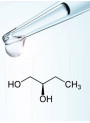
- Butylene Glycol: Your proposed 5% Butylene Glycol is within the typical usage rate of 1-20%. Butylene Glycol acts as a solvent and humectant, similar to Pentylene Glycol and Propylene Glycol, but is considered gentler. Using multiple glycols is common in cosmetics to achieve specific textures, solvency, and feel. Increasing Butylene Glycol would enhance its solvent and humectant properties. Whether you should increase or decrease it, or include it at all, depends on the overall feel and hydration properties you want for your final product. There's no single "correct" answer, but 5% is a standard and effective level.
Dissolving Oil-Soluble Ingredients and Emulsification
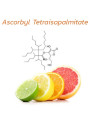
You have two oil-soluble active ingredients: Ascorbyl Tetraisopalmitate and Activated Resorcinol.
- Dissolving Activated Resorcinol: Activated Resorcinol is a powder that is soluble in oil. As shown in the example formula provided in its description, you should dissolve the Activated Resorcinol powder in an oil component (like LipidSoft) before combining it with the water phase.
- Dissolving Ascorbyl Tetraisopalmitate: Ascorbyl Tetraisopalmitate is an oil-soluble liquid (clear oil). It can be mixed directly with the oil phase ingredients in your formula.
- Role of LipidSoft and Emulsifier: Your understanding is correct. A LipidSoft product (which is an emollient/oil) is suitable for dissolving the powdered Activated Resorcinol. An emulsifier is then necessary to blend this oil phase containing the dissolved actives and the Ascorbyl Tetraisopalmitate into the water phase, creating a stable serum or cream texture.
- Oil-Soluble Ingredients in Glycols: As confirmed by the staff reply, whether an oil-soluble ingredient can dissolve in a glycol depends on the specific ingredient and glycol. While some, like Oxyresveratrol, are soluble in glycols, Activated Resorcinol is specifically noted as soluble in oil. Ascorbyl Tetraisopalmitate is an oil itself. For your formula, dissolving Activated Resorcinol in an oil is the recommended method based on the product information.
- Oils Dissolving in Glycols: Generally, oils do not dissolve in glycols. Glycols are more polar than oils. Solubility is specific to the combination of substances.
Alternative Emulsifiers
If you prefer not to use Pro Polymer, you will need a dedicated emulsifier to combine your water and oil phases and potentially a separate thickener if you desire a viscous texture.
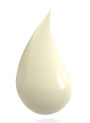
- Light Cream Maker: This is a very suitable alternative. The product description for Light Cream Maker indicates it is an oil-in-water emulsifier and thickener that works without heat. It can emulsify up to 20% oil and has some electrolyte tolerance. Its recommended usage rate is 0.5-3%, with 1-1.5% being typical for a creamy consistency. This would be an easy-to-use option for your water-based serum with an oil phase.
- Laureth-23: You mentioned Laureth-23. Its description confirms it is a solid emulsifier (HLB 17-18, suitable for O/W) used at 1-5% (max 6%). However, it requires heating to 60-70°C to melt and incorporate into the oil phase before emulsifying with water. Your concern about it potentially clogging is noted, although the product description does not mention this as a side effect. If you prefer to avoid heating and want easier processing, Light Cream Maker would be a better choice.
Absorption
Your formula includes ingredients that can enhance absorption and penetrate the skin:
- Pentylene Glycol: The description for Pentylene Glycol mentions it can act as a penetration enhancer at 2-4%. Your proposed 10% (or even 3-5%) would contribute to this.
- Oil-Soluble Actives: Ascorbyl Tetraisopalmitate is specifically noted for its superior percutaneous absorption due to its oil-soluble nature, allowing it to penetrate the lipid layers of the skin effectively. Activated Resorcinol, being dissolved in oil, would also benefit from the oil phase for skin penetration.
- Glycols and Glycerin: Butylene Glycol, Pentylene Glycol, and Glycerin are humectants that draw moisture into the skin, which can improve the overall condition of the skin barrier and indirectly support the absorption of other ingredients.
Overall, the combination of humectants, solvents, and oil-soluble actives in your proposed formula, especially with the inclusion of Pentylene Glycol and the oil phase for the whitening agents, suggests that the formula should absorb well and allow the oil-soluble actives to reach the lipid layers of the skin.
Here is a summary of the key points for your formulation:
- Licorice Extract (Licochalcone A) is for anti-irritation, not whitening.
- 10% Pentylene Glycol is acceptable, but 3-5% may provide sufficient benefits.
- Dissolve Activated Resorcinol powder in an oil (like LipidSoft), and mix Ascorbyl Tetraisopalmitate oil with the oil phase.
- Use an emulsifier like Light Cream Maker (no heat needed, 0.5-3%) or Laureth-23 (requires heat, 1-5%) to combine the oil and water phases.
- 5% Butylene Glycol is standard and contributes to solvency and hydration.
- The formula contains ingredients that support good absorption into the skin.
Consider adjusting the percentage of Pentylene Glycol based on your desired texture and feel, and choose an emulsifier that suits your manufacturing process and preference for heat.
Related Products Mentioned
Triethanolamine 99%
Laureth-23
Light Cream Maker™
Glycerin (USP/Food Grade)
Phenoxyethanol (Extra Pure)

Lactic Acid (AHA) 88%
Disodium EDTA
Pro Polymer™ (Gel Maker)
Butylene Glycol
Pumpkin Renew™ ผลัดเซลล์ผิวอ่อนโยน
Pentylene Glycol (Low-Odor)