DIY Serum/Cream Formulation: Mixing, pH, and Active Ingredient Percentages
Question
I am formulating a DIY serum/cream using Double Hyaluron gel base. I plan to include the following active ingredients:
- Vitamin B3 (Safe-B3™) 2%
- NAG (GlucoBright™) 4%
- Matrixyl 3000 5%
- Azelaic Acid (Liquid Azelaic™) 10%
- Green Tea Extract (Hi-EGCG™) 2%
- Licorice Extract 5%
Based on this formulation, I have the following questions:
- Can I mix all ingredients at room temperature?
- What is the recommended mixing order, especially for powder ingredients like Vitamin B3 and NAG?
- Are the percentages of the active ingredients suitable? Should any be reduced or increased? (Specifically, I am concerned about potential stickiness).
- Will the final pH be acidic, and do I need to adjust the pH with TEA to a range of 6-7.5? What is the optimal pH range for this formulation?
Answer
DIY Cream Formulation Guidance
Based on your planned formulation and questions, here is some guidance:
Mixing Temperature
Yes, mixing at room temperature is suitable. Several of your active ingredients, such as Matrixyl 3000, Azelaic Acid (Liquid Azelaic™), and Green Tea Extract (Hi-EGCG™), should be added in the final step at temperatures below 40°C to maintain their stability and efficacy. Mixing the entire formulation at room temperature ensures this requirement is met.
Active Ingredient Percentages
The combination of active ingredients you've chosen is excellent for addressing your skin concerns (dark spots, uneven tone, acne, oiliness, and early wrinkles).
- Vitamin B3 (Safe-B3™) at 2% and NAG (GlucoBright™) at 4%: This combination is well-supported by research for its synergistic effect in reducing hyperpigmentation and improving skin tone. Your chosen percentages are within the recommended ranges for these ingredients.
- Matrixyl 3000 at 5%: This is within the recommended usage range (3-5%) for stimulating collagen and reducing wrinkles.
- Azelaic Acid (Liquid Azelaic™) at 10%: This is the recommended concentration for its effects on brightening, reducing oiliness, and helping with acne.
- Green Tea Extract (Hi-EGCG™) at 2%: This is within the recommended range (1-5%) for its antioxidant, anti-inflammatory, and oil-control benefits.
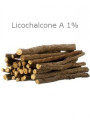
- Licorice Extract at 5%: The product description for Licorice Extract (Licochalcone A 1%, Water-Soluble) recommends a usage rate of 0.5-3% for general use (reducing oiliness, acne, inflammation, irritation, allergies), and 3% for eczema. Your planned 5% is above this recommended range. While the staff mentioned your percentages are suitable and won't cause stickiness, you might consider reducing the Licorice Extract percentage closer to the recommended maximum of 3% based on the ingredient's specific guidelines for optimal performance and to avoid potential issues, although exceeding it might not necessarily be harmful.
Overall, the staff's feedback that the percentages are suitable is generally correct for most ingredients and the overall texture, but it's worth noting the specific recommendation for Licorice Extract from the product information.
Mixing Order
A good mixing order, starting with your Double Hyaluron gel base, would be:
- Measure out the Double Hyaluron gel base.
- In a separate small container, dissolve the powder ingredients: Vitamin B3 (Safe-B3™) and NAG (GlucoBright™) in a small amount of the Double Hyaluron gel base or distilled water.
- Add the dissolved powder mixture to the main Double Hyaluron gel base and mix thoroughly until uniform.
- Add the liquid ingredients that can be mixed into the water phase: Licorice Extract.
- Mix well.
- Once the mixture is at room temperature (below 40°C), add the heat-sensitive liquid ingredients: Matrixyl 3000, Azelaic Acid (Liquid Azelaic™), and Green Tea Extract (Hi-EGCG™).
- Mix thoroughly until all ingredients are evenly dispersed.
- If using Green Tea Extract (Hi-EGCG™), it is recommended to add ActiveProtec™ OX at 1% to help stabilize it against metal ions. Ensure your formula does not contain Vitamin E.
- Check and adjust the pH if necessary (see next point).
- Ensure the final product is stored in an opaque container to protect the Green Tea Extract from light.
pH Adjustment
While the staff mentioned the pH might not be very acidic, it is always best practice to check the final pH of your formulation using a pH meter or pH strips after all ingredients are fully incorporated.
Many of your active ingredients function optimally within a slightly acidic to neutral pH range:
- Vitamin B3 (Safe-B3™): Optimum pH 4.0-7.0
- NAG (GlucoBright™): pH range 3-7
- Licorice Extract: pH range 3.5-6.5
- Green Tea Extract (Hi-EGCG™): pH range 4.0-6.5
- Azelaic Acid (Liquid Azelaic™): pH range 5-11 (works in a wider range)
A final pH in the range of 5.0-6.5 would be suitable for the optimal efficacy and stability of most of your active ingredients, as well as being gentle on the skin.
If the measured pH is lower than this range, you can use a small amount of Triethanolamine (TEA) solution (e.g., a 10% solution in water) to slowly adjust the pH upwards, adding drop by drop and mixing well before re-measuring, until you reach your desired pH range. If the pH is too high, you would use an acidic solution (like Citric Acid solution) to lower it, but based on your ingredients, it is more likely to be slightly acidic or neutral.
Checking and adjusting the pH ensures your actives are effective and the product is safe and comfortable to use.
Related Products Mentioned
Pal-GHK, Pal-GQPR (eq Matrixyl 3000)
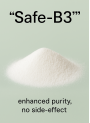
Safe-B3™ (Vitamin B3, Niacinamide)
GlucoBright™ (Acetyl Glucosamine)
Triethanolamine 99%

Double Hyaluron Liquid