DIY Toner Formulation with Specific Ingredients
Question
I want to make a toner using the following ingredients. Could you please advise on how to formulate it, including the recommended usage percentages, solubility, optimal pH, and compatibility between ingredients?
Ingredients:
- GlucoBright™ (Acetyl Glucosamine)
- Safe-B3™ (Vitamin B3, Niacinamide)
- Aloe Vera Extract
- Witch Hazel (Distillate - Alcohol Free, Paraben Free)
- Witch Hazel (Alcohol Free, Paraben Free) Plus Allantoin
- Glycerin
- Matrixyl™ 3000
- Distilled Water
Specifically, I am concerned about the compatibility of Witch Hazel and Matrixyl™ 3000.
Answer
Making Your Own Toner
You can use the ingredients you mentioned to make a toner. Here are some recommendations:
- GlucoBright™ (Acetyl Glucosamine): Helps brighten skin, reduce dark spots, and stimulate Hyaluronic Acid production for moisture. It can be used in toners. Recommended usage rate is 1-8% (4% recommended when used with Vitamin B3). Dissolve in water, add to the water phase. Optimal pH is 3-7.
- Safe-B3™ (Vitamin B3, Niacinamide): Offers multiple benefits including reducing wrinkles, redness/dark spots, increasing moisture, stimulating collagen and ceramides, and reducing oiliness. It works well in toners. Recommended usage rate is 1-10% (5% recommended). Dissolve in water, add to the water phase. Optimal pH is 3-8 (best at 4-7). Works well with Acetyl Glucosamine.
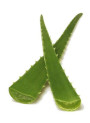
- Aloe Vera Extract: Helps soothe skin, reduce irritation, and add moisture. It can be used in toners. Recommended usage rate is 1-10% (3% is equivalent to 30% Aloe Vera). Dissolve in water, add to the water phase. Optimal pH is 3.5-7.
- Witch Hazel: Helps tighten pores. There are two types you asked about:
- Witch Hazel (Distillate - Alcohol Free, Paraben Free): Pure distillate, alcohol-free, good for pore tightening.
- Witch Hazel (Alcohol Free, Paraben Free) Plus Allantoin: Distillate mixed with Allantoin, helps reduce irritation and adds moisture, potentially better for sensitive skin.
For a toner focused on pore tightening, a high usage rate is recommended: 10-100% (suggested to use more than 50%). Add in the final step, temperature below 40°C.
- Glycerin: A humectant that helps retain moisture and gives the toner a slightly viscous, pleasant feel. You can choose to include it or not, depending on whether you want the toner to have added moisturizing properties. Typical usage rate is 1-10%. Dissolve in water, add to the water phase.
- Matrixyl™ 3000: A peptide that helps stimulate collagen synthesis and reduce wrinkles. It can be used in toners. Recommended usage rate is 3-5% (3% recommended). Add in the final step, temperature below 40°C. However, caution is advised because Witch Hazel is acidic (pH 3-5), which can degrade peptides like Matrixyl™ 3000. If using a high percentage of Witch Hazel or if the formula is very acidic, you may need to consider adjusting the pH, reducing the amount of Witch Hazel, or potentially omitting Matrixyl™ 3000 if focusing on a high concentration Witch Hazel base, as another member suggested.
Distilled Water: Can be used as the main base for your toner. You can find it at pharmacies. Alternatively, you can choose to use a high percentage of Witch Hazel instead of adding distilled water, as also suggested by another member.
Usage Percentages: The exact percentages depend on your desired concentration and other ingredients in the formula. However, based on product information, here are typical usage ranges (total should not exceed 100%, and the base like distilled water or Witch Hazel should be the main component):
- GlucoBright™ (Acetyl Glucosamine): 1-8%
- Safe-B3™ (Vitamin B3): 1-10%
- Aloe Vera Extract: 1-10%
- Witch Hazel: 10-100% (if used as the main base) or 10-50% (if used with distilled water)
- Glycerin: 1-10%
- Matrixyl™ 3000: 3-5% (consider pH compatibility with Witch Hazel)
Important Additional Note: Since toner is a water-based product, you must include a preservative to prevent microbial growth. Choose a preservative suitable for your formula's pH range.
It's recommended to start by making a small batch and testing the pH of the final product to ensure it's within the suitable range for each ingredient and safe for your skin.
Related Products Mentioned
Pal-GHK, Pal-GQPR (eq Matrixyl 3000)
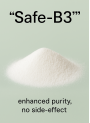
Safe-B3™ (Vitamin B3, Niacinamide)
GlucoBright™ (Acetyl Glucosamine)