DIY Vitamin C Serum for Anti-Aging and Brightening
Question
I would like a formula for a serum containing Vitamin C for anti-aging and brightening. I want a formula to mix myself.
Answer
DIY Vitamin C Serum for Anti-Aging and Brightening
Creating your own Vitamin C serum for anti-aging and brightening involves selecting the right form of Vitamin C and combining it with other beneficial ingredients. While providing a precise formula with percentages for self-mixing is complex due to factors like stability, pH, and preservation, I can guide you on suitable ingredients based on available products.
Key Ingredients to Consider:
Vitamin C Forms:
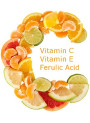
- L-Ascorbic Acid: The pure, potent form of Vitamin C. Products like Vitamin C (L-ascorbic acid) (Ultra-Fine) are available. It is highly effective but unstable in water and requires a low pH (2.0-4.0), which can be irritating. Vitamin C E Ferulic combines Ascorbic Acid with Vitamin E and Ferulic Acid for improved stability.
- Stable Vitamin C Derivatives: Easier to formulate with and more stable than L-Ascorbic Acid:
- Ethyl Ascorbic Acid: A highly stable, water-soluble derivative effective for brightening and anti-aging (use in pH 3.5-6.0).
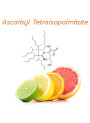
- Perfect-C™ (Ascorbyl Tetraisopalmitate): An oil-soluble derivative with excellent absorption, stability, and efficacy for brightening, anti-oxidation, and collagen stimulation (use in pH 5.0-5.5).
- Sodium Ascorbyl Phosphate (Vitamin C SAP): A stable, water-soluble derivative effective for brightening (use in pH 7-9).
Other Beneficial Actives:
- GlucoBright™ (Acetyl Glucosamine): Works with Vitamin B3 for whitening and dark spot reduction, boosts hydration, and helps reduce wrinkles.
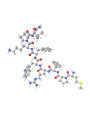
- Pep®-Radiance (Nonapeptide-1): A peptide for brightening skin tone and reducing wrinkles.
- Pep-Even™ (Tetrapeptide-30): A peptide that helps brighten skin by inhibiting pigment transfer.
- REGU®-AGE: Primarily for eye area concerns (dark circles, puffiness), but also offers general skin benefits like strengthening the barrier and reducing inflammation.
Formulation Considerations:
DIY serum formulation requires careful attention to ingredient compatibility, proper mixing techniques, pH adjustment, and the inclusion of a preservative system to ensure safety and product longevity. Using stable Vitamin C derivatives can simplify the process compared to working with L-Ascorbic Acid.
For specific usage rates and mixing instructions, please refer to the detailed descriptions provided for each product.
Related Products Mentioned
Vitamin C E Ferulic
GlucoBright™ (Acetyl Glucosamine)
Vitamin C (L-ascorbic acid) (Ultra-Fine)

REGU®-AGE (CB)
Pep®-Radiance (Nonapeptide-1)