Effect of L-Ascorbic Acid Particle Size After Dissolution
Question
Does the initial particle size (Standard, Fine, Ultra-Fine) of L-ascorbic acid affect its performance and absorption once it is fully dissolved in water for immediate use?
Answer
L-Ascorbic Acid Particle Size: Performance and Absorption After Dissolution
You are asking if the different particle sizes of L-ascorbic acid (Standard, Fine, Ultra-Fine) affect performance and absorption once they are fully dissolved in water for immediate use.
The primary difference between these grades is their particle size, which affects how quickly they dissolve:
- Ultra-Fine: Smallest particle size (<45 microns), dissolves very quickly.
- Fine: Medium particle size (200-300 microns), dissolves quickly.
- Standard: Larger particle size, may require slight heat to dissolve.
However, once the L-ascorbic acid powder is completely dissolved in water, the substance in the solution is the same L-ascorbic acid molecule, regardless of the original particle size. At the molecular level, there is no difference.
Therefore, if fully dissolved at the same concentration and pH, the performance and absorption should be the same for all three grades when used immediately.
The key consideration when dissolving L-ascorbic acid in water is its stability. L-ascorbic acid is highly effective but is unstable and oxidizes quickly when dissolved in water, especially at higher pH levels. This is why mixing fresh for immediate use is a common approach to maximize its potency before degradation occurs.
For optimal performance and stability (even for immediate use), ensure the solution is at an appropriate low pH (typically between 2.0 and 4.0, noting that for skin application, the FDA requires a pH of at least 3.5). Including an ingredient like Disodium EDTA can also help chelate metal ions that can accelerate oxidation.
Related Products Mentioned
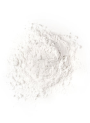
Vitamin C (L-ascorbic acid) (Ultra-Fine)
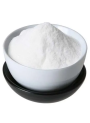
Vitamin C (L-ascorbic acid) (Fine)