Effect of Water Phase Ingredients on Cream Texture
Question
I am formulating a cream using Butter Cream Maker and Cetearyl Alcohol as the primary emulsifiers and thickeners, aiming to avoid using additional Emulsion Stabilizers.
My oil phase formulation is:
- Butter Cream Maker: 3%
- Cetearyl Alcohol: 4%
- shea butter: 10%
- Vit E: 1%
The mixing method involves heating the oil phase together until dissolved at 80°C, and mixing water with water-soluble ingredients at 80°C (except heat-sensitive ingredients added later at 40-50°C).
I have found that the following water phase ingredients cause the product texture to become liquid:
- Soy Extract 5%
- 1,2-Hexanediol 3%
- Natto Gum 5%
Could you please review the following list of water phase ingredients and advise which ones might also cause the cream texture to become liquid, either individually or when used together in combination?
- Repair Activator 15%
- Fucus Film 5%
- Live Yeast Cell 3%
- Glyceryl glucoside 2%
- Alaria Esculenta
- Glycosaminoglycan 3%
- Snow Algae 3%
- Isopentyldiol 5%
- Horse Placenta 3-5%
- Plankton 2-5%
- Apple Stem Cell Extract 3%
- Rosa Hybrid Cell Extract 2%
- Japanese Cedar 1%
Thank you.
Answer
Water Phase Ingredients and Cream Texture
Based on your formula using Butter Cream Maker and Cetearyl Alcohol as the primary emulsifiers and thickeners, and your goal to avoid additional emulsion stabilizers, here is an analysis of the water phase ingredients you listed and their potential impact on cream texture:
Ingredients Known to Cause Thinning
You have correctly identified the following ingredients as potentially causing your cream to become liquid:
- Soy Extract
- 1,2-Hexanediol
- Natto Gum
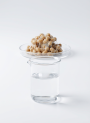
These ingredients, particularly solvents like 1,2-Hexanediol and potentially certain extracts or gums depending on their specific properties and concentration, can interfere with the emulsion structure built by Butter Cream Maker and Cetearyl Alcohol, leading to reduced viscosity.
Potential Thinning Agents from Your List
Reviewing the ingredients you are considering for the water phase:
- Alaria Esculenta Extract: The product description indicates this ingredient is oil-soluble, not water-soluble. Adding it to the water phase will not dissolve properly and can disrupt the emulsion, potentially leading to instability and thinning or separation. This ingredient should be added to the oil phase if used in this formula.
- Isopentyldiol: Similar to 1,2-Hexanediol, Isopentyldiol is a solvent and humectant. At a concentration of 5%, it has the potential to reduce the viscosity of the water phase and the overall cream, especially in a system without strong polymeric stabilizers.
- High Total Concentration of Water-Soluble Actives: While individual water-soluble extracts like Repair Activator, Fucus Film, Live Yeast Cell, Glyceryl Glucoside, Glycosaminoglycan, Snow Algae, Horse Placenta, Marine Plankton, Apple Stem Cell Extract, Rosa Hybrid Cell Extract, and Japanese Cedar may not inherently cause thinning at typical usage rates, incorporating many of them at relatively high percentages (as indicated in your list) can collectively reduce the viscosity of the water phase. This can put stress on the emulsifier system (Butter Cream Maker and Cetearyl Alcohol), which might not be sufficient on its own to maintain a thick texture under a high load of water-soluble components without additional stabilizers.
Ingredients Less Likely to Cause Thinning (Individually)
Based on the product descriptions and general knowledge, the following water-soluble ingredients from your list are less likely to cause significant thinning on their own at typical usage rates, but their combined effect at high total concentration should still be considered:
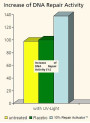
- Repair Activator (Bifida Ferment Lysate)
- Fucus Film (Fucus Vesiculosus Extract)
- Live Yeast Cell Derivative (Saccharomyces Lysate Extract)
- Glyceryl Glucoside (especially the low-sticky grade)
- Glycosaminoglycan
- Snow Algae
- Horse Placenta
- Marine Plankton (Lifting, Tightening)
- Apple Stem Cell Extract
- Rosa Hybrid Cell Extract
- Japanese Cedar (Cryptomeria Japonica Bud Extract)
Recommendations
To maintain your desired cream texture without using additional emulsion stabilizers, consider the following:
- Move Alaria Esculenta Extract to the Oil Phase: Since it is oil-soluble, it must be incorporated into the oil phase during heating.
- Evaluate Isopentyldiol Concentration: Test the formula with Isopentyldiol at a lower concentration or consider if it is essential for the formulation's goals. Its solvent properties are a likely contributor to thinning.
- Manage Total Water-Soluble Load: If you wish to include many water-soluble actives, you may need to reduce the concentration of some to prevent the water phase from becoming too fluid. Alternatively, you might need to slightly increase the concentration of Butter Cream Maker and/or Cetearyl Alcohol, or reconsider the use of a mild co-stabilizer if thinning persists.
- Test Combinations: The interaction between multiple ingredients can be complex. Always test combinations of your chosen water phase ingredients in a small batch to observe the effect on the final cream viscosity before scaling up.
By carefully selecting and managing the concentration of your water phase ingredients, particularly solvents and ensuring proper phase incorporation for oil-soluble components, you can improve the stability and texture of your cream formulation.
Related Products Mentioned

Natto Gum Extract
Cetearyl Alcohol (50/50, e.q. Lanette O)
Butter Cream Maker™
Rosa Hybrid Cell Extract (HybridCell™)
Snow Algae
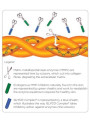
Glycosaminoglycans Complex

Marine Plankton (Lifting, Tightening)
Isopentyldiol
Horse Placenta

Alaria Esculenta Extract

Fucus Film™ (fucus vesiculosus extract)

Live Yeast Cell Derivative (LYCD)