Effectiveness and Formulation Challenges of Ceramide Complex with Cholesterol
Question
I regularly use Ceramide Complex as an ingredient.
However, the website information recommends using Cholesterol together with Ceramide for the best results.
I would like to ask:
- How much better does Ceramide work when combined with Cholesterol? Can you estimate this as a percentage?
- I am concerned that mixing at high temperatures will degrade the quality of many other ingredients to some extent. I fear the benefits might not outweigh the drawbacks.
Answer
Understanding Ceramide Complex and Cholesterol in Formulations
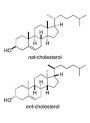
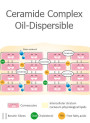
You are currently using Ceramide Complex, which is a great ingredient for restoring the skin's barrier. The recommendation to use it with Cholesterol is based on the fact that Ceramides and Cholesterol are key components of the skin's natural lipid barrier. Using them together helps to more effectively replenish and repair this barrier.
Cholesterol helps to complete the function of Ceramide Complex and stabilize the lipid structure in the skin barrier. Formulations designed for intensive skin barrier repair often use a combination of Ceramides, Cholesterol, and Fatty Acids, sometimes in specific ratios like 2:4:2 (Ceramides:Cholesterol:Fatty Acids), which has been shown to be effective in recovering dry, dehydrated skin.
Regarding your question about the percentage improvement: While the combination of Ceramide Complex and Cholesterol is known to be more effective than using Ceramide Complex alone for skin barrier repair, there isn't a single, universally applicable percentage figure for how much better Ceramide works when combined with Cholesterol. The degree of improvement can vary significantly depending on the specific formulation, the concentrations of each ingredient used, and the individual's skin condition and response.
Your concern about the high heat required for Cholesterol is valid. Cholesterol has a very high melting point (around 150°C) and needs to be heated significantly in the oil phase to dissolve properly before being incorporated into the rest of the formulation. This high temperature does pose a risk to other heat-sensitive ingredients in your formula. It is crucial to follow the recommended mixing instructions carefully, which typically involve dissolving Cholesterol in a heat-resistant oil at high temperature first, and then combining this phase with other ingredients at appropriate temperatures, often requiring the water phase to be heated to 70-80°C or higher before combining. You should assess the heat stability of all other ingredients in your formulation when using Cholesterol.
Related Products Mentioned