Emulsifier and Preservative Advice for Aftershave Splash and Water Sprays
Question
I am developing a few grooming products and have some questions about formulation:
- Pre-shave oil: This is purely oil. For a 1oz size, assuming it will be used up quickly, is it okay not to add a preservative?
- Aftershave splash: I'm using Witch Hazel 80% and Jojoba Oil 20%. Jojoba Oil feels a bit too viscous, so I might reduce the amount. Is there an Emulsifier that can make the texture lighter, similar to Hada Labo lotion?
- (Rose, Aloe Vera, Cucumber) water with Witch Hazel (Spray bottle): The ingredients are DI Water + an extract (like Rose Extract) + essential oil. Since it contains a lot of water, I definitely need a preservative. Do I also need an Emulsifier to combine Rose Water, Witch Hazel, and essential oil?
Answer
Advice on Emulsifiers and Preservatives for Aftershave Splash and Water Sprays
Hello! It's great you're working on several grooming products. Let's address your questions about emulsifiers and preservatives for your aftershave splash and water-based spray, keeping your goal of natural ingredients in mind.
Emulsifier for Aftershave Splash and Water Sprays
You're right that oil and water won't mix on their own. To combine your Jojoba Oil and essential oils with Witch Hazel and other water-based ingredients like Rose Water and Cucumber Extract into a clear or lightly dispersed liquid, you need an emulsifier.
Based on your goal for a light, sprayable texture, Light Lotion Maker is an excellent choice. It's an ECOCERT-certified emulsifier designed for light formulas and can be used in a cold process, which is convenient for home formulation.
- How to use: Mix Light Lotion Maker with your oils (Jojoba Oil, essential oils). In a separate container, have your water-based ingredients (Witch Hazel, Rose Water, DI Water, extracts). Slowly add the oil mixture to the water phase while blending continuously until fully combined and clear/dispersed.
- Usage Rate: Light Lotion Maker is typically used at 2-4% depending on the oil content (up to 40% oil). For sprayable formulas, the description suggests 3-4% Light Lotion Maker, potentially combined with a small amount of a co-emulsifier like Polysorbate 80 (1%) or a thickener like Xanthan Gum (around 0.2%) to improve stability and prevent separation over time.
Preservatives
- Oil-Only Products (Pre-shave oil, Solid cologne): For products that are purely oil-based, preservatives are generally not necessary for personal use, especially if you plan to use them up quickly. However, if you intend to sell these products, adding a preservative is highly recommended to protect against potential microbial contamination that could occur during customer use (e.g., if water accidentally gets into the product).
- Water-Based Products (Aftershave splash, Water-based spray): Any product containing water must include a broad-spectrum preservative system. Water is a breeding ground for bacteria, mold, and fungi, which can spoil the product and be harmful to the skin.
Natural or Near-Natural Preservative Options
You mentioned interest in 1,3-Propanediol, Mild Preserved Eco, and Thyme Kill™.
- 1,3-Propanediol: This is a natural ingredient derived from glucose fermentation. It's a great humectant (helps retain moisture) and solvent, and it can act as a preservative booster, meaning it can enhance the effectiveness of other preservatives. However, it is not a standalone broad-spectrum preservative and should not be used alone to preserve a water-based product.
- Mild Preserved Eco: This is a popular choice for formulations aiming for a "preservative-free" claim because it is not classified as a preservative by the FDA. It is a blend of Ethylhexylglycerin and 1,3-Propanediol and provides effective broad-spectrum preservation for cosmetic formulas. It is gentle and odorless.
- Usage Rate: Typically used at 1.0-1.5% for general preservation, up to 2.0% for formulas with high natural content or risk of contamination.
- How to use: It can be added in the final cooling phase (below 80°C) and needs to be blended well to dissolve clearly in water-based formulas.
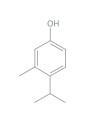
- Thyme Kill™: This ingredient (o-Cymen-5-ol) is effective at very low concentrations (0.05-0.1%) and acts as a preservative booster. It is not a standalone preservative and should be used in combination with other preservatives for adequate protection. It has a very light scent that won't affect your product's fragrance.
- How to use: Thyme Kill™ is a powder and needs to be pre-dissolved in a solvent like Propylene Glycol (1g Thyme Kill™ per 10g Propylene Glycol) before adding it to your formula.
Recommended Preservation System:
For effective preservation in your water-based products while leaning towards natural options, a combination of Mild Preserved Eco (1.0-1.5%) and Thyme Kill™ (0.05-0.1%) is a good approach. Mild Preserved Eco provides broad-spectrum coverage, and Thyme Kill™ boosts its effectiveness, especially against bacteria.
Mixing Preservatives:
Add the pre-dissolved Thyme Kill™ and Mild Preserved Eco to your formula during the cooling phase, after the emulsion has formed (if using Light Lotion Maker). Ensure thorough mixing to distribute the preservatives evenly throughout the product.
"All Natural, Preservative Free, Homebrew" Claims:
- Homebrew: This is certainly achievable for personal use.
- Preservative Free: While Mild Preserved Eco allows for a "preservative-free" claim according to FDA classification, it still performs the function of preventing microbial growth, which is essential for safety in water-based products. True "preservative-free" water-based products are extremely difficult to formulate safely for typical storage and use conditions.
- All Natural: Achieving a truly "all natural" formula with effective, broad-spectrum preservation is challenging. Ingredients like Light Lotion Maker are ECOCERT-certified (natural origin), 1,3-Propanediol is natural, and Mild Preserved Eco contains natural-derived components, but Thyme Kill™ is synthetic. You can aim for formulas with a high percentage of natural ingredients, but claiming "all natural" might be difficult while ensuring microbial safety.
For home use, you have more flexibility, but for any product you might share or sell, robust preservation is crucial for safety and stability.
Let me know if you have more questions!
Updated Review: May 2026
This section was added after reviewing the original answer against current product availability and formulation knowledge at the stated point in time.
Update as of 2026-05-24
The original guidance is still directionally correct: an oil-only pre-shave oil for personal use usually does not need a conventional water-phase preservative, but it should be made, filled, and used dry/cleanly to avoid water contamination and rancidity. If selling the product, packaging and preservation/stability should be assessed more conservatively.
For Witch Hazel + Jojoba Oil or essential-oil sprays, please note that the oils do not truly dissolve in water or Witch Hazel. They must be emulsified/solubilized/dispersed, and the finished product must be checked for separation, surface oiling, and spray-nozzle performance. Reducing Jojoba Oil below 20% will usually make the aftershave feel lighter, but the emulsifier level should be adjusted to the final oil load.
Light Lotion Maker remains a valid cold-process option for a light oil-in-water emulsion. However, if the main target is a very fluid sprayable emulsion, Spray Maker™ is now the more directly positioned catalog option; it is a heat-process system and should be processed according to its method.
All water-rich formulas, including rose/aloe/cucumber water + Witch Hazel + essential oil sprays, still need a suitable broad-spectrum preservation strategy. 1,3-Propanediol is best viewed as a humectant/solvent/booster, and Ethylhexylglycerin or Thyme Kill™ should not be treated as universal standalone broad-spectrum preservatives. Mild Preserved Eco™ with Thyme Kill™ can be trialed as a near-natural-style preservation approach only when the formula pH is compatible, and the finished formula should pass microbial challenge testing before commercial sale. Also, even if Witch Hazel is supplied already preserved, that does not automatically preserve the complete finished formula after adding other ingredients.
Related Products Mentioned
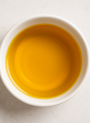
Jojoba Oil (Golden - Deodorized)

Cucumber Extract (France)
Mild Preserved Eco™ (Preservative-Free)
Rose Water (Rosa Damascena)
Light Lotion Maker
Ethylhexylglycerin