Encapsulation of Sensitive Ingredients with Lecithin/Phosphatidylcholine
Question
I would like to know if Soy Lecithin from MySkinRecipes can be used to encapsulate a natural ingredient that darkens upon exposure to air and light into liposomes to maintain color stability.
If so, what percentage should be used?
Answer
Encapsulating Sensitive Ingredients with Lecithin
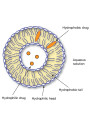
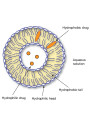
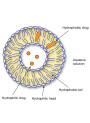
To encapsulate natural ingredients sensitive to air and light using products from MySkinRecipes, you would typically use Phosphatidylcholine products, which are derived from Soy Lecithin and specifically designed for encapsulation (Phospholipid Encapsulation). These can be used to form liposomes to help protect sensitive substances, potentially improving their stability and preventing issues like darkening.
While the basic Soy Lecithin (Soy Bean Oil, Liquid Lecithin) is available and functions as a water-in-oil emulsifier, it is not the product intended for forming liposomes for encapsulation purposes. For encapsulation, you should consider the Phosphatidylcholine products with higher purity.
Examples of suitable products for encapsulation include:
- Phosphatidylcholine 50% (Soy Lecithin, Dark Yellow)
- Phosphatidylcholine 80% (from Soy Lecithin, Dark Yellow)
- Phosphatidylcholine 90% (from Soy Lecithin, Light Yellow)
- Hydrogenated Lecithin (50% Phosphatidylcholine)
- Hydrogenated Lecithin (70% Phosphatidylcholine)
- Hydrogenated Lecithin (95% Phosphatidylcholine)
Regarding the percentage to use and the process for encapsulation (forming liposomes), please note that creating liposomes requires specific techniques such as sonication, solvent evaporation, or extrusion. The appropriate percentage of Phosphatidylcholine and the specific method will depend on the properties of the ingredient being encapsulated and the desired characteristics of the liposomes. MySkinRecipes provides the raw materials but does not offer technical advice on the specific encapsulation techniques, testing methods, dimensioning, or calculating entrapment efficiency. The user would need to have knowledge of these processes.
Using Phosphatidylcholine to encapsulate your light and air-sensitive natural ingredient can potentially help maintain its color stability by providing a protective barrier.