Enhancing Hada Labo Style Lotion for Hydration and Homemade Sunscreen Texture Issues
Question
I am making a Hada Labo style lotion and a homemade sunscreen for the first time and have some questions about formulation and ingredients.
For the Hada Labo Style Lotion:
I want to add the following ingredients to enhance hydration:
- Sea Kelp Bioferment
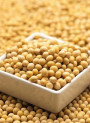
- Soy Extract (Isoflavones 40%)
- Glycerin (Vegetable)
- Propylene Glycol
My questions are:
- Sea Kelp Bioferment is listed as effective for moisturizing at 5-100%. How much should I actually add, or is there no limit? Is it suitable for very sensitive skin, and could it cause flaking if used as a daytime moisturizer?
- Soy Extract (Isoflavones 40%) at 3-5% is said to require the cosmetic temperature to be below 30°C. Does this mean I can just mix it in at normal room temperature? Is there a chance of irritation or allergic reaction?
- Glycerin (Vegetable) helps make the product soft and pleasant. Can I add it as much as I want to achieve a very slippery feel?
- Propylene Glycol at 1-20% is described as retaining moisture and reducing water loss. Is its primary function skin-feel rather than actual benefit?
Overall, will adding these ingredients effectively increase hydration? Are they compatible with the base formula? Which ones are necessary or recommended?
Also, please clarify:
- How should I calculate the percentages? Is 10% of ingredient X in 100ml water equivalent to 10ml of X in 100ml water?
- What is the correct mixing order for these ingredients, assuming no heat is needed?
- Can the finished product be stored in a clear plastic bottle, or must it be opaque?
- Between Glycerin and Propylene Glycol, which one should I use more of? Do both have the potential to cause irritation?
For the Homemade Sunscreen:
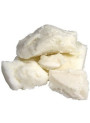
I tried making a sunscreen with shea butter, coconut oil, and zinc oxide. The instructions said to melt all ingredients and then whip with a cake mixer to get a whipped cream-like texture, but it didn't whip up.
My questions are:
- What type of coconut oil should I use? There are types that solidify in cold air and types that don't. I used the type that doesn't solidify, and it didn't whip. Would using the type that solidifies help?
- If using that type of coconut oil doesn't work, are there other ingredients I could add to achieve a dense mousse-like texture?
Thank you for your help!
Answer
Enhancing Your Hada Labo Style Lotion and Homemade Sunscreen
Hello! It's great that you're experimenting with making your own cosmetics. Let's break down your questions about enhancing your Hada Labo style lotion and the issues you faced with the homemade sunscreen.
Enhancing Your Hada Labo Style Lotion
You want to add Sea Kelp Bioferment, Soy Extract, Glycerin, and Propylene Glycol to boost hydration. These are generally good choices for adding moisture and other benefits to a water-based formula like the Hada Labo style lotion.
- Sea Kelp Extract: This extract is known for moisturizing and nourishing the skin, and can help strengthen sensitive skin. While it offers hydration, it also provides nutrients and antioxidants. You can add it at a rate of 1-10%, with 1-3% being a common recommendation for skin care. Using higher amounts might give a slight marine scent.
- Soy Extract (Isoflavones): The water-soluble form of Soy Isoflavones can offer anti-aging, skin brightening, moisturizing (by enhancing skin barrier), and anti-inflammatory benefits. It can be easily mixed into the water phase at room temperature. The recommended usage rate is 0.1-1.0%. As with any ingredient, individual skin sensitivity can occur.
- Glycerin: This is a classic humectant, meaning it draws moisture into the skin. It also helps make the product feel smoother and more pleasant. You can use it from 1% up to high concentrations, but typically 1-10% is sufficient in a lotion. Yes, adding more can increase the slippery feel, but too much can become sticky.
- Propylene Glycol: Like Glycerin, Propylene Glycol is a humectant that helps retain moisture and improves the texture and stability of the formula. It is water-soluble and can be added at 1-20%. It generally mixes easily.
These ingredients are compatible with your base formula and will indeed help enhance hydration and provide additional skin benefits.
Adjusting Hyaluronic Acid Percentage
The original formula uses 1% total Hyaluronic Acid (0.5% Standard + 0.5% Nano). Based on typical recommendations, a total Hyaluronic Acid concentration of 0.05-0.1% is suitable for normal/dehydrated skin, 0.1-0.3% for dry skin, and 0.3-0.5% for very dry skin. Using 1% can sometimes feel sticky or heavy. Since you are adding other humectants, you could consider reducing the total Hyaluronic Acid concentration to somewhere in the 0.1-0.5% range depending on how hydrating and viscous you want the final product to be, while keeping the ratio of Standard to Nano molecules (e.g., 50:50) to get benefits from both sizes.
Percentage Calculation
In cosmetic formulation, percentages are typically calculated by weight (w/w), not volume (w/v). So, if you have a 100g total formula, adding an ingredient at 10% means adding 10g of that ingredient and adjusting the other ingredients to make the total 100g. For water-based formulas, 100ml of water is approximately 100g, so your initial water amount (99ml) is close to 99g. You would calculate the weight of each ingredient based on the total desired weight of your final product (e.g., 100g) and then measure them by weight.
Mixing Order and Temperature
For your lotion, you generally won't need high heat. Hyaluronic Acid powders need to be dissolved in cold water, which can take time and requires good mixing (shaking or blending) and often refrigeration to fully hydrate without clumps. Once the Hyaluronic Acid is dissolved, you can add the other water-soluble ingredients like Sea Kelp Extract, Soy Extract, Glycerin, and Propylene Glycol at room temperature. Add your preservative last according to its instructions. So, the order would generally be: Dissolve Hyaluronic Acid in water -> Add other water-soluble ingredients -> Add preservative.
Packaging
It is best to store cosmetic products in opaque or at least translucent bottles rather than clear ones. This helps protect the ingredients from light degradation, which can reduce their effectiveness over time.
Glycerin vs. Propylene Glycol and Irritation
Both Glycerin and Propylene Glycol are effective humectants and help improve the texture of the product. Neither is inherently more irritating than the other at typical cosmetic usage rates (1-10% for Glycerin, 1-20% for Propylene Glycol). Both are widely used and considered safe. Any potential irritation is usually due to individual skin sensitivity, which can happen with almost any ingredient. Glycerin is often perceived as slightly more natural.
Homemade Sunscreen
Regarding your homemade sunscreen with shea butter, coconut oil, and zinc oxide, it's common for simple formulas like this not to whip up into a stable mousse or whipped cream texture. Whipping requires specific ingredients (like certain emulsifiers or waxes) that can trap and stabilize air within the mixture, often combined with controlled cooling and mixing.
- Coconut Oil Type: You are correct that standard virgin or unrefined coconut oil solidifies at cooler temperatures (below about 25°C), while fractionated coconut oil remains liquid. Using the solidifying type will make your final product firmer when cool, but it won't magically make it whip into a mousse with just shea butter and zinc oxide. The liquid type (fractionated) will result in a softer, more liquid consistency, which is likely why it didn't whip.
- Achieving Mousse Texture: To get a stable mousse-like texture, you would typically need to create an emulsion (mixing oil and water phases with an emulsifier) and/or use specific texturizers or waxes designed to create that kind of airy, stable structure when whipped and cooled.
- Important Caution: Homemade sunscreens using just oils, butters, and zinc oxide are very difficult to formulate correctly to ensure even dispersion of the zinc oxide particles. Uneven dispersion means you won't get consistent UV protection, and the actual SPF/PA level will be unreliable and likely much lower than intended. For effective sun protection, it's highly recommended to use commercially formulated sunscreen products where the dispersion and SPF/PA have been tested and verified.
Making your own cosmetics is a fun and educational process! Keep experimenting and learning.
Related Products Mentioned

Sea Kelp Extract
Shea Butter (Refined , Deodorised)
Propylene Glycol (USP)
Glycerin (USP/Food Grade)
Fractionated Coconut Oil
Shea Butter (Ultra Soft)
Zinc Oxide 200nm EasyDisperse™