Essence Formulation Review: Ingredient Compatibility and pH Stability
Question
Feasibility review of an essence formulation with multiple active ingredients, focusing on ingredient compatibility and pH stability.
Answer
Regarding your proposed essence formulation, it contains a high concentration of various active ingredients, which is quite complex for an essence (น้ำตบ).
Here's a review of the ingredients and their proposed percentages:
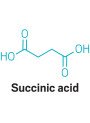
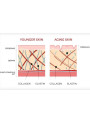
- Most ingredients are used within their recommended usage rates based on the product descriptions: Prebio-care (3%), Pure-Succinic™ (2%), Rice Vitamin (2%), French Pine Bark Extract (1%), Rosa Hybrid Cell Extract (2%), Hydrolyzed Elastin (2%), White Caviar Extract (3%), Plankton Artemia Extract (2%), Wakame Extract (2%), Pitera (20%), Repair Activator™ Liquid (10%), Lemon Peel Bioferment (2%), Yeast Resurface (3%), Natural Moisturizing Amino Acids (4%), Pep®-Coll (3%), Pal-GHK, Pal-GQPR (eq. Matrixyl 3000) (3%), Adenosine Liposome (3%), Wrinkle-Fill™ (2%), Safe-B3™ (4%), Vitamin E Water-Soluble (1%), and Ectoine (2%).
- The concentration of Nano Gold (5%) is higher than the recommended usage rate of 1-3% (recommended 2%). Using a higher percentage might not increase efficacy and could potentially affect the formulation.
- The Mild Preserved Eco™ is used at 1%, which is within the recommended range of 0.5-2.0%. However, the note about calculating it based on ingredients excluding Pitera is unconventional; it's typically calculated as a percentage of the total formula.
A significant consideration for this formula is the pH compatibility of the ingredients. Wrinkle-Fill™ (Acetyl-Tyrosine) is quite acidic (pH 2-3 at 2.5% concentration), while many other active ingredients in your formula require a higher pH range (typically between 4-7) for optimal stability and efficacy. Mixing ingredients with such different preferred pH ranges can lead to:
- Reduced effectiveness of some active ingredients.
- Instability of the formulation (e.g., precipitation, separation).
- Potential for skin irritation, especially with a low pH product applied to the skin.
Therefore, it is crucial to carefully check and adjust the final pH of your formulation to a range that is compatible with all ingredients, or at least minimizes negative interactions, and is suitable for skin application (ideally pH 4.5-5.5). This might be challenging with the current combination.
Given the complexity and high active ingredient load, thorough stability testing (including pH monitoring over time), efficacy testing, and irritation testing are highly recommended before finalizing this formulation.
Related Products Mentioned
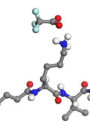
Pep®-Coll (Palmitoyl tripeptide-5)
Pal-GHK, Pal-GQPR (eq Matrixyl 3000)
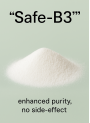
Safe-B3™ (Vitamin B3, Niacinamide)
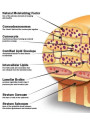

Lemon Peel Bioferment (Lemon Skin™)
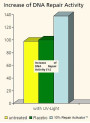

Rice Vitamin (Inositol, Vitamin B8)
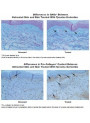
Wrinkle-Fill™ (Acetyl-Tyrosine)

Mild Preserved Eco™ (Preservative-Free)

Yeast Resurface

Wakame Extract (Brown Sea Weed)

Rosa Hybrid Cell Extract (HybridCell™)
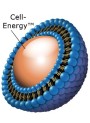
Adenosine Liposome

Plankton Artemia Extract
Ectoine (Ectoin, from Bio-fermentation)
Prebio-care (Skin Prebiotic)


White Caviar Extract
Hydrolyzed Elastin (From Fish)