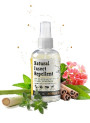
Euca-Kill Spray Formulation Issues and Alternatives
Question
I am trying to create an insect repellent spray using Euca-Kill and have two proposed formulas. I want to understand why these formulas are not suitable for spraying as a fine mist.
My first proposed formula is:
- Euca-Kill 15-25% (Solubility: Glycol, Alcohol, any oil)
- Butylene Glycol 20% (Usage: 1-20%, max 50%; Appearance: clear liquid like oil; Solubility: water)
- Water (remaining)
- Mild Preserved Eco 1% (Solubility: Propylene Glycol, Butylene Glycol, Ethoxydiglycol, Alcohol; Insoluble in water)
The staff mentioned that Butylene Glycol's weight makes it difficult to spray.
My second proposed formula is:
- Flora Solve™ Clear (Usage: 2-5 parts Flora Solve™ Clear : 1 part fragrance)
- Euca-Kill 15-25%
- Water
I understand that Flora Solve™ Clear needs to be used at 15-25% for this concentration of Euca-Kill. Is the reason this formula cannot be sprayed because Flora Solve™ Clear needs to be used at such a high percentage, exceeding the standard usage?
Answer
Euca-Kill Spray Formulation
You are looking to create an insect repellent spray using Euca-Kill and have proposed two formulas. You are concerned about the stability and suitability for commercial sale, particularly regarding sprayability.
Analysis of Your Proposed Formulas
Formula 1 (Euca-Kill, Butylene Glycol, Water, Mild Preserved Eco):
- The ingredients in this formula can likely be mixed together based on their solubility properties (Euca-Kill in Glycol/Alcohol/oil, Butylene Glycol in water, Mild Preserved Eco in Glycols/Alcohol/oil and dispersible in water).
- However, as the staff pointed out, the primary issue with this formula for a spray application is the inclusion of Butylene Glycol at a significant concentration (20%). Butylene Glycol has a relatively high viscosity, which makes the final mixture too heavy to be effectively atomized and sprayed as a fine mist through a standard spray head. It would likely come out as a stream or large droplets, making it unsuitable for a spray product.
Formula 2 (Flora Solve™ Clear, Euca-Kill, Water):
- This formula uses Flora Solve™ Clear to help solubilize Euca-Kill in water. While Flora Solve™ Clear is designed to solubilize oils and fragrances in water, the concentration of Euca-Kill (15-25%) is quite high.
- To solubilize Euca-Kill at this concentration, you would need a substantial amount of Flora Solve™ Clear (typically 2-5 parts Flora Solve™ Clear per 1 part oil/fragrance). Using Flora Solve™ Clear at such a high ratio to solubilize a large percentage of Euca-Kill results in a mixture that is too viscous.
- As confirmed by the staff, this high viscosity prevents the mixture from spraying properly, similar to the issue with Butylene Glycol in the first formula.
Recommendation for a Spray Formulation
The staff's recommendation is accurate: for a spray formulation that atomizes into a fine mist, using Ethyl Alcohol as the primary solvent is generally the most effective approach. Ethyl Alcohol is much lighter and more volatile than glycols or high concentrations of solubilizers like Flora Solve™ Clear, allowing the mixture to pass through a spray nozzle easily.
Euca-Kill is soluble in Alcohol, making it a suitable base. While an alcohol-based spray might feel drying on the skin for some, it is the standard method for achieving a fine spray mist for this type of product.
In summary, while your proposed ingredient combinations might mix, they are not ideal for a spray due to viscosity issues. An Ethyl Alcohol-based formula is recommended for achieving a proper spray application.
Related Products Mentioned
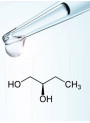
Butylene Glycol
Mild Preserved Eco™ (Preservative-Free)