Evaluation of Sunscreen Formulas and Mixing Inquiry
Question
I have two sunscreen formulas and would like to know if they can be mixed or if any adjustments are needed. Please review the formulas below:
Formula 1:
- Titanium Dioxide 15nm Liquid (Gloss) 15%
- Zinc Oxide 35nm Liquid 20%
- PMMA Booster (SPF/Color Booster) 5%
- Polyethylene Wax (Soft) 2%
- Polyhydroxystearic acid 5%
- Dimethicone (Very Light/5, Low Odor) 15%
- Magnesium Sulfate (Anhydrous) 2%
- Mild Preserved Eco™ (Preservative-Free) 1%
- น้ำกลั่น (Distilled Water) 35%
- Total: 100%
Formula 2:
- OMC 10%
- Zinc Oxide 200nm EasyDisperse™ 8%
- DHHB 5%
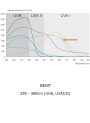
- BEMT 2%
- Bisoctrizole 5%
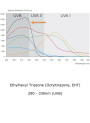
- Ethylhexyl Triazone 1.5%
- LipidSoft™ Dry II 15%
- PMMA 5%
- Polyethylene Wax 2%
- PEG-30 Dipolyhydroxystearate 3%
- Magnesium Sulfate 2%
- Mild Preserved Eco™ 1%
- Ethyl Ferulate 0.5%
- น้ำกลั่น (Distilled Water) 48%
- Total: 108%
Can these two formulas be mixed, or what adjustments are needed?
Answer
Evaluation of Sunscreen Formulas
Thank you for providing your sunscreen formulas for review. Here is an evaluation of each formula:
Formula 1
This formula appears to be a physical sunscreen formulation, primarily using Titanium Dioxide and Zinc Oxide as UV filters. The ingredients and their percentages sum up to 100%, which is correct.
- Type: Physical Sunscreen (likely Water-in-Oil emulsion)
- Key Ingredients: Titanium Dioxide, Zinc Oxide, Polyhydroxystearic acid (dispersant), Dimethicone, Magnesium Sulfate (stabilizer), Polyethylene Wax, PMMA Booster, Mild Preserved Eco (preservative), Water.
- Feasibility: The formula seems plausible as a starting point for a physical sunscreen. The combination of physical filters, a dispersant (Polyhydroxystearic acid), silicones, and stabilizers suggests a functional formulation base.
Formula 2
This formula is a mixed physical and chemical sunscreen formulation, using a combination of organic UV filters (OMC, DHHB, BEMT, Bisoctrizole, Ethylhexyl Triazone) and Zinc Oxide.
- Type: Mixed Physical/Chemical Sunscreen (likely Water-in-Oil emulsion)
- Key Ingredients: OMC, Zinc Oxide, DHHB, BEMT, Bisoctrizole, Ethylhexyl Triazone (UV filters), LipidSoft Dry II (emollient/solvent), PMMA, Polyethylene Wax, PEG-30 Dipolyhydroxystearate (emulsifier), Magnesium Sulfate (stabilizer), Mild Preserved Eco (preservative), Ethyl Ferulate (antioxidant), Water.
- Feasibility: The list of ingredients and their roles is consistent with a mixed sunscreen formulation. However, I noticed that the percentages listed sum up to 108% (10+8+5+2+5+1.5+15+5+2+3+2+1+0.5+48 = 108). There might be a typo in the water percentage (48%). If the water percentage were 38%, the total would be 100%. Assuming the percentages are adjusted to sum to 100%, this formula also seems plausible as a starting point. The combination of multiple UV filters aims for broad-spectrum protection.
General Considerations
Both formulas appear to be designed as Water-in-Oil (W/O) emulsions, which are common for sunscreens due to their potential for water resistance and stable dispersion of UV filters.
- Formulation Expertise: Formulating stable and effective sunscreens requires expertise. These formulas are starting points.
- Stability Testing: It is crucial to perform stability testing (e.g., heat/cold cycles, centrifuge) on the final product to ensure the emulsion remains stable over time.
- SPF/PA Testing: The listed percentages of UV filters are indicative, but the actual SPF (Sun Protection Factor) and PA (Protection Factor of UVA) can only be determined through in-vivo or in-vitro testing according to relevant standards. Adjustments to filter percentages or formulation might be needed to achieve a specific target SPF/PA.
- Texture and Feel: The texture, feel, and white cast (especially for physical filters) will depend on the specific grades of ingredients used and the manufacturing process. Adjustments might be needed to optimize these properties.
- Mixing Formulas: It is generally not recommended to mix two different finished cosmetic formulas, as this can lead to instability and unpredictable results. If you intend to create a new formula combining elements from both, it requires careful re-formulation and testing.
In summary, both formulas seem like reasonable starting points for sunscreen development, provided the percentage sum issue in Formula 2 is a typo and corrected. However, successful production requires careful formulation, processing, and rigorous testing.
Related Products Mentioned
Dimethicone (Medium/350, Low-Odor)
Zinc Oxide 200nm EasyDisperse™
Titanium Dioxide 15nm Liquid (Gloss)
Zinc Oxide 35nm Liquid
Mild Preserved Eco™ (Preservative-Free)

Polyhydroxystearic acid (High Viscosity)