Eye Irritation from Homemade Face Cream and Serum
Question
Hello team,
I purchased raw materials to make my own cosmetic products. However, after using them, I feel pain in both eye sockets, but there is no rash or allergic reaction. I'm not sure if I used too many ingredients.
My skin condition is dry and lacks moisture, with no acne. The goal for the formulas is to increase moisture and reduce freckles. My age is 37.
Here are the formulas I created:
Formula 1: Face Cream
- น้ำกลั่น (Distilled Water): Remaining part
- EDTA: 0.2%
- Pro Polymer: 0.5%
- Satin Cream Maker: 1.5%
- MSH White: 5%
- Repair Activator: 10%
- White Cumin 2X: 2.5 %
- Moist 72: 5 %
- Pep-Coll: 3%
- water lock: 2%
- สารกันเสีย SA (Preservative SA): 1 %
Formula 2: Face Cream
- น้ำกลั่น (Distilled Water): Remaining part
- EDTA: 0.2%
- Allontion (Anti-irritant): 0.5% of water amount
- Safe-B3: 1.8%
- ClucoBriht: 4%
- Rice Vitamin: 2%
- Calendula: 2%
- Paeonia Preserve: 1 %
- Pro Polymer: 0.8%
- Satin Cream Maker: 1.5%
- Moist 72: 3%
- Jojoba Oil: 1% (Used to dissolve ingredient #2)
- DMAE: 1 %
- Protein B5: 1%
Formula 3: Serum
- น้ำกลั่น (Distilled Water): Remaining part
- ETDA: 0.2%
- Allontion (Anti-irritant): 0.5%
- water lock: 2%
- White Cumin 2X: 3%
- Pep -coll: 2.5 %
- MSH White Absorb: 4%
- Moist 72: 3%
- Satin Cream Maker: 1.5%
- Paeonia Preserve: 1%
All three formulas caused pain in my eye sockets after use, but no rash occurred. Please advise on how to adjust the formulas. Which ingredients should be added or removed?
Answer
Addressing Eye Irritation from Homemade Formulas
It's concerning that you are experiencing eye irritation after using your homemade facial cream and serum formulas, even without visible rash. The skin around the eyes is very delicate and sensitive, and some ingredients or their concentrations might be too strong for this area.
Based on the ingredients you provided, here are some potential reasons for the eye irritation and suggestions for adjusting your formulas:
Potential Irritants and Considerations:
- MSH White (Undecylenoyl phenylalanine): This ingredient needs to be properly dissolved in the oil phase with heat (around 80°C). If it wasn't fully dissolved or properly incorporated, undissolved particles could cause irritation. Also, the concentration used (5% in Formula 1, 4% in Formula 3) is higher than the generally recommended range (0.5-2%), which might be too high for the sensitive eye area.
- White Cumin 2X (Tetrahydrodiferuloylmethane): While water-soluble, the concentration (2.5% in Formula 1, 3% in Formula 3) might be too potent for the delicate skin around the eyes, even if within the recommended range for facial use.
- DMAE: Even at a lower concentration like 1% (Formula 2), DMAE can cause irritation, especially on sensitive skin areas like the eyes. The product description itself warns about potential irritation.
- Preservative (SA): The type of preservative used is crucial. If "Preservative SA" is Salicylic Acid, a 1% concentration is quite high for a facial product, and definitely too high and irritating for the eye area. Consider using a milder preservative suitable for eye products.
- Allantoin Dissolution: Although Allantoin is an anti-irritant, if it wasn't fully dissolved (it has limited solubility in water at room temperature), any undissolved crystals could cause physical irritation.
- Incorrect Mixing Methods: In Formula 2, you mentioned using Jojoba Oil to dissolve EDTA. EDTA is water-soluble, not oil-soluble. This indicates potential issues with the overall mixing process, which could lead to ingredients not being properly dispersed and causing irritation.
- Cumulative Effect of Actives: Combining multiple active ingredients, even at seemingly moderate concentrations, can sometimes overwhelm and irritate the sensitive eye area.
Recommendations for Adjusting Your Formulas:
- Reduce Concentrations: For the cream and serum applied near the eyes, significantly reduce the concentration of potentially irritating ingredients like MSH White, White Cumin 2X, and DMAE. You might consider omitting DMAE entirely from formulas used around the eyes.
- Ensure Proper Dissolution and Mixing: Strictly follow the recommended mixing instructions for each ingredient. Ensure MSH White is dissolved in the oil phase with heat before incorporating it. Make sure Allantoin is fully dissolved in the water phase (you might need to gently heat the water phase or use a co-solvent if using more than 0.5% of the water amount). Review your overall mixing process to ensure all ingredients are properly dispersed.
- Choose a Milder Preservative: If "Preservative SA" is Salicylic Acid, switch to a milder broad-spectrum preservative that is known to be safe and non-irritating for use around the eyes.
- Consider an Eye-Specific Formula: The best approach for the eye area is often to use a separate product specifically formulated for this delicate skin. An eye cream or serum typically contains lower concentrations of actives and is formulated with gentler ingredients.
- Simplify Eye Area Formulas: If you want to use your homemade products around the eyes, create a separate, simpler version with fewer active ingredients and lower concentrations, focusing on hydration and gentle actives.
- Patch Test: Always perform a patch test on a small, inconspicuous area (like behind the ear or on the inner arm) before applying any new formula to your face, especially near the eyes.
By reducing the concentration of potentially irritating ingredients, ensuring proper mixing, and considering a gentler approach for the eye area, you should be able to create formulas that are more comfortable to use.
Related Products Mentioned
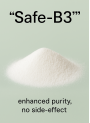
Safe-B3™ (Vitamin B3, Niacinamide)

Allantoin
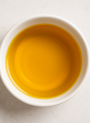
Jojoba Oil (Golden - Deodorized)
GlucoBright™ (Acetyl Glucosamine)

Calendula Extract (Water Soluble)
Pro Polymer™ (Gel Maker)

Satin Cream Maker™
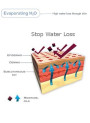
WaterLock™ (Polyquaternium-51)
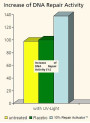
Rice Vitamin (Inositol, Vitamin B8)
DMAE (SkinTight MD™) Liquid
MSH White™ (Undecylenoyl phenylalanine)