Eyelash Glue Formulation, Glycols, and Skin Irritation
Question
Regarding modifying starch paste glue for use as false eyelash glue, the staff suggested using 1,3-Propanediol as an alternative to Propylene Glycol or Butylene Glycol, mixed in a 2:3 ratio (1,3-Propanediol to starch paste glue). This is due to concerns about irritation from Butylene Glycol.
Based on this context, I have the following questions about cosmetic adhesive formulations:
- By default, if a formulation contains Propylene Glycol, does it necessarily also contain Butylene Glycol?
- Are there cosmetic adhesive formulations that do not contain Butylene Glycol?
- Are there cosmetic adhesive formulations that do not contain both Butylene Glycol and Propylene Glycol?
Answer
About False Eyelash Glue and Irritation
It sounds like your customer is experiencing irritation from Butylene Glycol in their current eyelash glue. This is a valid concern, as some individuals can be sensitive to certain ingredients.
Regarding your questions:
- By default, if Propylene Glycol is present, must Butylene Glycol also be included? No, Butylene Glycol and Propylene Glycol are different ingredients. While both are types of glycols used as solvents, humectants, or viscosity reducers in cosmetics, they are not chemically identical, and a formulation containing one does not automatically require the other. The presence of either depends entirely on the specific product's formulation designed by the manufacturer.
- Are there formulations without Butylene Glycol? Yes, it is possible to formulate cosmetic adhesives, including eyelash glues, without Butylene Glycol. Formulators can choose from a variety of other solvents, humectants, and film-forming polymers depending on the desired properties of the glue.
- Are there formulations without both Butylene Glycol and Propylene Glycol? Yes, this is also possible. As mentioned, formulators have access to numerous ingredients to achieve the adhesive properties needed for eyelash glue. The choice of ingredients like solvents and film-formers will vary. For example, ingredients like Cyanoacrylates (such as 2-octyl Cyanoacrylate or N-butyl Cyanoacrylate) are used as adhesives, and water-based film formers like Polyacrylate-21 can also contribute to the adhesive properties without necessarily requiring the presence of Butylene Glycol or Propylene Glycol.
For customers sensitive to Butylene Glycol or Propylene Glycol, seeking products specifically labeled for sensitive eyes or examining the ingredient list for alternative ingredients is recommended. As the staff reply suggested, 1,3-Propanediol is an alternative ingredient that can be considered in formulations like starch paste glue, potentially offering a less irritating option for some individuals compared to Butylene Glycol or Propylene Glycol.
Related Products Mentioned
Propylene Glycol (USP)
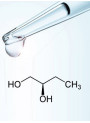
Butylene Glycol

2-octyl Cyanoacrylate