Face Serum Formulation: Ingredient Compatibility, Solubility, and White Cast
Asked by: ng2anarah
On: September 14, 2025
Product Type:
Cosmetics
Answered
Question
Hello, I am developing a face serum with the following ingredients:
Sebum RegLipidSoft LiteL-CarnitineDipotassium Glycyrrhizate (DPG, High Purity)Zinc Oxide Transparent DispersionOMCPure TECA (TECA 95%, CICA)Boswellia Serrata Extract (Boswellic Acid)ActiveProtect OXCyclopentasiloxane1,2-HexanediolPropanediol 1,3Pentylene GlycolKalahari Melon Seed Oil
I have several questions regarding this formulation:
Ingredient Compatibility:
- Will these ingredients work together effectively?
- Are there any ingredients that would not work well in this combination?
Solubility of Extracts:
- Can
Pentylene Glycolbe used as the glycol to dissolvePure-TECAandBoswellia Serrata Extract? - If
Pentylene Glycolcan be used, what are the recommended ratios for dissolution? - Regarding the dissolution ratio of
Boswellia Serrata Extract, when you state "1%:6%", does this mean 1% of the total formulation amount forBoswelliato 6% of the total formulation amount for the glycol? And should the entire resulting dilution then be incorporated into the main formulation?
- Can
L-Carnitine and Sunscreens:
- Will
L-Carnitinework effectively with the chosen sunscreen options (Zinc Oxide Transparent DispersionandOMC) without leaving a white cast on the skin? - Can both
Sebum-RegandL-Carnitinebe used together in the same formulation?
- Will
Dipotassium Glycyrrhizate (DPG) Usage:
- Do I have to use
Dipotassium Glycyrrhizatein combination withGlycyrrhetinic Acid, or can it be used by itself? - What are the recommended ratios or amounts for
Dipotassium Glycyrrhizatein a serum formulation?
- Do I have to use
Any suggestions or guidance would be greatly appreciated. Thank you!
Answer
Here's a detailed breakdown of your serum formulation, addressing your questions and providing suggestions:
Ingredient Compatibility and Functionality
Most of your chosen ingredients are commonly used in cosmetic formulations and appear to be compatible. Here's a look at specific interactions and considerations:
- Sebum-Reg and L-Carnitine: Both ingredients are known for their sebum-regulating properties. L-Carnitine specifically helps control oil production by the pores and can accelerate skin cell turnover. Using both can offer a synergistic effect in reducing oiliness and improving skin texture. There are no known incompatibilities between them.
- Sunscreens (Zinc Oxide Transparent Dispersion and OMC):
- OMC (Octinoxate): This is an organic UVB filter. Its description notes that using a large proportion can make the formula shiny. It also strongly recommends using it with antioxidants (like your ActiveProtect OX) to help increase stability.
- Zinc Oxide Transparent Dispersion: The term "transparent dispersion" indicates it's designed to minimize the white cast often associated with zinc oxide. The actual transparency will depend on the concentration used and the specific dispersion technology.
- Compatibility: Combining organic (OMC) and physical (Zinc Oxide) sunscreens is a common strategy for broad-spectrum protection. Ensure your formulation does not contain Avobenzone, as OMC is unstable in its presence.
- L-Carnitine with Sunscreens and White Cast: L-Carnitine itself is a soluble amino acid and will not contribute to a white cast. The transparency of your sunscreen system will primarily depend on the Zinc Oxide Transparent Dispersion and the overall formulation. With a transparent dispersion, you should be able to achieve a minimal white cast.
- Cyclopentasiloxane and LipidSoft Lite: These are excellent choices for creating a light, non-greasy serum texture. Cyclopentopentasiloxane provides a silky feel and aids in active delivery, while LipidSoft Lite is a very light emollient that doesn't clog pores and can reduce shine.
- Glycols (1,2-Hexanediol, Propanediol 1,3, Pentylene Glycol): These are versatile ingredients acting as solvents, humectants, and often preservative boosters. They are generally compatible with each other and other ingredients.
- pH Considerations: L-Carnitine is effective in accelerating skin cell turnover at pH 6-7. Boswellia Serrata Extract prefers a pH range of 4.0-6.5. To ensure optimal activity for both, aiming for a final serum pH in the range of 5.0-6.5 would be a good compromise.
Solubilizing Pure-TECA and Boswellia Serrata Extract
- Boswellia Serrata Extract: The product description explicitly states that Boswellia Serrata Extract is soluble in Propylene Glycol. It recommends using Propylene Glycol at least 6 times the amount of the extract. For example, if you use 1% Boswellia Serrata Extract, you should dissolve it in 6% Propylene Glycol.
- Pure-TECA: We do not have specific solubility information for Pure-TECA. While Pentylene Glycol is a solvent, it's crucial to verify its compatibility and efficacy for dissolving Pure-TECA with your supplier. If no specific solvent is recommended, you might need to perform small-scale tests.
- Can you use Pentylene Glycol instead of Propylene Glycol for Boswellia? Based on the provided information, it is not recommended to substitute Pentylene Glycol for Propylene Glycol for dissolving Boswellia Serrata Extract, as the manufacturer specifically advises Propylene Glycol for optimal dissolution.
- Ratio Explanation (1%:6%): Your understanding is correct! When we say "1% Boswellia Serrata Extract soluble in 6% Propylene Glycol," it means:
- You would take 1% of your total formulation weight as Boswellia Serrata Extract.
- You would take 6% of your total formulation weight as Propylene Glycol.
- You would first dissolve the 1% Boswellia Serrata Extract completely in the 6% Propylene Glycol to create a pre-dilution.
- This entire pre-dilution (which now contains 1% Boswellia and 6% Propylene Glycol) is then incorporated into your main formulation. This ensures the active is fully dissolved and evenly distributed.
Dipotassium Glycyrrhizate (DPG, High Purity)
- Alone or with Glycyrrhetinic Acid: Dipotassium Glycyrrhizate can absolutely be used by itself. Its primary function, as confirmed by research, is to reduce skin irritation and inflammation and strengthen the skin. While Glycyrrhetinic Acid is a related compound often found in licorice extracts, DPG is effective on its own for its stated benefits. You do not have to use them together.
- Ratios/Amounts: The product description for Dipotassium Glycyrrhizate does not specify a usage rate. Typically, in cosmetic formulations, Dipotassium Glycyrrhizate is used at concentrations ranging from 0.1% to 1%. For precise recommendations, always consult the technical data sheet provided by your specific supplier.
Suggestions
- Solvent for Boswellia: Stick to Propylene Glycol for dissolving Boswellia Serrata Extract at the recommended 1:6 ratio (extract:glycol).
- Solvent for Pure-TECA: Contact your Pure-TECA supplier for specific solubility guidelines. If it's water-soluble, your glycols (1,2-Hexanediol, Propanediol 1,3, Pentylene Glycol) can help. If it requires an oil phase, consider your LipidSoft Lite or Kalahari Melon Seed Oil.
- pH Management: Carefully adjust the final pH of your serum to be within 5.0-6.5 to ensure optimal efficacy for both L-Carnitine and Boswellia Serrata Extract, as well as overall formula stability.
- Antioxidant for OMC: Ensure your ActiveProtect OX is included in the oil phase with OMC to help stabilize the sunscreen.
- Kalahari Melon Seed Oil: This is a lovely oil. Ensure its concentration is appropriate for a serum texture, especially since you also have LipidSoft Lite and Cyclopentasiloxane for a light feel.
- Preservation: While 1,2-Hexanediol acts as a preservative booster, depending on your water phase content and overall formulation, you may still need a broad-spectrum preservative system to ensure product safety and shelf life.
Related Products Mentioned
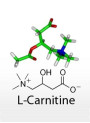
L-Carnitine (Carnitine)
Cosmetics
Sebum-Reg™ (Capryloyl Glycine)
Cosmetics
Pentylene Glycol (Low-Odor)
Cosmetics
ActiveProtec™ OX
Cosmetics