Facial Foam Formulation: Foaming Issues and Charcoal Powder Usage
Question
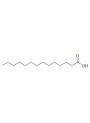
I am making a facial foam using the following ingredients: Myristic acid, Stearic acid, Palmitic acid, Lauric acid, and Potassium hydroxide.
1. Why is my formulation not producing foam?
2. How can I add foam to this formulation?
3. I also want to add Charcoal Powder. When should I add it, what does it disperse in, and what percentage should I use to avoid making the product black?
Answer
Facial Foam Formulation Feedback
Based on the ingredients you provided, your formulation appears to be a soap-based facial cleanser. These types of cleansers create foam through a process called saponification, where the fatty acids (Myristic acid, Stearic acid, Palmitic acid, Lauric acid) react with an alkali (Potassium hydroxide) to form soap.
Why is there no foam?
The lack of foam suggests that the saponification reaction may not be occurring completely or effectively. This could be due to:
- Incorrect Ratio: The balance between the total amount of fatty acids and the amount of Potassium hydroxide is crucial for complete saponification. If there isn't enough Potassium hydroxide, not all fatty acids will be converted to soap.
- Insufficient Heating/Mixing: Saponification often requires heat and thorough mixing to ensure the reactants come into contact and the reaction proceeds to completion.
To improve foaming, ensure you are using the correct stoichiometric ratio of your fatty acids to Potassium hydroxide and that you are heating and mixing the mixture properly according to standard soap-making procedures.
How to add foam?
While optimizing the saponification process should generate foam, you can enhance the lather by adding co-surfactants to your formulation. Consider adding mild amphoteric or non-ionic surfactants which are compatible with soap bases, such as Cocamidopropyl Betaine or Decyl Glucoside. These can help create a richer, more stable foam.
Using Charcoal Powder
Regarding Charcoal Powder:
- When to add: Charcoal Powder is a solid pigment that needs to be dispersed evenly throughout the product. It is typically added to the water phase of your formulation and mixed thoroughly to ensure it is well dispersed before combining with other phases.
- What it disperses in: Charcoal Powder disperses well in water.
- Percentage to avoid black color: The usage rate for Charcoal Powder can vary widely depending on the desired effect. To avoid the product turning black and instead achieve a lighter color or just benefit from its properties without significant color change, you should use a very low percentage. Starting with a range of 0.01% to 0.1% is recommended and you can adjust from there based on the color intensity you observe. Even at low concentrations, it can impart a grey tint.
Related Products Mentioned
Sodium Hydroxide
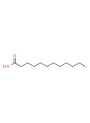
Lauric Acid (99%)
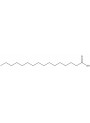
Palmitic Acid (98%, FEMA-2832)
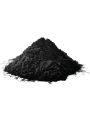
Bamboo Charcoal Powder (4-9micron, Eco)