Facial Gel Formulation for Acne, Wrinkles, and Clarity: Ingredient Adjustments and Mixing Order
Question
I am formulating a facial gel targeting minor wrinkles, clogged pores, acne marks, clarity, and smooth skin for combination skin. I have some questions regarding the ingredient selection, concentration, and mixing procedure based on my initial formula and the staff's feedback.
My initial formula and the staff's comments were:
- Tea Tree Oil (Australian - Water Soluble) 2% - Staff comment: Does not help with clogged pores, only inflammatory acne.
- Double Hyaluron Liquid 1% - Staff comment: For combination skin, use ingredients that balance moisture instead of moisturizer.
- Galactomyces Ferment Filtrate (Pitera) 4% - Staff comment: If for moisture, not recommended; if for soft skin, can use, but should be 10%+.
- Pro Polymer™ 2% - Staff comment: Try 1.0% first; add more if not thick enough.
- Vitamin B3, Niacinamide (Safe-B3™) 3% - Staff comment: Increase to 5% for full efficacy.
My specific questions are:
- Will the gel be too viscous or is the water content too low?
- Are there any unnecessary ingredients or ingredients that cannot be mixed in the same formula?
- For Adenosine Complex, should it be added after the gel has formed because it makes the gel thinner?
- Between the preservative (Phenoxyethanol) and Adenosine Complex, which one should be added last?
Answer
Formula Review and Recommendations
Your goal is to create a facial gel targeting wrinkles (minor), clogged pores, acne marks, clarity, and smooth skin for combination skin. Your initial formula includes several excellent ingredients for these concerns.
Let's address your specific questions:
- Gel viscosity: Your original formula used 2% Pro Polymer. Pro Polymer is a strong gel maker, and 2% can result in a quite thick, potentially "หนืดไป" (too viscous) gel, especially for a facial product where a lighter feel might be preferred for combination skin. The staff's suggestion to reduce Pro Polymer to 1% is appropriate. You can always start lower and add more if you desire a thicker texture.
- Unnecessary or incompatible ingredients:
- Based on your goals and skin type, the staff's suggestion to remove Tea Tree Oil (Water Soluble) is reasonable. While Tea Tree Oil is great for killing bacteria associated with inflammatory acne, it is less effective for clogged pores, which you specifically mentioned.
- Similarly, for combination skin, Double Hyaluron Liquid might provide more moisture than needed, especially in the T-zone. The staff's recommendation to focus on ingredients that balance moisture is suitable for combination skin.
- The ingredients you selected are generally compatible in a water-based gel formula. However, the concentration of Phenoxyethanol in your original formula (0.15%) is below the typical recommended range (0.5-1.0%) for effective preservation. It is crucial to use a sufficient amount of preservative to prevent microbial growth and ensure product safety and stability. Increasing it to at least 0.5% is highly recommended.
- Adenosine addition timing: You asked if Adenosine Complex should be added after gel formation because it might thin the gel. The staff correctly explained that adding it after the gel is formed is often easier, especially without high-speed mixing equipment. This allows the gel-forming ingredient (Pro Polymer) to hydrate fully and build viscosity first. While it might slightly reduce viscosity, this can often be compensated for by adjusting the gel maker concentration. If you have a high-speed mixer, the order is less critical, but adding heat-sensitive ingredients after cooling is always a good practice.
- Last ingredient (Preservative vs. Adenosine): The staff's explanation is accurate. If any heat is used during the formulation process, heat-sensitive ingredients like Phenoxyethanol (avoid heat over 80°C) and potentially Adenosine Complex (storage in refrigerator suggests some heat sensitivity or preference for cooler temperatures) should be added after the mixture has cooled down. If no heat is used, the order between these two is less critical, as long as they are fully incorporated.
Revised Formula Recommendation:
Considering your goals, combination skin, and the staff's valuable input, here is a revised formula that should be more effective and stable:
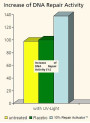
- Repair Activator™: 10%
- Matrixyl™ 3000: 6%
- Galactomyces Ferment Filtrate (Pitera): 4%
- GlucoBright™ (Acetyl Glucosamine): 4%
- Safe-B3™ (Vitamin B3, Niacinamide): 5%
- Adenosine Complex: 1.5%
- Pro Polymer™: 1%
- Phenoxyethanol: 0.5%
- Water: 68%
This revised formula removes ingredients less targeted to your specific acne concern (clogged pores) and skin type (combination moisture balance), increases the concentration of a key multi-benefit ingredient (Safe-B3™), adjusts the thickener for better texture, and ensures proper preservation.
Related Products Mentioned
Pal-GHK, Pal-GQPR (eq Matrixyl 3000)

Safe-B3™ (Vitamin B3, Niacinamide)
GlucoBright™ (Acetyl Glucosamine)
Phenoxyethanol (Extra Pure)