Facial Spray Formulation with Rose Water and Ingredient Limitations
Asked by: orjira.p
On: September 30, 2017
Product Type:
Cosmetics
Answered
Question
I want to create a facial spray using a water base and specific active ingredients, without using a traditional spray base. Can I use the following formula?
- Rose Water: 80%
- Aloe Vera Extract: 3%
- GlucoBright (Glucosamine N-Acetyl): 4%
- Safe-B3™ (Vitamin B3, Niacinamide): 5%
- Willow Bark Extract (Natural Salicylic Acid): 3%
Do I need to add a preservative? What are the potential benefits (like mild nourishment, anti-wrinkle) and limitations of this formula, especially regarding ingredient compatibility and overall effectiveness?
Answer
Regarding your question about making a facial spray using water and active ingredients without a base, and your proposed formula:
Your proposed formula consists of:
- Rose Water: 80%
- Aloe Vera Extract: 3%
- GlucoBright (Glucosamine N-Acetyl): 4%
- Safe-B3™ (Vitamin B3, Niacinamide): 5%
- Willow Bark Extract (Natural Salicylic Acid): 3%
Based on the staff's analysis:
- The formula can be mixed.
- You do not need to add an extra preservative, as the Rose Water (used at 80%) already contains a preservative.
- This formula is suitable for mild skin nourishment. However, as a water-based spray, it has limitations in incorporating a wide range of ingredients (especially oil-soluble ones), which limits its ability to provide intensive skin care, including significant anti-wrinkle effects.
- For improved skin feel, the staff recommended adding Silicone Quick-Cond (PEG-12 Dimethicone) at 3%.
While this formula can provide some moisturizing benefits, its anti-wrinkle effect may be limited compared to more comprehensive formulations.
Related Products Mentioned
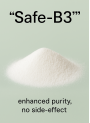
Safe-B3™ (Vitamin B3, Niacinamide)
Cosmetics

GlucoBright™ (Acetyl Glucosamine)
Cosmetics
Silicone Quick-Cond (PEG-12 Dimethicone)
Cosmetics
Rose Water (Rosa Damascena)
Cosmetics