Feedback on Hair Root Serum Formula
Question
Hello,
Please provide feedback on my proposed hair root serum formula for 400ml:
- Rosemary distill water 80%
- Menthol water soluble 2%
- Biotinyl-GHK 3%
- Ectoine 2%
- N-Acetyl Cysteine 3 %
- Copper Peptide (GHK-Cu) 3 %
- Argan Oil 1.5 %
- Sandal Pentanol (Sandalore) 5 %
- Viscolam 0.5% or Aristiflex AVC 0.1%
My scalp is not very oily. I would like to ask:
- Are the active ingredients for stimulating hair roots too high in concentration?
- Ingredients in items 7 and 8 are oils. When mixed into the formula, will they make the formula too oily or sticky for scalp care?
- For item 9, which thickener is better for mixing the oil phase with the water phase, or do you recommend any other options?
- With this proposed formula, I want the resulting serum texture to be liquid, easily absorbed, and non-sticky.
Thank you.
All ingredients used are from myskinrecipes.
Answer
Subject: Feedback on Hair Root Serum Formula (400ml)
Thank you for sharing your proposed formula for a hair root serum. It includes several interesting ingredients aimed at stimulating hair growth. Based on the percentages and ingredients listed, here is some feedback regarding your questions:
Active Ingredient Concentrations: You have included several potent actives. While Biotinyl-GHK (3%) and Ectoine (2%) are within typical usage ranges, the concentrations of Copper Peptide (GHK-Cu) at 3% and Sandal Pentanol (Sandalore) at 5% appear significantly higher than generally recommended usage rates for cosmetic formulations.
- Copper Peptide (GHK-Cu) is typically used at 0.1% to 1%. Using 3% might not provide additional benefits and could potentially cause irritation or stability issues.
- Sandal Pentanol (Sandalore) is primarily an aroma chemical, and while it has some reported benefits for hair, 5% is an exceptionally high concentration for either a fragrance or an active ingredient. Typical usage for fragrance is much lower (<1%). Using it at 5% could impact the formula's stability, scent profile, cost, and potentially cause irritation.
- N-Acetyl Cysteine at 3% is on the higher side of typical usage (often 0.5-2%) but might be acceptable depending on the specific product form.
- We recommend reviewing the specific recommended usage rates for these ingredients from myskinrecipes.com to ensure safety and efficacy. Reducing the concentrations of Copper Peptide and especially Sandal Pentanol is strongly advised.
Oiliness/Stickiness from Oils (Argan Oil & Sandal Pentanol): The total oil/oil-soluble phase from Argan Oil (1.5%) and Sandal Pentanol (5%) is 6.5%. While 1.5% Argan Oil is manageable, the 5% Sandal Pentanol contributes significantly to this oil phase. Incorporating 6.5% oil/oil-soluble material into a water-based serum thickened only by a gelling agent (like Viscolam or Aristiflex AVC) can be challenging. It might lead to:
- Difficulty in achieving a stable, homogenous mixture (potential separation).
- The final product feeling slightly oily or sticky, especially on a non-oily scalp, contrary to your desired texture.
Reducing the percentage of Sandal Pentanol would significantly help in achieving a lighter, less oily feel.
Thickener/Emulsifier Choice (Viscolam vs. Aristiflex AVC): Both Viscolam (0.5%) and Aristiflex AVC (0.1%) are gelling agents suitable for thickening the water phase and suspending small amounts of oil.
- Aristiflex AVC at 0.1% will likely give a very light, serum-like consistency, which aligns with your goal of a liquid, easily absorbed texture.
- Viscolam at 0.5% would likely result in a slightly thicker gel.
Neither is a strong emulsifier for 6.5% oil phase. To better incorporate the 6.5% oil/oil-soluble phase and ensure stability with a light texture, you might consider: - Slightly increasing the Aristiflex AVC percentage (e.g., to 0.2-0.3%) to provide better suspension.
- Adding a small amount of a co-emulsifier suitable for light serums (check myskinrecipes for options).
- Most effectively: Significantly reducing the oil/oil-soluble phase, particularly the Sandal Pentanol percentage.
Achieving Desired Texture (Liquid, Easily Absorbed, Non-Sticky): Based on the formula, achieving a liquid, easily absorbed, non-sticky texture is possible with Aristiflex AVC at 0.1% as the thickener, provided the 6.5% oil/oil-soluble phase can be successfully suspended. However, as mentioned, the high percentage of the oil phase, largely due to 5% Sandal Pentanol, makes this challenging and increases the risk of the serum feeling slightly oily or sticky, or separating over time. Reducing the oil phase is key to easily achieving the desired light texture.
Additional Considerations:
- Preservation: Your formula does not include a preservative. A broad-spectrum preservative system is essential for any water-based product to prevent microbial growth and ensure safety and shelf life.
- pH Adjustment: The final pH of the serum should be checked and adjusted to a skin/scalp-friendly range (typically pH 4.5-5.5) for optimal efficacy and minimal irritation. Some ingredients, like N-Acetyl Cysteine, can lower pH.
In summary, while the ingredient selection targets hair root health, the high concentrations of Copper Peptide and Sandal Pentanol are concerning from a formulation and safety perspective and are the main factors that might prevent you from achieving the desired light, non-sticky texture. We strongly recommend adjusting these percentages and adding a preservative and checking/adjusting pH.
Related Products Mentioned
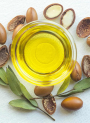
Argan Oil (Virgin - Deodorized)
BB Micro Silk™
Ectoine (Ectoin, from Bio-fermentation)
Menthol Crystal (L-menthol)
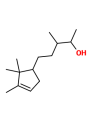
Sandal Pentanol (Sandalore)