Floral Spray Perfume Formulation for Subtle, Long-lasting Scent
Question
Hello. Please recommend a formula for making a spray perfume using floral essential oils as ingredients. Which essential oils should be used and in what proportions to achieve a subtle, long-lasting fragrance? Thank you for your advice.
Answer
Creating a Floral Spray Perfume
Making perfume involves blending different aromatic components to create a harmonious and lasting fragrance. A spray perfume typically consists of essential oils (the fragrance), alcohol (to dissolve the oils and help the scent diffuse), and sometimes a small amount of water.
Basic Components and Proportions
A common starting point for a spray perfume (Eau de Parfum concentration) is:
- Fragrance (Essential Oils/Absolutes): 15-20%
- Alcohol (Perfumer's Alcohol or high-proof Ethanol): 70-80%
- Water (Distilled or Purified): 5-10% (Optional, can help dilute if needed)
For a lighter scent (Eau de Toilette), you might use 10-15% fragrance. For a subtle scent, start at the lower end of the fragrance percentage.
Choosing Floral Essential Oils
To create a complex and lasting fragrance, perfumers often use a blend of notes:
- Top Notes: Light, fresh scents that are noticed first but evaporate quickly (e.g., citrus, some herbs).
- Middle Notes (Heart Notes): The main body of the perfume, appearing after the top notes fade. These are often floral scents.
- Base Notes: Rich, heavy scents that last the longest and help anchor the lighter notes (e.g., woods, resins, some florals like Jasmine Absolute).
For a floral perfume, your middle notes will be key. To add depth and longevity, you might include a base note.
Here are some floral essential oils you could consider from the search results, categorized by typical note:
- Middle Notes:
- Rose Petal
- Rose Blossom
- Jasmine Petal
- Geranium (Pelargonium Bourboun) Oil
- Violet Flower
- White Orchid Leaf Oil (can also lean towards base)
- Base Notes (can also be middle):
- Jasmine Grandiflorum Absolute (often used as a rich middle or base note)
- Other (can be green/leafy middle/top):
Example Floral Blend Concept
To create a balanced floral scent, you could try blending:
- Middle Notes: A combination of Rose (Petal or Blossom), Jasmine (Petal or Absolute), and Geranium. Geranium pairs well with Rose and adds a slightly green, rosy note.
- Base Note: A touch of Jasmine Grandiflorum Absolute can add richness and help the scent last.
- Optional: A tiny amount of Violet Leaf for a green, slightly powdery nuance.
Example Blend Ratio (adjust based on desired intensity and specific oils):
Let's say you want to use 20 drops of essential oil total for a small test batch.
- Rose Petal / Rose Blossom: 8 drops (Main floral)
- Jasmine Petal: 5 drops (Adds sweetness and depth)
- Geranium (Pelargonium Bourboun) Oil: 4 drops (Complements rose, adds green facet)
- Jasmine Grandiflorum Absolute: 2 drops (Base note for longevity)
Violet Leaf: 1 drop (Optional, for green note)
(Total: 20 drops)*
Mix these essential oils together first. This is your fragrance concentrate.
Making the Spray
- Measure your alcohol (e.g., 8 ml for a 10 ml total volume if aiming for 20% fragrance).
- Add the essential oil blend (2 ml or 20 drops in this example) to the alcohol.
- Stir or swirl gently to combine.
- Optionally, add a small amount of distilled water (e.g., 1 ml).
- Pour into a spray bottle.
- Allow the perfume to "age" or "macerate" in a cool, dark place for at least a few weeks (preferably longer, like a month or two). This allows the scents to meld and develop.
Tips for Longevity and Subtlety
- Use a good quality alcohol: Perfumer's alcohol is ideal as it contains denaturants that don't interfere with the scent. High-proof ethanol (like 95%) can also work.
- Maceration is key: Aging the perfume significantly improves the blend and longevity.
- Base notes help: Including a base note like Jasmine Absolute helps the fragrance last longer on the skin.
- Adjust proportions: If the scent is too strong, dilute with more alcohol. If it's not lasting, increase the fragrance percentage slightly or add more base notes. If it's not floral enough, increase the middle notes.
- Subtlety: To keep it subtle, use a lower overall fragrance percentage (e.g., 10-15%) and focus on softer floral oils.
Experimentation is the most important part of perfumery! Start with small batches and adjust the ratios until you find your perfect subtle, long-lasting floral scent.
Updated Review: May 2026
This section was added after reviewing the original answer against current product availability and formulation knowledge at the stated point in time.
Update as of 2026-05-31: The floral perfume concept above is still usable, but please distinguish the material types in the current catalog. Rose Petal, Rose Blossom, Jasmine Petal, Violet Leaf and Violet Flower are best treated as fragrance concentrates, while Geranium (Pelargonium Bourboun) Oil and White Orchid (Michelia Alba) Leaf Oil are essential oils, and Jasmine Grandiflorum Absolute is a natural absolute. For an alcohol spray perfume, dissolve the aromatic blend in high-proof ethanol/perfumer’s alcohol first. Add water only after a small clarity/stability test, because these aroma materials are generally oil/alcohol-soluble and may turn cloudy or separate in water. For a soft floral scent, start with a lower total aroma level, then increase gradually if needed. Because this is a leave-on spray product, keep each fragrance material within its recommended/IFRA-safe use level, patch test, and store the finished perfume tightly closed away from heat, air and light.
Related Products Mentioned
Rose Petal
Jasmine Petal
Geranium (Pelargonium Bourboun) Oil
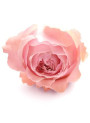
Rose Blossom
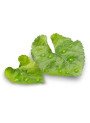
Violet Leaf
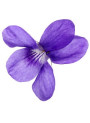
Violet Flower
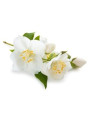
Jasmine Grandiflorum Absolute