Formula Requirements for Continuous Manufacturing of Sunscreen Daycream
Question
What specific technical information, documentation, and detailed procedures are required for a manufacturing company to produce a Daycream SPF 50 PA++++ formula, which I have successfully made myself, on a continuous basis?
Answer
Formula Review and Requirements for Continuous Production
Thank you for providing your Daycream SPF 50 PA++++ formulation and mixing steps. It's great that you were able to successfully produce a batch yourself.
When a manufacturing company takes on a formula for continuous production, they require a complete technical dossier to ensure consistency, quality, safety, and regulatory compliance for every batch produced. The information you provided is a good starting point but typically lacks the detailed specifications needed for industrial scale-up.
Here are the key areas where more information is usually required:
- Complete Ingredient List with INCI Names: Manufacturers need the full International Nomenclature of Cosmetic Ingredients (INCI) name for every raw material, along with its exact percentage. While you provided trade names and some chemical names, the INCI name is the globally recognized standard.
- Raw Material Specifications: For each ingredient, the manufacturer needs detailed specifications from the supplier, including:
- Certificate of Analysis (CoA) for each batch received.
- Safety Data Sheet (SDS).
- Technical Data Sheet (TDS) outlining properties, handling, and storage.
- Information on potential allergens or restricted substances.
- Detailed Manufacturing Procedure: The mixing steps you provided are basic. A manufacturer needs a precise, step-by-step guide including:
- Specific equipment to be used (e.g., type of mixer, homogenizer, mill).
- Mixing speeds, times, and sequences for each step.
- Exact temperatures and holding times for heating/cooling phases.
- Specific points for quality control checks during the process (e.g., particle size distribution after milling, emulsion stability, viscosity checks).
- Cleaning and sanitization procedures for all equipment.
- Quality Control (QC) Specifications: Clear parameters for testing the finished product to ensure it meets standards before release. This includes:
- Physical appearance, odor, and color.
- pH (if applicable).
- Viscosity and specific gravity.
- Microbiological limits.
- Performance tests (e.g., confirmed SPF/PA value, stability).
- Stability Testing Data: Proof that the formula remains stable over its intended shelf life under various conditions (e.g., room temperature, elevated temperature, freeze-thaw cycles, light exposure) and in the specific packaging. This includes physical, chemical (active ingredient degradation), and microbiological stability.
- Packaging Compatibility Testing: Ensuring the formula does not react with or degrade the packaging material over time.
- Safety Assessment: A comprehensive safety assessment report for the finished product, considering all ingredients and their concentrations.
- Regulatory Compliance: Confirmation that the formula complies with cosmetic regulations in the target markets (e.g., maximum allowed concentrations for sunscreens, preservatives, etc.).
- Scale-up Validation: Data demonstrating that the process developed for a small batch is reproducible and yields a consistent product when manufactured at a larger scale.
Your formula appears complex, involving multiple phases (oil/sunscreen, silicone, water, powder) and processes like heating and milling. Achieving a stable and consistent emulsion with a high powder load at scale requires precise control over mixing, temperature, and particle dispersion.
To move forward with continuous production, you will likely need to work with a cosmetic formulation consultant or collaborate closely with the manufacturing company to develop this complete technical documentation package.
Related Products Mentioned
Vitamin E (Tocopheryl Acetate)
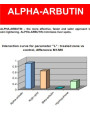
Alpha Arbutin (Switzerland)
Silicone Gel (Ultra Clear, Super Silky)
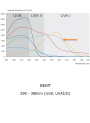
Zinc Oxide 200nm EasyDisperse™
BB Micro Silk™
Talc Powder (5 Micron, Methicone Coated)
Double Hyaluron Liquid
Beige Iron Oxides EasyMix™
Silicone Blender


Purified Water, TDS Limit 1PPM)

Para-Preserve (eq. Phenonip P4)
Silicone Film (Medium-Wear, Soft)