Formula Review and Adjustment for Hydrating Serum/Lotion: Texture, Thickening, and Water Quality
Question
Based on the following formula, what is the expected texture, how does it compare to Hada Labo lotion, and what ingredient adjustments or additions (specifically a thickener and its amount) are needed to achieve a thicker texture?
Formula:
- Hyaluronic Acid (Standard Molecule) 0.5%
- Hyaluronic Acid (Nano Molecule) 0.5%
- WaterLock™ 2%
- MOIST72™ 2.5%
- Panthenol (Pro Vitamin B5) 2.5%
- Soy Extract (Isoflavones / Genistein) 5%
- Phenoxyethanol 0.5%
- Water 86.5%
- Total: 100%
Additionally, what type of water is recommended for cosmetic formulations? If distilled water is not available, can drinking water from a convenience store be used with a chelating agent? If so, which chelating agent (like Disodium EDTA) should be used and in what percentage?
Answer
Formula Review and Adjustments
Your formula:
- Hyaluronic Acid (Standard Molecule) 0.5%
- Hyaluronic Acid (Nano Molecule) 0.5%
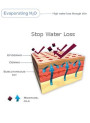
- WaterLock™ 2%
- MOIST72™ 2.5%
- Panthenol (Pro Vitamin B5) 2.5%
- Soy Extract (Isoflavones / Genistein) 5%
- Phenoxyethanol 0.5%
- Water 86.5%
- Total: 100%
This formula is generally good for hydration. However, some percentages are higher than typically recommended, which might affect the texture and potentially the efficacy or cost-effectiveness.
- Hyaluronic Acid (Standard Molecule) and Hyaluronic Acid (Nano Molecule): You are using 0.5% of each, totaling 1.0%. For very dry skin, the recommended total concentration for these types of Hyaluronic Acid is typically 0.3-0.5%. Using 1.0% might make the product feel sticky. You could consider reducing the total Hyaluronic Acid to 0.5% (e.g., 0.25% Standard + 0.25% Nano) to reduce stickiness while still providing significant hydration.
- MOIST72™: You are using 2.5%. For very dry or chapped skin, the product description recommends using up to 5% for enhanced moisturizing effects. Increasing this could be beneficial for your skin type.
- Panthenol (Pro Vitamin B5): You are using 2.5%. The suggestion to increase it to 5% is valid as the usage rate for skin is 1-10%. 5% is within the effective range and can provide more benefits like reducing inflammation and aiding skin healing. However, as mentioned in the product description, using more than 5% may cause stickiness. 5% is a reasonable level to try for increased efficacy, but be aware of the potential texture impact.
- Soy Extract (Isoflavones / Genistein): You are using 5%. The recommended usage rate for this ingredient (Isoflaqua™) is 0.1-1.0%. Using 5% is significantly higher than recommended and likely won't provide additional benefits beyond the maximum effective concentration, potentially making the formula more expensive or unstable. It is highly recommended to reduce this percentage to within the 0.1-1.0% range, for example, 0.5% or 1.0%.
- Phenoxyethanol: You are using 0.5%. This is the minimum recommended usage for preservation. It should be sufficient for basic preservation, but using 1.0% would provide more robust protection against microbial growth, especially since Phenoxyethanol alone is not broad-spectrum.
Suggested Adjustments:
To optimize the formula for very dry skin and improve texture, consider these adjustments:
- Hyaluronic Acid (Standard Molecule): 0.25%
- Hyaluronic Acid (Nano Molecule): 0.25%
- WaterLock™: 2%
- MOIST72™: 5%
- Panthenol (Pro Vitamin B5): 5% (or keep at 2.5% if concerned about stickiness)
- Soy Extract (Isoflavones / Genistein): 0.5% - 1.0%
- Phenoxyethanol: 0.5% - 1.0%
- Water: Adjust percentage to reach 100% total.
Example Adjusted Formula (using 0.5% HA total, 5% MOIST72, 5% Panthenol, 1% Soy Extract, 1% Phenoxyethanol):
- Hyaluronic Acid (Standard Molecule): 0.25%
- Hyaluronic Acid (Nano Molecule): 0.25%
- WaterLock™: 2%
- MOIST72™: 5%
- Panthenol (Pro Vitamin B5): 5%
- Soy Extract (Isoflavones / Genistein): 1%
- Phenoxyethanol: 1%
- Water: 80.5%
- Total: 100%
Removing Ingredients
While you could remove ingredients, each one in your formula contributes to hydration, anti-aging, or preservation. Removing any would likely reduce the overall effectiveness or shelf life of the product. It's generally better to adjust the percentages to the recommended levels rather than removing components entirely.
Water Type
As mentioned in the previous replies in the forum thread, distilled water is the recommended type of water for cosmetic formulations. This is because distilled water is free from minerals and ions that can interfere with the stability and effectiveness of certain ingredients, particularly thickeners and chelating agents.
You cannot use drinking water from a convenience store directly.
Using Drinking Water with a Chelating Agent
Yes, if distilled water is not convenient to find, you can use clean water (like filtered or boiled drinking water) along with a chelating agent. A chelating agent helps to bind metal ions present in non-distilled water, preventing them from causing instability or affecting the formula's performance.
A suitable chelating agent is Disodium EDTA. The recommended usage rate for Disodium EDTA is 0.1-0.2%. You should add it to the water phase before adding other ingredients.
You can find Disodium EDTA on the MySkinRecipes website.
Texture and Thickening
As the staff reply indicated, your original formula will likely have a liquid texture, similar to Hada Labo lotion, but might feel sticky due to the high concentration of Hyaluronic Acid.
If you want a thicker texture, you need to add a gel-forming agent or thickener. The staff suggested looking in the "Other --> Thickener" category and specifically mentioned Pro Polymer.
Pro Polymer is a suitable gel maker for water-based formulas and has good electrolyte resistance, which is helpful if you use non-distilled water with a chelating agent. The recommended usage rate for a general gel texture is around 0.8%. You can adjust this amount (typically between 0.5% and 5%) to achieve your desired viscosity. Start with a lower percentage (e.g., 0.5-1.0%) and increase gradually if needed.
To use Pro Polymer, you typically sprinkle the powder onto the water phase while stirring slowly until a smooth gel forms. Avoid high-speed blending, which can damage the polymer structure.
In summary, your formula is a good starting point. Adjusting the percentages of Hyaluronic Acid, MOIST72™, Panthenol, and Soy Extract to their recommended ranges will improve the formula's balance and likely reduce stickiness. Always use distilled water or clean water with a chelating agent like Disodium EDTA. If you desire a thicker texture, add a gel maker such as Pro Polymer.
Related Products Mentioned
Phenoxyethanol (Extra Pure)
Disodium EDTA
Pro Polymer™ (Gel Maker)

MOIST72™