Formula Review: Silicone-Based Sunscreen Milk SPF 50 PA++++
Question
Please review my proposed water-in-silicone sunscreen formula and mixing method. I want to create a milky, easy-to-spread sunscreen with a matte finish that is waterproof and suitable for oily skin, aiming for SPF 50 PA++++. Will this formula and mixing method achieve the desired results? I would appreciate your advice.
Answer
Formula Review: Silicone-Based Sunscreen Milk SPF 50 PA++++
Thank you for sharing your sunscreen formulation. Based on the ingredients and method, this formula is designed as a water-in-silicone (W/Si) emulsion, which is suitable for achieving the desired milky texture, easy spreadability, matte finish, suitability for oily skin, and water resistance.
Here's a review of the formula and mixing method:
Ingredients and Their Roles
- Cyclotetrasiloxane (50%): A high percentage of this volatile silicone will contribute significantly to the light, dry, and matte feel upon application as it evaporates quickly. Cyclopentasiloxane is a common alternative with similar properties.
- Warp Cream Maker™ XL (5%): This is an appropriate water-in-silicone emulsifier for this type of formula. Its description confirms it helps create quick-absorbing, soft, smooth, and dry-finish textures and is suitable for waterproof sunscreen formulations.
- ETHYLHEXYL METHOXYCINNAMATE (OMC) (10%): A common and effective UVB filter at this concentration, contributing significantly to the SPF value.
- DHHB (3%): This is a UVA filter. While it contributes to UVA protection and can boost SPF, the description for DHHB indicates that a concentration of >7.5% is typically needed to achieve PA++++. At 3%, it might not be sufficient for this specific PA rating, although it still provides valuable UVA protection.
- Water (20%): Forms the internal phase of the emulsion.
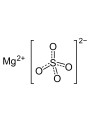
- Magnesium Sulfate (1%): As recommended for water-in-silicone formulas using emulsifiers like Warp Cream Maker™ XL, Magnesium Sulfate helps improve emulsion stability and reduce the chance of separation.
- Preservative (1%): Essential for the water phase to prevent microbial growth.
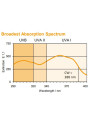
- Bisoctrizole (10%): A broad-spectrum UV filter (covering UVB, UVA I, and UVA II) that is water-dispersible. Using it at the maximum allowed concentration (10%) significantly boosts both SPF and PA values and is suitable for the water phase.
Mixing Method
The proposed mixing method of combining the silicone/oil phase ([A] + [B]) first and then slowly adding the water phase ([C]) with high-speed stirring is the correct approach for forming a water-in-silicone emulsion using Warp Cream Maker™ XL.
Important Consideration: The description for DHHB mentions it is a powder that needs to be mixed with a solvent and recommends using heat (up to 80°C) to help dissolve it in the oil phase. Your method does not explicitly mention heating phase [A+B]. You should heat phase [A+B] to around 80°C to ensure the DHHB is fully dissolved before adding phase [C]. Maintain high-speed stirring throughout the addition of phase [C] and for a period afterward to ensure a stable emulsion.
Achieving SPF 50 PA++++
The combination of 10% OMC, 3% DHHB, and 10% Bisoctrizole provides strong broad-spectrum protection. The 10% OMC and 10% Bisoctrizole contribute significantly to SPF. The 10% Bisoctrizole also provides substantial UVA protection. However, the 3% DHHB is likely below the concentration typically needed for a PA++++ claim based on its description (>7.5%). While the formula offers good protection, achieving a confirmed SPF 50 PA++++ would ideally require laboratory testing. You might consider increasing DHHB if aiming strictly for PA++++, subject to regulatory limits and formulation stability.
Conclusion
The formula structure and ingredients are well-chosen for a silicone-based, matte, water-resistant sunscreen milk. The mixing method is appropriate, but ensure the oil phase containing DHHB is heated to dissolve the UV filter properly. While the formula provides excellent protection, confirming the SPF 50 PA++++ claim would require testing, and the DHHB concentration might need adjustment depending on the desired PA contribution from this specific filter.