Formulating 100% Natural Soft Balm for Tube Dispensing
Question
Hello,
I have a question about formulating a soft balm that can be claimed as 100% natural. The formula contains 70% natural oils.
- I need the texture to be soft enough to be dispensed from a tube with a 2mm opening and remain stable at temperatures between 0-45°C.
- I want to include shea butter. How much should I use?
- I want to add a natural fragrance. Which group of fragrances should I use?
- Should I include Vaseline or natural beeswax?
- I previously tried making it, and when the product cooled, there were small water droplets on the surface. What ingredient should I add to fix this problem?
Thank you very much.
Answer
Natural Balm Formulation for Tube (100% Natural)
Creating a 100% natural soft balm that can be dispensed from a tube (2mm opening) and remains stable between 0-45°C requires a careful balance of natural oils, soft butters, and natural waxes. Since you are avoiding Vaseline, natural waxes like beeswax are essential for providing structure and increasing the melting point.
Here are the answers to your questions:
Soft texture for tube dispensing (2mm opening), stable 0-45°C: To achieve this, you will use your 70% natural oils as the base. The remaining 30% will consist of a blend of natural butter (like shea butter) and natural wax (like beeswax). The key is the ratio of wax to the total oil/butter phase. For a soft balm that can be squeezed from a tube, you will need a relatively low percentage of wax. Natural beeswax has a melting point around 62-64°C, but when combined with 70% liquid oils and shea butter, the overall melting point of the balm will be lower. You will need to find the right percentage of beeswax (likely in the range of 10-20% of the total formula, with shea butter making up the rest of the 30% solid phase) that provides enough structure to remain stable at 45°C without being too hard to squeeze from a 2mm opening at lower temperatures. This will likely require some testing and adjustment.
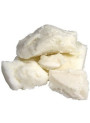
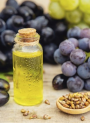
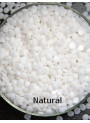
Shea butter percentage: Given your formula is 70% natural oils, the remaining 30% is where you will incorporate shea butter and wax. Shea butter contributes significantly to the balm's soft texture and emollience. You can use a substantial amount of shea butter within this 30% solid phase. A starting point could be anywhere from 10% to 20% of the total formula. For example, if you use 15% shea butter, you would then use 15% natural wax to reach your 30% solid phase. The exact amount will depend on the desired softness and how much wax is needed for stability. Shea Butter (Refined, Deodorised) and Shea Butter (Ultra Soft) are good options.
Natural fragrance: To add a natural fragrance, you should use natural essential oils or natural fragrance oils that are approved for cosmetic use. Ensure you use them at safe, low dilution rates appropriate for a leave-on product, following guidelines from reputable sources (like IFRA standards for fragrance oils, or general safety guidelines for essential oils).
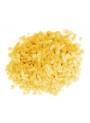
Vaseline or natural beeswax: For a 100% natural claim, you should not use Vaseline (petroleum jelly). Natural beeswax is an excellent choice for providing structure and consistency in a natural balm. Products like Natural White Beeswax or Yellow Beeswax are suitable. While there is a product called Vegetable Vaseline (Olus Oil), it functions more like a natural emollient oil blend with a Vaseline-like texture rather than a structuring wax, so beeswax is still needed for firmness.
Water droplets on the surface: A traditional balm is an anhydrous product (contains no water). The presence of water droplets suggests that water was somehow introduced into your formulation. This could be due to:
- Condensation: If the balm cooled too quickly or in a humid environment.
- Contamination: Water accidentally got into your ingredients or during the mixing process.
- Attempted Emulsion: If you tried to mix a water-based ingredient (like a botanical extract in water or a hydrosol) into the oils/waxes without a proper emulsifier, the water will separate out.
To avoid this, ensure all your ingredients are anhydrous (oil-based, butter-based, wax-based) and that your equipment and environment are dry during preparation and cooling. If you need to incorporate water-soluble ingredients, you would need to formulate a cream or lotion using emulsifiers, which is a different type of product than a balm.
Suggested Starting Point (Example):
- Natural Oils: 70%
- Shea Butter: 15%
- Natural Beeswax: 15%
- Natural Fragrance: 0.1 - 1% (adjust based on IFRA or safety guidelines)
- Natural Antioxidant (e.g., Vitamin E) to prevent oil rancidity: 0.1 - 0.5%
Melt the beeswax and shea butter in the natural oils, heat gently until fully liquid (around 70-75°C). Stir well while cooling. Add fragrance and antioxidant when the mixture has cooled significantly but is still liquid (around 40-45°C) before pouring into tubes. Cool slowly and evenly to help prevent texture issues.
Remember that achieving the perfect texture and stability will likely require making small test batches and adjusting the shea butter and beeswax percentages based on your results.
Related Products Mentioned
Shea Butter (Refined , Deodorised)
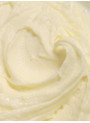
Shea Butter (Ultra Soft)
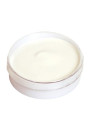
Vegetable Vaseline (Olus Oil)