Formulating a Cream Based on Ingredient List
Question
I have a list of ingredients from a cream I like and would like guidance on how to formulate a similar cream. The ingredients are:
- Mineral oil
- Glyceryl monostearate
- Ethyl Alcohol
- Persea Gratissima oil (Avocado oil)
- Sesamum indicum seed oil (Sesame oil)
- Aqua (Water)
- Methylparaben
- Fragrance
Could you provide a sample formulation structure and mixing method for a cream using these ingredients?
Answer
Recreating Your Favorite Cream: A Guide to Formulation
Thank you for your interest in formulating your own cream! Based on the ingredients you provided – Mineral oil, Glyceryl monostearate, Ethyl Alcohol, Persea Gratissima oil (Avocado oil), Sesamum indicum seed oil (Sesame oil), Aqua (Water), Methylparaben, and Fragrance – we can outline a possible formulation and mixing method for a similar cream.
Please note that without the exact percentages from the original cream, it's not possible to provide an identical formula. However, we can create a stable and effective cream using these components. This type of formulation is likely an oil-in-water (O/W) emulsion.
Key Ingredients and Their Roles:
- Oil Phase:
- Mineral Oil (such as Mineral Oil (Paraffinum Liquidum) Light or Mineral Oil (Paraffinum Liquidum) Medium): Provides emolliency and a smooth feel.
- Avocado Oil: Adds nourishing fatty acids and skin conditioning.
- Sesame Oil: Offers moisturizing properties.
- Glyceryl Monostearate SE (such as Glyceryl Stearate SE / Glyceryl Monostearate SE (GMS SE)): Acts as an emulsifier, helping the oil and water phases mix and stabilize.
- Water Phase:
- Water (Aqua): The base of the emulsion.
- Cool Down Phase:
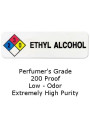
- Ethyl Alcohol (such as Ethyl Alcohol (99.9%)): Can act as a solvent and provide a cooling sensation.
- Methylparaben (or a suitable alternative preservative like Phenoxyethanol P5): Essential for preventing microbial growth and ensuring product safety.
- Fragrance (such as Floral Background): Added for scent.
Sample Formulation Structure (Illustrative Percentages):
Here is a sample structure with example percentage ranges. You will need to adjust these based on the desired texture and feel of your final cream.
- Phase A (Oil Phase):
- Mineral Oil: 5-15%
- Avocado Oil: 3-7%
- Sesame Oil: 1-5%
- Glyceryl Monostearate SE: 5-10%
- Phase B (Water Phase):
- Water: 60-80%
Phase C (Cool Down Phase):
- Ethyl Alcohol: 1-5%
- Preservative (e.g., Methylparaben or Phenoxyethanol P5): 0.5-1%
- Fragrance: 0.1-0.5%
(Note: Total percentage should add up to 100%)*
General Mixing Method (Oil-in-Water Emulsion):
- Combine Phase A: Weigh all ingredients from Phase A into a heat-resistant beaker or container. Heat gently to 70-75°C, stirring until the Glyceryl Monostearate SE is fully melted and the phase is uniform.
- Heat Phase B: In a separate heat-resistant container, heat the Water (Phase B) to the same temperature (70-75°C).
- Emulsify: Slowly pour Phase A into Phase B while stirring continuously. Use a high-shear mixer (like a stick blender or homogenizer) for 3-5 minutes to create a stable emulsion.
- Cool Down: Switch to slower paddle or overhead stirring and continue stirring while the emulsion cools. You can place the container in a cool water bath to speed up cooling. Stir until the temperature drops below 40°C.
- Add Phase C: Once the emulsion is below 40°C, add the Ethyl Alcohol, Preservative, and Fragrance. Stir well to ensure they are evenly dispersed.
- Final Adjustments: Check the pH of the cream and adjust if necessary (typically aiming for a skin-compatible pH of 5.5-6.5). Package the cream in a suitable container.
Remember that formulation requires experimentation. You may need to make small batches and adjust the percentages of oils, emulsifier, and water to achieve your desired texture and stability. Always follow good manufacturing practices (GMP) and ensure proper preservation to prevent contamination.
Related Products Mentioned
Floral Background