Formulating a Cream for Dark Spots and Pore Tightening
Question
I would like to formulate a cream targeting dark spots (from acne and age) and pore tightening. I am considering using the following ingredients:
- Actiwhite
- Beta-white
- Etioline
- Mulberry extract liquid
- Alpha Arbutin
- Arbutin
- SymWhite
- ODA White
- Pueraria mirifica extract
- Witch Hazel
- Butylene Glycol
- PENETRATION ENHANCER นำพาสารสู่ผิว (specifically Reservoir-Tech, Tetrahydropiperine, TransMoist™)
Please advise on which ingredients are most suitable for my goals and their recommended usage rates in a cream formulation.
Answer
Formulating a Cream for Dark Spots and Pore Tightening
You're looking to create a cream to tackle dark spots from acne and age, as well as tighten pores, using a specific list of ingredients. It's great that you've identified potential actives! However, using too many ingredients with similar functions in one formula often doesn't increase effectiveness and can sometimes lead to irritation or stability issues. A more focused approach is usually recommended.
Based on your goals and the ingredients you listed, here are some suggestions for selecting ingredients and their recommended usage rates:
Key Ingredients for Dark Spots (Acne Marks & Age Spots)
For reducing hyperpigmentation like acne marks and age spots, focusing on potent melanin inhibitors is key. From your list, the following are highly effective:
- Alpha Arbutin: Recommended usage rate is 0.2-2%. Using 2% is often recommended for optimal brightening results. It works by inhibiting the enzyme tyrosinase, which is crucial for melanin production. Ensure your formula's pH is between 3.5-6.5 for stability.
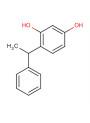
- SymWhite (Phenylethyl Resorcinol): Recommended usage rate is 0.1-1.0%, with 0.5% being a commonly recommended effective concentration for leave-on products. It's a powerful tyrosinase inhibitor and also has antioxidant properties. It's best used in formulas with a pH of 4-5.
- ODA White (Octadecenedioic Acid): Recommended usage rate is 1-3%, with 2% being a recommended concentration. It helps reduce melanin synthesis.
You could choose one or two of these, or use lower concentrations if combining all three to minimize potential irritation. For example, a combination of Alpha Arbutin (1-1.5%), SymWhite (0.5%), and ODA White (1-1.5%) could be considered, but always start with lower percentages and patch test.
Key Ingredient for Pore Tightening
For tightening the appearance of pores, astringent ingredients are helpful.
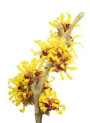
- Witch Hazel (Hamamelis Virginiana Water): This is effective for its astringent properties, helping to tighten pores. While it can be used at very high concentrations in toners (up to 100%), a lower percentage like 10-20% can be effective in a cream formulation.
Penetration Enhancers
To help these active ingredients penetrate the skin effectively, you can include a penetration enhancer. From the options you mentioned or are available:
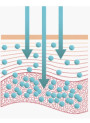
- Reservoir-Tech: Recommended usage rate is 2.5-5.0% (recommend 3%). This ingredient helps retain actives on the skin and provides a gradual release, which can be particularly helpful in reducing irritation when using potent ingredients like those for whitening. It's suitable for water-soluble actives like Alpha Arbutin.
- Tetrahydropiperine (Natural Penetration Enhancer): Recommended usage rate is 0.01%. This is a potent enhancer that helps transport ingredients into the skin.
- TransMoist™ (PPG-24-Glycereth-24): Recommended usage rate is 1-10% (recommend 2%). It aids in ingredient absorption and provides moisturization, improving the feel of the formula.
You might choose one or two of these depending on your formula's base and desired feel. Reservoir-Tech is a good option if you are concerned about irritation from multiple actives.
Ingredients to Reconsider
Given the effectiveness of Alpha Arbutin, SymWhite, and ODA White for dark spots, and Witch Hazel for pores, some of the other ingredients you listed might be less necessary or have less readily available detailed usage information:
- Actiwhite, Beta-white, Etioline, Mulberry extract liquid: While they have skin brightening aspects, the ingredients mentioned above are generally considered more potent and well-researched for significant dark spot reduction. Using a focused selection can simplify formulation and reduce potential for interaction or irritation.
- Arbutin (if referring to Beta-Arbutin): Alpha Arbutin is significantly more effective.
- Pueraria mirifica extract: This ingredient is not typically used for dark spots or pore tightening.
Summary Recommendation
A focused formula targeting your concerns could include:
- For Dark Spots: Alpha Arbutin (up to 2%), SymWhite (up to 1%), and ODA White (up to 3%). Consider using a combination at slightly lower percentages (e.g., Alpha Arbutin 1.5%, SymWhite 0.5%, ODA White 1.5%) and adjust based on tolerance and effectiveness.
- For Pore Tightening: Witch Hazel (10-20%).
- For Penetration Enhancement/Absorption: Choose one or two from Reservoir-Tech (3%), Tetrahydropiperine (0.01%), or TransMoist (2%).
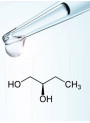
- Base: Butylene Glycol (up to 20%) can be used as part of the solvent system.
Always start with lower concentrations when combining multiple actives and perform a patch test on a small area of skin before applying to the entire face to check for irritation. Pay close attention to the recommended pH ranges for Alpha Arbutin (3.5-6.5) and SymWhite (4-5) to ensure their stability and effectiveness in the final product.
Related Products Mentioned
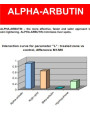
Alpha Arbutin (Switzerland)
Butylene Glycol

ODA-White Plus™
Reservoir-Tech