Formulating a Hydrating Serum with Hyaluronic Acid and Niacinamide: Mixing Procedure and Ingredient Properties
Question
I am planning to formulate a serum using Hyaluronic Acid Standard, Niacinamide, and distilled water. I want to confirm the correct mixing procedure. I plan to do the following:
1. Chill 95 ml of distilled water for 3 hours.
2. Add 4 ml of Vitamin B3 (Niacinamide). Do I need to mix the Vitamin B3 powder with water first and then add it, or can I add 4 grams of the powder directly to the 95 ml of water and stir to dissolve?
3. Mix in 1 ml of Hyaluronic Acid Standard powder and stir until it is fully hydrated.
4. Chill again for 3 hours.
Is this procedure correct?
Answer
Skincare Formulation for Sensitive Skin
It's great that you are making your own simple formula to avoid irritation! The formula recommended by the staff is excellent for very sensitive and dehydrated skin.
Recommended Formula (100ml)
The staff recommended the following proportions for a 100ml total volume:
- Hyaluronic Acid Nano: 0.5% (0.5g)
- Hyaluronic Acid Standard: 0.5% (0.5g)
- Vitamin B3 (Niacinamide): 4% (4g)
- Allantoin: 0.5% (0.5g)
- Distilled Water: 94.5% (94.5ml)
Your calculation for the full 100ml formula (0.5g Hya Nano + 0.5g Hya Standard + 4g VB3 + 0.5g Allantoin + 94.5ml water) is correct based on these percentages.
While precise measurement is best, especially within 0.1g for this specific formula, some ingredients like Vitamin B3 are more forgiving if you are slightly off. However, using a scale is highly recommended for accuracy. Remember that grams (g) and milliliters (ml) are not always equal, except for distilled water where 1g is approximately 1ml.
You do not need to measure the pH for this formula as the ingredients are naturally close to neutral.
Mixing Individual Ingredients with Water
Yes, you can mix individual ingredients like Aloe Vera Extract or Vitamin B3 with water if you don't have all ingredients yet.
- For Vitamin B3 (4%) in 100ml: Your calculation of mixing 4g of Vitamin B3 powder with 96ml of distilled water is correct.
- For Aloe Vera Extract (0.1%) in 10ml: Your calculation needed a slight adjustment as pointed out by the staff. For 0.1% in 10ml, you would mix 0.01ml of Aloe Vera Extract with 9.99ml of distilled water.
Mixing Procedure (Hyaluronic Acid Standard, Niacinamide, Water)
Your proposed steps for mixing Hyaluronic Acid Standard, Niacinamide, and water are mostly correct, with a key tip from the staff:
- Dissolve powders first: Dissolve the Niacinamide powder in the distilled water before chilling the water or adding the Hyaluronic Acid. You can add the 4g of Niacinamide powder directly to the 95ml of water and stir to dissolve. Using slightly warm water can help powders dissolve faster, then let it cool down.
- Chill the water: Once the Niacinamide is fully dissolved, you can chill the water (e.g., for 3 hours). Chilling helps the Hyaluronic Acid hydrate properly.
- Add Hyaluronic Acid: Add the 1g of Hyaluronic Acid Standard powder to the chilled water. Stir or shake well initially, then refrigerate again (e.g., for 3 hours or until fully dissolved). Check periodically and shake if needed until the powder is completely dissolved and there are no floating particles.
- Add Liquids Last: If you were using any liquid ingredients (like liquid extracts), you would add them after the Hyaluronic Acid powder has fully hydrated into the water. In your current plan with just Niacinamide, Hyaluronic Acid Standard, and water, this step isn't strictly necessary unless you add other liquid ingredients later.
Benefits of the Ingredients
- Hyaluronic Acid (Nano and Standard Molecule): Acts as a water reservoir in the skin, providing intense hydration. The combination of Nano and Standard molecules helps moisturize both the deeper and outer layers of the skin. It helps strengthen the skin's hydration and can reduce the appearance of wrinkles caused by dehydration.
- Vitamin B3 (Niacinamide): Beneficial for sensitive, acne-prone skin. It helps reduce redness and irritation, strengthens the skin barrier, reduces oiliness (sebum excretion), and can improve skin tone and texture. It also helps the skin produce ceramides, which are essential for moisture retention.
- Allantoin: A soothing and anti-irritating ingredient that helps reduce irritation and allergies. It also supports the skin's natural tissue regeneration process.
Mixing these ingredients with distilled water provides a simple yet effective hydrating and soothing serum suitable for very sensitive skin.
Related Products Mentioned
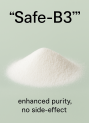
Safe-B3™ (Vitamin B3, Niacinamide)