Formulating a Light Essence for Dark Spots, Melasma, and Acne Marks: Compatibility, pH, and Mixing Order
Question
I would like to create a light essence formula to reduce shallow melasma, dark spots, and acne marks. I have drafted the following formula with percentages:
- Chamomile Water (Anthemis Nobilis) 69.40%
- Safe-B3™ (Vitamin B3, Niacinamide) 5.00%
- Hydro-White™ 1.50%
- 4MSK 3.00%
- Tranexamic Acid 3.00%
- 4D Hyaluronic Acid 5.00%
- French Pine Bark Extract 25 (Liquid) 2.50%
- Centella Asiatica Extract (Madecassoside) 0.50%
- GlucoBright™ (Acetyl glucosamine) 5.00%
- Japanese Cedar 1.00%
- PiteraEx™ 1.50%
- Ethoxydiglycol 2.60%
My questions are:
- Are the ingredients compatible?
- Safe-B3 has a pH of 6-7.5. Will this affect the formula?
- Can I mix ingredients 1-12 in order?
Answer
Analysis of Your Light Essence Formula
Here is an analysis of your proposed light essence formula for reducing shallow melasma, dark spots, and acne marks, addressing your specific questions:
1. Ingredient Compatibility
The ingredients you've selected are generally beneficial for addressing hyperpigmentation, dark spots, and improving skin texture. Many of them, such as Safe-B3 (Niacinamide), Hydro-White, 4MSK, Tranexamic Acid, GlucoBright, French Pine Bark Extract, Centella Asiatica Extract (Madecassoside), Japanese Cedar, and PiteraEx, are known for their brightening, anti-inflammatory, and skin-renewing properties.
However, there are a few points regarding compatibility and formulation stability:
- Stability: Hydro-White and Tranexamic Acid are prone to discoloration and require a stabilizer like ActiveProtec™ OX (0.5-1.0%) for long-term stability. Your current formula does not include this.
- Texture: 4MSK is an electrolyte and might affect the viscosity of the formula, potentially reducing the thickening effect of 4D Hyaluronic Acid.
- Preservation: While Chamomile Water contains a preservative (phenoxyethanol 0.8%), the total percentage in the final formula (69.4%) might not be sufficient to preserve the entire product, especially given the high water content and presence of various botanical extracts. A broad-spectrum preservative system should be added to ensure microbial stability.
Functionally, the active ingredients complement each other well for the intended purpose.
2. Effect of Safe-B3 pH on the Formula
Safe-B3 (Niacinamide) has a pH range of 6-7.5, which is within its optimal working pH range (4.0-7.0) and acceptable range (3-8). The pH of individual ingredients contributes to the final pH of the formula. Many of the active ingredients in your formula work best in a slightly acidic to neutral pH range (e.g., Madecassoside 4-6.5, Japanese Cedar 3.5-6.5, GlucoBright 3-7, Safe-B3 4-7 optimal, Tranexamic Acid 3-8, 4D Hyaluronic Acid 3-9). The final pH of your mixed formula should be checked and ideally adjusted to be within the range of 5.0-6.5 to ensure optimal efficacy and stability of most ingredients while minimizing potential irritation.
So, the pH of Safe-B3 itself is not problematic, but you must ensure the final formula pH is suitable for all ingredients.
3. Mixing Order
The proposed mixing order (1-12) is not ideal due to the different solubility and heat sensitivity requirements of the ingredients. Hydro-White requires heating (60-80°C) to dissolve, while several other ingredients (4MSK, Madecassoside, PiteraEx) should avoid high heat or be added at lower temperatures.
A more appropriate mixing procedure would involve separating ingredients based on their properties:
- In a beaker, combine the water base (Chamomile Water) with ingredients that dissolve in water and can tolerate some heat, such as Ethoxydiglycol, Safe-B3, Tranexamic Acid, GlucoBright, Japanese Cedar, and French Pine Bark Extract. Stir to dissolve.
- Gently heat this mixture to 60-80°C to help dissolve Hydro-White. Add Hydro-White and stir until fully dissolved. Ensure the temperature does not exceed 60°C for prolonged periods after adding 4MSK.
- Remove from heat and let the mixture cool down to room temperature (below 40°C).
- Add 4D Hyaluronic Acid and stir until the desired gel texture is achieved.
- In a separate small container, dissolve or disperse the heat-sensitive ingredients like Centella Asiatica Extract (Madecassoside) and PiteraEx in a small amount of the cooled water base. Add this mixture to the main batch and stir well.
- Add your preservative system (in addition to the one in Chamomile Water) and ActiveProtec™ OX (highly recommended for stability).
- Check and adjust the final pH to 5.0-6.5.
This revised order ensures that ingredients requiring heat are dissolved properly, while heat-sensitive ingredients are added at a safe temperature.
In summary, your formula contains effective ingredients for your goals, but requires the addition of a stabilizer (ActiveProtec™ OX) and a comprehensive preservative system, along with careful attention to the mixing procedure and final pH adjustment for optimal performance and stability.
Related Products Mentioned
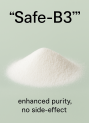
Safe-B3™ (Vitamin B3, Niacinamide)
GlucoBright™ (Acetyl Glucosamine)
Ethoxydiglycol (e.q. Transcutol)

Tranexamic Acid (Trans-White™)
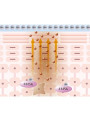
4MSK (Potassium Methoxysalicylate)

Chamomile Water (Anthemis Nobilis)
Dermal Respiratory Factor

4D Hyaluronic Acid