Formulating a Milky Foaming Scrub
Question
I want to create a fine scrub that becomes milky and foams when water is added.
Here is my current formulation:
- Herbal powder 3%
- Calcined Marl (Din Sor Pong Satu) 5%
- Powdered Salt (QS %)
- Glycerine 12%
- Mineral Oil (Paraffinum Liquidum) ชนิดหนัก 15%
- Eumulgin O5 5%
- Propylene Glycol 5%
- Para-Preserve 1%
I want the scrub to break into a milky texture, but I also want it to have foam.
Can PEG-40 Hydrogenated Castor Oil and SulFoam™ (Disodium Laureth Sulfosuccinate) be dissolved by Propylene Glycol? Or do you have other recommendations?
Answer
To make a fine scrub that turns milky and foams when water is added, you need ingredients that can emulsify the oil phase with water and provide foaming action in that system.
You asked about PEG-40 Hydrogenated Castor Oil and SulFoam™ (Disodium Laureth Sulfosuccinate).
- PEG-40 Hydrogenated Castor Oil is a surfactant that can help emulsify oils into water. It can contribute to the milky effect when the scrub is rinsed with water.
- SulFoam™ (Disodium Laureth Sulfosuccinate) is a gentle, high-foaming detergent. However, it is primarily water-soluble. While it provides good foam, incorporating a water-soluble surfactant effectively into a predominantly oil-based scrub to get foam upon water contact can be challenging compared to using ingredients designed for oil-based foaming systems.
You also asked if Propylene Glycol can dissolve these.
- Propylene Glycol is a solvent that is soluble in water and can help dissolve or disperse certain ingredients. It is not typically the primary solvent for oil-soluble components like PEG-40 Hydrogenated Castor Oil or ingredients designed to be mixed directly into oil phases. SulFoam is water-soluble, so Propylene Glycol could potentially help with its dispersion if a water phase were present, but the most effective way to incorporate ingredients for a milky and foaming oil scrub is often by selecting those compatible with the oil phase.
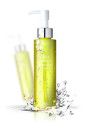
A more direct approach to achieve a milky and foaming oil-based scrub is to use a product specifically designed for this purpose, such as Oil Soap™. There are different versions available, including Oil Soap™ (High Foaming Oil-Based Liquid Soap) and Oil Soap™ WW-CF (High Foaming Oil-Based Liquid Soap) which is noted for high foaming efficiency. These products are oil-soluble bases that, when mixed with oils, create a system that turns milky and produces foam upon contact with water. This aligns perfectly with your desired outcome for the scrub.
By incorporating Oil Soap into your existing oil phase (Mineral Oil, Eumulgin O5), you can create the desired milky transformation and foaming action when the scrub is used with water. The usage rate for Oil Soap typically ranges from 15-40% (or even up to 70% for the WW-CF version), mixed directly with the oil phase.
Here's a suggested approach:
- Combine your oil phase ingredients (Mineral Oil, Eumulgin O5) with Oil Soap™. The percentage of Oil Soap will determine the degree of milkiness and foam. You might start with a percentage within the recommended range and adjust based on testing.
- Add your powders (ผงสมุนไพร, ดินสอพองสะตุ, เกลือแป้ง) to this oil mixture.
- Incorporate Glycerin and Propylene Glycol. While Propylene Glycol may not be the primary solvent for the foaming/milky agents, it acts as a humectant and can aid in the overall texture and feel of the scrub. Glycerin is also a humectant.
- Add your preservative (Para-Preserve).
This method leverages ingredients specifically designed for creating foaming and milky oil-based cleansing products, which is the most effective way to achieve your formulation goal.
Related Products Mentioned
Propylene Glycol (USP)