Formulating a Serum with Multiple Actives: Compatibility and Stability
Question
I would like to combine the following ingredients to create a serum for anti-wrinkle, whitening, and moisturizing:
Repair Activator (Bifida Ferment Lysate)Wrinkle Fill (Acetyl-Tyrosine)Acetyl Hexapeptide-8Vitamin C (L-ascorbic acid Ultra Fine)Hyaluronic Acid (Standard Molecule)Hyaluronic Acid (Nano Molecule)
I have several questions regarding this formulation:
- Are these ingredients compatible when combined? Is it necessary to use all of them together?
- What is the correct mixing method, steps, and recommended usage ratios for each ingredient?
- How should the finished mixed product be stored?
- How should the unmixed raw ingredients be stored?
- What tools are needed for accurate measurement, especially for small quantities?
- Which of these ingredients can be used alone without mixing into a formula?
- Are there alternative Vitamin C ingredients that are more suitable for this type of serum?
- How can I determine the total volume of the product after mixing?
Answer
Formulation Advice for Your 6 Ingredients
Thank you for your questions regarding the combination of Repair Activator (Bifida Ferment Lysate), Wrinkle Fill (Acetyl-Tyrosine), Acetyl Hexapeptide-8, Vitamin C (L-ascorbic acid Ultra Fine), Hyaluronic Acid (Standard Molecule), and Hyaluronic Acid (Nano Molecule) for your desired anti-wrinkle, whitening, and moisturizing formula.
Here is a breakdown of your questions and the relevant information:
1. Compatibility and Necessity
Combining multiple active ingredients targeting similar concerns (like wrinkles and hydration) is common in cosmetic formulations. However, the compatibility of these specific ingredients, particularly L-ascorbic acid, needs careful consideration in a water-based formula.
- L-ascorbic acid (Ultra Fine): As noted in the previous staff reply and the product description, L-ascorbic acid is highly unstable when dissolved directly in water. It oxidizes quickly, losing its effectiveness. It is best suited for anhydrous (water-free) formulations or requires a very low pH (3.5-4.0 for skin application) for minimal stability, which can cause irritation and may affect the stability or efficacy of other ingredients.
- Hyaluronic Acids (Standard and Nano): Combining different molecular weights of Hyaluronic Acid is beneficial for providing hydration at various levels of the skin. This combination is compatible in a water-based formula, provided a suitable thickener is used, as the nano size can affect viscosity.
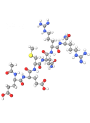
- Peptides (Acetyl Hexapeptide-8) and Amino Acid (Wrinkle Fill - Acetyl-Tyrosine): These ingredients are generally compatible in water-based formulas within their recommended pH ranges (Acetyl Hexapeptide-8: 3.5-6.5; Wrinkle Fill: acidic, pH 2-3 at 2.5%). Repair Activator (Bifida Ferment Lysate) is also water-soluble with a pH range of 4-5.5.
Overall Compatibility: The primary challenge is incorporating L-ascorbic acid into a water-based formula with the other ingredients due to its instability and low pH requirement, which conflicts with the optimal pH ranges for some other ingredients (e.g., Repair Activator prefers 4-5.5). Using L-ascorbic acid in this mix might lead to a rapidly degrading product. It is generally considered too much or incompatible in a standard water-based serum with these other ingredients.
2. Mixing Method, Steps, and Ratios
Given the compatibility issue with L-ascorbic acid in water, a stable formula combining all six ingredients as listed is difficult to achieve in a typical water-based serum. If you proceed with a water-based formula, you would likely need to omit L-ascorbic acid or replace it with a stable derivative.
Assuming a water-based formula without L-ascorbic acid (or using a stable Vitamin C form), here are general steps and recommended usage rates:
- Base: Start with your water phase (e.g., distilled water or a suitable serum base).
- Dissolve Powders: Add and fully dissolve the powder ingredients: Hyaluronic Acid (Standard Molecule), Hyaluronic Acid (Nano Molecule), and Wrinkle Fill. For Hyaluronic Acid powders, this can take time and may require refrigeration or blending as per product instructions.
- Add Liquids: Once powders are dissolved and the mixture is below 40°C, add the liquid ingredients: Repair Activator and Acetyl Hexapeptide-8. Shake Repair Activator well before use.
- Adjust pH: Check and adjust the pH of the final mixture to be within a suitable range for all ingredients (e.g., 4.0-5.5) using a pH adjuster if necessary.
- Add Preservative: Always add a broad-spectrum preservative to water-based formulas.
Recommended Usage Rates:
- Repair Activator (Bifida Ferment Lysate): 5-100%
- Wrinkle Fill (Acetyl-Tyrosine): 1-2%
- Acetyl Hexapeptide-8: 3-10%
- Vitamin C (L-ascorbic acid Ultra Fine): 3-15% (Note: This is the rate if used in a suitable, likely anhydrous, formula)
- Hyaluronic Acid (Standard Molecule): 0.05-0.5%
- Hyaluronic Acid (Nano Molecule): 0.1-0.5%
The exact percentage within the recommended range will depend on your desired potency and the total volume of your formula.
3. Storage of Mixed Product
For optimal stability and shelf life, the mixed product should be stored in an airtight, opaque container in the refrigerator (4-8°C). This protects the active ingredients from light, heat, and air, which can cause degradation.
4. Storage of Unmixed Ingredients
All the listed ingredients generally require storage in the refrigerator for long-term preservation. They should be kept in their original, tightly sealed containers, away from sunlight and heat. This maintains their quality and extends their shelf life, typically up to 2 years or more when stored correctly.
5. Measurement Tools
To accurately measure ingredients by percentage (which is typically by weight in cosmetic formulation), you will need a precise digital scale. For small batch sizes or low percentage ingredients, a scale that can measure to 0.01g or 0.001g is highly recommended. You can find suitable digital scales from online retailers specializing in laboratory equipment or cosmetic formulation supplies.
6. Ingredients Usable Alone
Based on the recommended usage rates, only Repair Activator (Bifida Ferment Lysate) is listed with a usage rate up to 100%, meaning it can potentially be used directly on the skin without dilution. The other ingredients have recommended usage rates well below 100% and should be incorporated into a base formula.
7. Alternative Ingredients
If you aim for a water-based formula with stable Vitamin C for whitening, it is recommended to replace L-ascorbic acid with a more stable derivative. Suitable alternatives include:
- Ethyl Ascorbic Acid: Highly stable, water-soluble, good efficacy.
- Ascorbyl Glucoside: Stable, water-soluble, converts to L-ascorbic acid in the skin.
- Sodium Ascorbyl Phosphate (SAP) or Magnesium Ascorbyl Phosphate (MAP): Stable, water-soluble, good for brightening.
If you are set on using L-ascorbic acid, you would need to formulate in an anhydrous base (like silicones or oils), which would require a different approach and may not be compatible with all the water-soluble ingredients you listed.
8. Total Volume After Mixing
The total volume of the mixed product will depend entirely on the total quantity of the base (e.g., water or serum base) you use and the percentages of each ingredient you add. For example, if you use 90g of base and add 10g of active ingredients, the total weight will be 100g (which is approximately 100ml for water-based formulas, but can vary depending on density). You need to decide on your desired final volume or weight first and then calculate the amount of each ingredient based on your chosen percentages.
I hope this detailed information helps you with your formulation!
Related Products Mentioned
Acetyl Hexapeptide-8 (eq Argireline)
Vitamin C (L-ascorbic acid) (Ultra-Fine)