Formulating a Silicone-Based Primer with SPF 15
Question
I am trying to formulate a primer similar to Hourglass Veil Mineral Primer SPF 15. I noticed the ingredient list includes several silicones (Cyclopentasiloxane, PolySilicone-11, Polymethylsilsesquioxane, Peg-10 Dimethicone) despite the product potentially being marketed as 'not a silicone base'. I need recommendations for ingredients available on MySkinRecipes and their suitable usage percentages to create a similar silicone/oil-based primer formulation with SPF 15, focusing on achieving a smooth, blurring, matte finish with oil control, using the following UV filters:
Zinc Oxide (4.20%)Titanium Dioxide (2.45%)
Could you provide guidance on the ingredients, their roles, suitable alternatives from MySkinRecipes, and a general formulation guide for this type of product?
Answer
You're looking to recreate a popular primer with SPF and have questions about its ingredients and how to formulate something similar. Based on the ingredient list you provided for the Hourglass Veil Mineral Primer SPF 15, here's a breakdown and a guide to formulating a similar product using ingredients available on MySkinRecipes.
Regarding your observation about silicones, you are correct. The ingredient list includes several silicone compounds such as Cyclopentasiloxane, PolySilicone-11, Polymethylsilsesquioxane, and Peg-10 Dimethicone. While the product might not use a traditional heavy silicone oil as its primary base, these ingredients are indeed silicones and contribute significantly to the primer's texture, feel, and performance, such as providing a smooth application, blurring effect, and oil control. The claim "not a silicone base" might be a marketing interpretation focusing on the overall formulation style rather than the complete absence of silicones.
Here are the key ingredients from the Hourglass primer and their equivalents or suitable alternatives available on MySkinRecipes, along with their roles:
Active Ingredients (UV Filters):
- Zinc Oxide (4.20%): Provides broad-spectrum UV protection. On MySkinRecipes, you can use Zinc Oxide (Micronized) (Product ID 292). For better dispersion and less whiteness in a sunscreen/primer, a treated or dispersed form like Titanium Dioxide 200nm EasyDisperse™ (Dimethicone/Silica Treated) (Product ID 236) (which is Titanium Dioxide but illustrates the concept of treated powders) or a specifically treated Zinc Oxide for sunscreens would be more suitable, although the exact treated form from the original list might not be available. You would need to ensure proper dispersion of the powder for effective SPF.
- Titanium Dioxide (2.45%): Provides broad-spectrum UV protection. Titanium Dioxide 200nm EasyDisperse™ (Dimethicone/Silica Treated) (Product ID 236) or Titanium Dioxide Nanosil (Product ID 7375) are suitable options treated for dispersion in oil/silicone bases and commonly used in makeup with SPF.
Other Ingredients (Base, Texture, Feel, Emulsification):
- Cyclopentasiloxane: A lightweight, volatile silicone that provides a silky feel and helps with spreadability. Cyclopentasiloxane (Low-Odor Cyclomethicone) (Product ID 171) or KF-995 (Cylopentasiloxane, D5) (Product ID 31770) are direct equivalents.
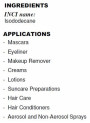
- Isododecane: A light hydrocarbon fluid that evaporates quickly, contributing to a non-greasy, weightless feel and helping to disperse pigments. Isododecane (Germany) (Product ID 228) or Isododcane (Ultra Lite) (Product ID 7915) are suitable. Isododecane Gel (Thixotropic) (Product ID 30309) could also be used to add viscosity.
- PolySilicone-11: A silicone elastomer that provides thickening, a matte finish, and a silky feel, often contributing to the blurring effect. Silicone Gel 9040 (e.q. DC 9040, Cyclopentasiloxane Base) (Product ID 32748) or Silicone Gel 5045 (e.q. BSG-5045, Cyclopentasiloxane Base) (Product ID 127459) are silicone elastomers in a Cyclopentasiloxane base that can provide similar texture and feel benefits.
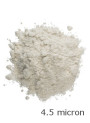
- Polymethylsilsesquioxane: A spherical silicone resin powder that provides soft-focus, blurring of fine lines and pores, and a matte finish by absorbing oil. Polymethylsilsesquioxane 4.5microns (Soft-Focus / Matte) (Product ID 1020) is available in various particle sizes (Product IDs 1354, 1355, 1356 are other options).
- Hexyl Laurate: A lightweight emollient ester that helps with spreadability and feel. Hexyl Laurate (Product ID 7960) is available. The staff suggested LipidSoft™ Lite (Isononyl Nonanoate) (Product ID 530) as a suitable alternative with a similar light feel.
- Peg-10 Dimethicone: A silicone-based emulsifier that helps combine the water and silicone/oil phases, typically used in water-in-silicone emulsions. SiliSolve™ (PEG-10 Dimethicone, Odorless) (Product ID 408) is a direct equivalent.
- Polyglyceryl-4 Isosterate: Another emulsifier, likely contributing to the stability of the emulsion. Polyglyceryl-4 Isostearate (Product ID 31514) is available. The staff suggested Oil Blender™ (Polyglyceryl-3 Diisostearate) (Product ID 1004) as an alternative, which is designed to blend oils and can be used in water-in-oil emulsions.
- Stearic acid: A fatty acid that can act as a thickener or co-emulsifier. Various grades of Stearic Acid are available (e.g., Product ID 32834, 126176, 1318).
- Alumina: A powder ingredient often used in makeup for its soft feel, oil absorption, and potential to enhance the performance of UV filters. Alumina (5micron, Spherical) (Product ID 1205) is available on MySkinRecipes. It can be used as a texturizer and potentially help with the matte finish.
General Formulation Guide (Silicone/Oil-Based Emulsion):
This type of primer is likely a water-in-silicone or anhydrous (water-free) formulation. Given the presence of PEG-10 Dimethicone, a water-in-silicone emulsion is probable.
- Create the Silicone/Oil Phase: Combine the silicone fluids (Cyclopentasiloxane, Isododecane), silicone elastomer (Silicone Gel), emollient ester (Hexyl Laurate or LipidSoft Lite), emulsifiers (Peg-10 Dimethicone, Polyglyceryl-4 Isosterate or Oil Blender), and Stearic Acid. Heat gently if needed to melt Stearic Acid, then cool slightly.
- Disperse Powders: Add the powder ingredients (Zinc Oxide, Titanium Dioxide, Polymethylsilsesquioxane, Alumina) to the silicone/oil phase. Mix thoroughly using a high-shear mixer to ensure the powders, especially the UV filters, are fully dispersed without clumps. Proper dispersion is crucial for SPF efficacy and a smooth texture.
- Prepare Water Phase (if applicable): If making a water-in-silicone emulsion, prepare a separate water phase with any water-soluble ingredients.
- Emulsify: Slowly add the water phase to the silicone/oil phase while mixing continuously with high shear. This process creates the emulsion. If it's an anhydrous formula, this step is skipped.
- Final Adjustments: Once the emulsion is formed (or phases are fully combined for anhydrous), mix until homogeneous. Add any heat-sensitive ingredients if applicable.
Important Considerations:
- Percentages: The exact percentages of each ingredient are crucial for the final texture, feel, SPF level, and performance (oil control, blurring). The percentages from the original product (4.20% Zinc Oxide, 2.45% Titanium Dioxide) are a starting point for the UV filters, but achieving SPF 15 will depend heavily on the type of UV filters used and their dispersion in the formula. Other ingredient percentages would require experimentation to match the desired feel and performance.
- Dispersion: Properly dispersing the powder ingredients, especially Zinc Oxide and Titanium Dioxide, is critical for both the aesthetic (avoiding whiteness) and the function (SPF protection) of the primer. Using treated powders designed for dispersion in oil/silicone bases is highly recommended.
- Stability: Formulating stable water-in-silicone emulsions can be challenging. The choice and ratio of emulsifiers, as well as the mixing method, are key.
By using the suggested ingredients from MySkinRecipes, you can create a primer with a similar composition and aim for comparable performance characteristics like oil control, pore blurring, and a smooth, matte finish with SPF protection.
Related Products Mentioned
Isododecane (Germany)
Zinc Oxide (Micronized)
Alumina (5micron, Spherical)
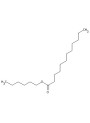
Hexyl Laurate