Formulating a Transparent Water-Based Serum with Oil-Soluble Vitamin C (ATIP): Potency, pH, and Stability
Question
I plan to formulate a serum using the stable, oil-soluble Vitamin C derivative, Perfect-C™ (Ascorbyl Tetraisopalmitate, ATIP). I have several technical questions regarding its properties and formulation requirements:
- Potency and Properties: Is ATIP as potent as pure L-Ascorbic Acid (LAA)? What are the key differences between the two, aside from ATIP being stable and oil-based?
- pH and Penetration: Pure L-Ascorbic Acid typically requires a low pH (e.g., below 3.5) for effective skin penetration. Why does ATIP require a formula pH between 5.0-5.5? Does ATIP not require a low pH to penetrate the skin like LAA does?
- Formulation Guidance (Water-Based Serum): I would like to create a water-based and transparent serum using ATIP. Could you provide a suggested formula structure or ingredient list? I intend to include anti-aging ingredients like Hyaluronic Acid (extra low molecule) and Gluconolactone.
- Stabilizer Requirements: Since I plan to use Disodium EDTA, is it necessary to also incorporate dedicated stabilizers such as
Protec™ OXandProtec™ UVin this transparent, water-based serum?
Answer
Hello, thank you for your questions about Perfect-C™ (Ascorbyl Tetraisopalmitate) (ATIP). This is an excellent choice for a stable and highly effective Vitamin C derivative.
Here are the answers to your questions:
1. Potency and Difference from L-Ascorbic Acid (LAA)
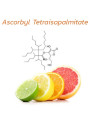
Perfect-C™ (ATIP) is considered to be as potent as pure L-Ascorbic Acid (LAA). The product description states it is the only type that is as effective as LAA while being completely stable.
The key differences are:
| Feature | Perfect-C™ (Ascorbyl Tetraisopalmitate) | L-Ascorbic Acid (Pure Vitamin C) |
|---|---|---|
| Solubility | Oil-soluble (Lipophilic) | Water-soluble (Hydrophilic) |
| Stability | Highly stable (Aged for at least 24 months without deterioration). | Highly unstable (Easily oxidizes when exposed to light, heat, or air). |
| Penetration | Superior percutaneous absorption due to its oil-soluble nature, allowing it to penetrate the lipid-rich skin barrier easily. | Requires a low pH to penetrate the skin effectively. |
| Mechanism | An ester that is converted into active L-Ascorbic Acid by enzymes (esterases) in the skin. | Active upon application. |
2. pH Requirement for Penetration
You are correct that pure L-Ascorbic Acid (LAA) requires a low pH (typically below 3.5) to be in its non-ionized form, which is the only form that can effectively penetrate the skin barrier.
Perfect-C™ (ATIP) does not need a low pH for penetration because its molecular structure is already highly lipophilic (oil-loving).
- LAA: Needs a low pH to become lipophilic enough to pass the skin barrier.
- ATIP: Is already an oil-soluble molecule. It penetrates the skin barrier easily due to its fat-like structure. Once absorbed, enzymes in the skin break it down to release the active L-Ascorbic Acid.
- Recommended pH: The product guidelines for Perfect-C™ require the final formula pH to be within 6.0. A target pH of 5.0-5.5 is ideal for skin compatibility and overall formula stability, but this range is for the formula, not a requirement for the ATIP molecule to penetrate the skin.
3. Water-Based, Transparent Serum Formulation
Since Perfect-C™ (ATIP) is oil-soluble, to create a water-based and transparent serum, you must use a solubilizer to disperse the oil phase (ATIP) into the water phase.
Suggested Formula Structure:
| Ingredient | Function | Suggested Concentration | Notes |
|---|---|---|---|
| Water Phase | |||
| Distilled Water | Solvent | Up to 100% | |
| Hyaluronic Acid (Small Molecule) | Humectant/Anti-aging | 0.1 - 1.0% | Use the extra low molecule type (e.g., ID 127702) for deeper penetration. |
| Natural PHA (Gluconolactone) | PHA/Anti-aging | 2 - 5% | Add to the water phase. |
| Disodium EDTA | Chelating Agent | 0.2% | Required by Perfect-C™ guidelines when water is present. |
| Oil Phase | |||
| Perfect-C™ (ATIP) (ID 499) | Active Vitamin C | 1 - 5% | 2-3% is effective for whitening. |
| Solubilizer | Dispersant | 2 - 4x the ATIP concentration | Use a high-quality solubilizer like Polysorbate 20 (ID 175) or Free Solve™ (ID 127576). |
| Final Adjustments | |||
| Preservative | Protection | Manufacturer\'s recommendation | Essential for water-based products. |
| pH Adjuster | pH Control | As needed | Use Lactic Acid or Triethanolamine to adjust pH to 5.0-5.5. |
Mixing Procedure:
- Mix the Perfect-C™ (ATIP) with the Solubilizer completely until a clear, single-phase liquid is formed.
- In a separate container, mix the Water Phase ingredients (Water, Hyaluronic Acid, Gluconolactone, Disodium EDTA).
- Slowly add the ATIP/Solubilizer mixture to the Water Phase while stirring gently until the solution is completely clear and transparent.
- Add the Preservative.
- Check and adjust the final pH to 5.0-5.5.
Necessity of Protec™ OX and Protec™ UV
Using Disodium EDTA (a chelating agent) is a crucial first step for stability and is required by the ATIP product guidelines. However, EDTA is not a substitute for dedicated stabilizers:
- Protec™ OX (ID 1332): This is an antioxidant for the formula itself. While ATIP is stable, other ingredients (especially oils or extracts if you add them) and the formula base can still oxidize. It is highly recommended to use Protec™ OX to protect the entire formulation from degradation over time.
- Protec™ UV (ID 1333): This is a UV stabilizer that protects the formula from light exposure. Since you want a transparent serum, it will be more susceptible to light degradation, even if packaged in a non-clear bottle. It is highly recommended to use Protec™ UV to ensure the long-term stability and efficacy of the serum.
Conclusion on Stabilizers: For maximum shelf-life and efficacy of a transparent serum, you should use Disodium EDTA (0.2%) in addition to Protec™ OX and Protec™ UV.