Formulating Aloe Vera Gel with Oils and Actives: Stability & Ingredient Questions
Question
I would like to create an Aloe Vera gel formula and add oils and other active ingredients. I have a few questions:
- Is there a difference in concentration between liquid Aloe Vera extract and powder Aloe Vera extract?
- If I add oil to the Aloe Vera Gel formula, will the product still have a shelf life of 2 years?
- Could you please provide a formula for Aloe Vera gel that includes added oil, along with the following ingredients:
- Avocado Oil
- Double Hyaluron Liquid
- Cucumber Extract
- Alpha Arbutin
- Vitamin A, C, and E
- Glycerin
Answer
Creating Your Own Aloe Vera Gel with Oils and Actives
It's great that you've found a combination that works well for your skin! Making your own formulations allows you to customize ingredients, but it's important to understand the science behind stable and safe products.
Here are the answers to your questions based on formulation principles and the available ingredients:
1. Mixing Oil with Gel Base
Yes, when you mix oil into a water-based gel, you generally need an emulsifier to bind the oil and water phases together. Without an emulsifier, the oil and gel will separate over time, similar to how oil and vinegar separate in salad dressing. Some gel-forming agents, like Pro Polymer, can help stabilize a small amount of oil, but for a significant oil percentage, a dedicated emulsifier is necessary for a stable, uniform product.
Regarding stability over time, a homemade mixture without proper formulation will likely face two main issues:
- Separation: As mentioned, without an emulsifier, the oil and water will separate.
- Rancidity and Microbial Growth: Oils can oxidize and become rancid, causing an unpleasant smell. More importantly, any product containing water (like a gel) is a breeding ground for bacteria, mold, and yeast. To prevent this, you absolutely need a preservative to ensure the product is safe to use and has a reasonable shelf life. An antioxidant (like Vitamin E) can help slow down oil rancidity.
Creating a stable oil-in-gel or oil-in-water emulsion requires careful selection of ingredients and understanding their compatibility and usage rates. Referring to basic formulation guides and starting with a pre-made base like Aloe Vera Gel (Heavy) or Aloe Vera Gel (Lite) can simplify the process. If formulating from scratch, you would need a gel maker (like Pro Polymer or Sepimax Zen) for the water phase and an emulsifier (like CreamMaker EG or SepGEL 305) to incorporate the oil phase.
2. Adding Specific Ingredients and Other Recommendations
The ingredients you wish to add – Avocado Oil, Double Hyaluron Liquid, Cucumber Extract, Alpha Arbutin, Vitamin A, C, and E, and Glycerin – are all beneficial for skin and can be incorporated into a gel formulation. Their inclusion and percentage would depend on the desired effect and the overall formula structure (whether using a base or formulating from scratch).
- Avocado Oil (Avocado Oil (Refined)) is an emollient rich in fatty acids and vitamins, great for moisturizing dry skin. It should be added to the oil phase (if using an emulsifier) or carefully dispersed if the gel maker can handle some oil.
- Double Hyaluron Liquid provides hydration with both high and low molecular weight hyaluronic acid. It is water-soluble and easy to add to the water phase or a gel base.
- Cucumber Extract (France) is known for its soothing and softening properties. It is water-soluble and added to the water phase.
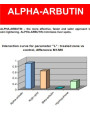
- Alpha Arbutin (Switzerland) is a popular skin brightening agent. It is water-soluble and typically added in the final phase below 30°C, ensuring the pH is between 3.5-6.5.
- Glycerin (USP/Food Grade) is a humectant that draws moisture into the skin. It is water-soluble and can be added to the water phase.
- Vitamin A: Forms like Vitamin A Palmitate or Retinol are oil-soluble (Retinol powder needs specific solvents). They require careful handling due to stability and usage rate limits.
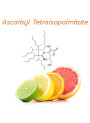
- Vitamin C: Various forms exist, some water-soluble (Vitamin C (L-ascorbic acid) (Fine), Sodium Ascorbyl Phosphate (Vitamin C SAP)) and some oil-soluble (Perfect-C™ (Ascorbyl Tetraisopalmiate)). Stability and pH requirements vary significantly between types.
- Vitamin E: Forms like Vitamin E (Tocopheryl Acetate) or Vitamin E (dl-alpha tocopherol) are oil-soluble and act as antioxidants for the oil phase and skin. They are mixed into the oil phase.
For additional extracts, consider water-soluble options known for soothing or antioxidant benefits, such as Calendula Extract (Water Soluble) or CleanTea™ Liquid (Green Tea Extract Deodorizer).
3. Using Fresh Aloe Vera
As previously advised, you should not use fresh Aloe Vera gel directly from the plant in homemade cosmetic formulations intended for storage. Fresh plant material contains a high bacterial load and will cause your product to spoil very quickly, even with preservatives. This can lead to skin irritation or infection.
Commercially available ingredients like Aloe Vera Extract (extraction ratio 10:1 FullAssay™) are processed to be microbiologically safe and stable for cosmetic use. You would use a small percentage (e.g., 1-10%) of this concentrated extract in your formula, not replace the entire water portion with fresh gel. You would still need other ingredients like a gel maker (if making from scratch), preservatives, and potentially an emulsifier if adding oils.
In summary, while mixing oil with gel is possible and can be beneficial, achieving a stable, safe, and long-lasting product requires understanding basic formulation principles, including the use of emulsifiers, preservatives, and antioxidants, and using stable, cosmetic-grade ingredients rather than fresh plant material.
Related Products Mentioned
Vitamin E (Tocopheryl Acetate)
Alpha Arbutin (Switzerland)
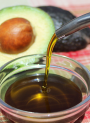
Avocado Oil (Refined)

Calendula Extract (Water Soluble)
Vitamin C (L-ascorbic acid) (Fine)
Vitamin E (dl-alpha tocopherol)
Glycerin (USP/Food Grade)
Aloe Vera Gel (Heavy)

Cucumber Extract (France)
Pro Polymer™ (Gel Maker)
Double Hyaluron Liquid
Aloe Vera Gel (Lite)

SepGEL 305
Retinol (100% Pure Powder)

Sepimax Zen