Formulating an Alcohol-Free Perfume Spray: Ingredient Differences and Solvent Impact
Question
I have the following formula:
- Bedtime Baby Bath (Johnson) 10%
- Last Fix™ 10%
- LipidSoft™ Deo 10%
- Ethyl Alcohol (remaining percentage)
- Can this formula be used as an odor-eliminating perfume spray?
- How does Citromask™ differ from LipidSoft™ Deo?
- If Ethyl Alcohol is replaced with distilled water, what would be the effects on the scent and effectiveness, as I want to create an alcohol-free multi-purpose perfume spray?
Answer
Formula Suitability and Ingredient Differences
The formula you provided, containing fragrance oil (like Bedtime Baby Bath), a potential fixative (like Last Fix™), LipidSoft™ Deo, and Ethyl Alcohol, can indeed be used as a multi-purpose odor-eliminating perfume spray.
- The fragrance oil provides the desired scent.
- LipidSoft™ Deo acts as a deodorant by inhibiting the bacterial process that causes body odor.
- Ethyl Alcohol serves as a solvent for the fragrance and other oil-soluble components, helps the spray disperse finely, and evaporates quickly.
- An ingredient like Last Fix™ is typically used as a fixative to help the fragrance last longer.
Difference between Citromask™ and LipidSoft™ Deo
While both are used for odor control, they work differently:
- LipidSoft™ Deo (Triethyl Citrate): This ingredient functions as an emollient (skin softener) with a light texture. Its primary deodorizing mechanism is to inhibit the esterase process of bacteria responsible for breaking down sweat components into odor molecules. It doesn't kill bacteria but prevents the odor formation process. It is soluble in oil and alcohol and has limited solubility in water.
- Citromask™: This is a natural deodorizer that works by neutralizing existing odors, particularly those from fatty acids (like body odor) and cigarette smoke. It does not have a scent itself but eliminates bad odors. It is soluble in oil, alcohol, or Dipropylene Glycol.
In summary, LipidSoft™ Deo targets the cause of bacterial odor by inhibiting the process, while Citromask™ neutralizes existing odors.
Replacing Ethyl Alcohol with Distilled Water
Replacing Ethyl Alcohol with distilled water in this formula will significantly impact its properties and effectiveness:
- Solubility: Fragrance oils and LipidSoft™ Deo are generally not soluble in water. Using water as the main solvent will likely cause these ingredients to separate from the water, resulting in a cloudy or layered product. You would need a suitable solubilizer or emulsifier to create a stable mixture.
- Scent Performance: Alcohol evaporates quickly, helping to disperse the fragrance molecules into the air for a strong scent throw. Water evaporates much slower and does not disperse fragrance as effectively, leading to a weaker and less diffusive scent.
- Effectiveness: LipidSoft™ Deo has limited solubility in water. Replacing alcohol will reduce its ability to properly disperse and function within the formula, potentially decreasing its effectiveness as a deodorant.
- Stability: Alcohol also contributes to the preservation of the formula. An alcohol-free, water-based formula would require an effective preservative system to prevent microbial growth.
To create an effective alcohol-free multi-purpose spray, you would need to reformulate significantly, incorporating appropriate solubilizers or emulsifiers to blend the oil-soluble ingredients with water, and adding a preservative system.
Related Products Mentioned
LipidSoft™ Deo (Triethyl Citrate, TEC)
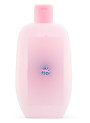
Bedtime Baby Bath (Benchmark - Johnson)