Formulating an Aloe Vera Gel for Hydration and Anti-Aging
Question
I am looking to formulate an Aloe Vera gel primarily for hydration and anti-aging benefits. I have several ingredients and would like guidance on their optimal usage percentages and how to combine them to achieve a light, fast-absorbing, and stable gel texture, similar to a reference product I like. The ingredients I am considering include:
- Aloe Vera Extract
- Centella Asiatica Extract
- Sodium Hyaluronate
- Beta Glucan
- Allantoin
- Phenoxyethanol (as a preservative)
- Glycerin
- Propylene Glycol
- Dimethyl Isosorbide (DMI)
- Xanthan Gum (or Hydroxyethylcellulose as a gelling agent)
Could you please advise on the recommended percentages for these ingredients, especially Sodium Hyaluronate, and provide a basic mixing procedure? I am particularly interested in whether solvents/penetration enhancers like Propylene Glycol, Glycerin, or DMI are necessary and the best gelling agent between Xanthan Gum and Hydroxyethylcellulose for ease of use without high-shear equipment.
Answer
Aloe Vera Gel Formulation for Hydration and Anti-Wrinkle
Based on the ingredients you have and your goal for a light, fast-absorbing, stable gel focused on hydration and anti-wrinkle benefits, here's a breakdown and some suggestions:
Solvent / Penetration Enhancer (Propylene Glycol, Glycerin, Dimethyl Isosorbide (DMI))
As the staff mentioned, these aren't strictly necessary for the solubility of most of your ingredients, as they are water-soluble. However, Glycerin is an excellent humectant (draws moisture into the skin) and can significantly improve the texture and feel of the gel, making it smoother and more pleasant to use. It can also help solubilize some plant extracts and potentially enhance the delivery of water-soluble active ingredients.
Propylene Glycol is also a good humectant and solvent. Dimethyl Isosorbide (DMI) is a more potent carrier, often used for ingredients that are difficult to solubilize or require deeper skin penetration, which might be more than needed for this basic formula.
Given that the reference product you mentioned includes Glycerin, incorporating a small amount (e.g., 2-5%) is a good idea for its humectant properties and to improve the skin feel, even if not essential for dissolving the primary ingredients.
Gelling Agent (Xanthan Gum vs. Hydroxyethylcellulose)
- Xanthan Gum: Much easier to work with, especially without a high-shear mixer. It hydrates relatively easily and provides a stable gel structure.
- Hydroxyethylcellulose (HEC): Can yield a clearer gel and a different skin feel, but requires proper dispersion techniques (like heating or using a dispersing agent) to avoid clumping.
For an easy-to-make and stable gel, Xanthan Gum is recommended. Use it at 0.2-1% to achieve your desired viscosity. For a lighter gel, start at 0.2-0.5%.
Usage Percentages for Ingredients
- Aloe Vera Extract: The percentage depends on the concentration of the extract you are using (e.g., 10:1 extract or 200x powder). Check the supplier's recommended usage rate. For a Aloe Vera Extract (extraction ratio 10:1 FullAssay™), a typical range is 1-10% (3% is equivalent to 30% fresh aloe vera).
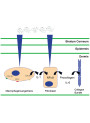
- Centella Asiatica Extract: 5% is a common and effective rate for many standardized Centella extracts. If using a highly concentrated form like Centella Asiatica Extract (Madecassoside 90%) or Pure-TECA™ Centella Asiatica Extract (TECA 95%, CICA), the recommended usage rate is typically 0.1-2% (1% is often recommended).
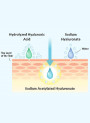
- Sodium Hyaluronate: As advised by cosmeceutical7, 3% is generally too high. High concentrations can feel sticky and, in very dry environments, can potentially draw moisture out of the skin. An effective and comfortable usage rate is typically between 0.1% and 1%. One type available is Super-HYA™ (Sodium Acetylated Hyaluronate, AcHA).
- Hyaluronic Acid (HA) vs Sodium Hyaluronate (NaHA): HA is the acid form, while NaHA is the salt form. NaHA is more stable and water-soluble, making it more commonly used in skincare.
- "Nano" Hyaluronic Acid: Refers to Sodium Hyaluronate with a very low molecular weight, claimed to penetrate deeper. Using standard Sodium Hyaluronate at 0.1-1% is usually sufficient for good hydration.
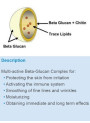
- Beta Glucan: 1% is a typical and effective usage rate.
- Oat vs. Yeast Beta Glucan: Both are excellent humectants, soothing agents, and support the skin barrier. Beta Glucan (Saccharomyces cerevisiae extract) (Yeast) is sometimes noted for potential immune-modulating effects and smaller size. Beta Glucan 70% (Oat Extract, Water-Soluble) or Beta Glucan 90% (Oat Extract, Water-Soluble) (Oat) are highly regarded for soothing properties. Both are good choices; the difference in basic hydration/soothing may not be vast.
- Allantoin: Typically used at 0.1-0.5%. It helps soothe irritation and promote skin healing. Its solubility in water at room temperature is about 0.5%. Using up to 0.5% will dissolve in plain water. With 5% Glycerin, solubility increases to 0.8%. The product Allantoin is available.
- Phenoxyethanol: A common preservative. The effective and safe usage rate is typically 0.5-1%. Should use the Phenoxyethanol (Extra Pure) product. Always follow the supplier's recommendation to ensure adequate preservation.
Other Ingredients for Stability
As the staff noted, your chosen ingredients should form a stable gel structure. However, adjusting the final pH of the product to around 5-6 is important for skin compatibility and optimal preservative function. You may need a small amount of a pH adjuster like Citric Acid solution after all ingredients are mixed.
Sample Starting Formulation
This is a suggested starting point. Adjustments may be needed based on your specific ingredients and desired texture:
- Purified Water: Up to 100%
- Glycerin: 3-5%
- Aloe Vera Extract: Follow supplier recommendation (e.g., 5-10% of 10:1 type)
- Xanthan Gum: 0.3-0.5% (Adjust for desired viscosity)
- Centella Asiatica Extract: 5% (Standard) or 1% (High concentration like Madecassoside 90%)
- Sodium Hyaluronate: 0.1-0.5%
- Beta Glucan: 1% (Choose Oat or Yeast, or a blend)
- Allantoin: 0.2-0.5%
- Phenoxyethanol: 0.5-1%
- Citric Acid Solution (for pH adjustment): As needed to reach pH 5-6.
General Mixing Procedure
- Weigh the purified water.
- Disperse the Xanthan Gum in a small amount of Glycerin or slowly sprinkle into the water while stirring/blending vigorously to prevent clumps. Continue mixing until a smooth gel forms.
- In a separate small container, dissolve Allantoin in a small amount of water or Glycerin.
- Add the dissolved Allantoin, Sodium Hyaluronate, Beta Glucan, and Extracts (Aloe Vera, Centella) to the main water/gel phase. Stir or blend until fully incorporated.
- Once everything is well mixed, add the Phenoxyethanol and mix thoroughly.
- Check the pH. If it is above 6, add drops of a dilute Citric Acid solution, stirring and re-checking the pH until it is between 5 and 6.
- Package the gel in clean containers.
Remember that cosmetic formulation requires accurate measurements, good hygiene practices, and testing (stability, pH, and potentially microbial testing for products intended for sale).
Related Products Mentioned
Allantoin
Propylene Glycol (USP)
Glycerin (USP/Food Grade)
Phenoxyethanol (Extra Pure)

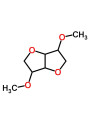
Dimethyl Isosorbide (DMI)