Formulating an Anti-Aging & Hydrating Serum: Ingredients, Mixing, Preservation, Texture, and Packaging
Question
I would like to create a serum formulation with anti-aging, moisturizing, hydration, and firming properties using the following ingredients:
- Galactomyces Ferment Filtrate (aka. Pitera) 15%
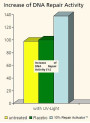
- Repair Activator™ Powder (Bifida Ferment Lysate) 1%
- Pal-GHK, Pal-GQPR (eq. Matrixyl 3000) 3%
- Natural Moisturizing Amino Acids 1%
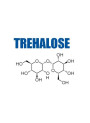
- TreMoisture™ (Trehalose) 1%
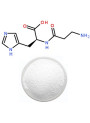
- L-Carnosine 1%
- DMAE (SkinTight MD™) Liquid 3%
- Prebio-care (Skin Prebiotic) 3%
- Ethylhexylglycerin (Preservative) (unsure of percentage)
I have the following questions:
- Can this formula be mixed using a beaker without a cream mixer?
- If yes, what is the recommended mixing order?
- What percentage of the preservative (Ethylhexylglycerin) should be used?
- Which ingredients can be substituted? Should any ingredients be removed or added?
- Will the finished serum have a sticky texture? If so, what can be added to reduce stickiness?
- Should the serum be packaged in an opaque bottle or a clear bottle?
Answer
Serum Formulation Guide
You have chosen a good selection of ingredients targeting anti-aging, hydration, and skin barrier support.
1. Can these ingredients be mixed using a beaker without a cream mixer?
Yes, for a serum formulation which is typically water-based, you can likely mix these ingredients using a beaker and stirring. Most of the ingredients you listed are water-soluble and are added to the water phase or in the final step. A cream mixer is usually needed for creating emulsions (mixing oil and water phases) or for thicker cream/lotion textures.
2. If yes, what is the mixing order?
Assuming you are creating a simple water-based serum, here is a suggested mixing order. You will need a base liquid, typically distilled water, to make up the remaining percentage of your formula (100% minus the total percentage of your active ingredients and preservative).
- Prepare the Water Phase: Measure out the required amount of distilled water (or your chosen base liquid).
- Add Water-Soluble Ingredients (Room Temperature): Add ingredients that dissolve easily in water and don't require specific temperature constraints first. Stir gently until fully dissolved. This would include:
- Natural Moisturizing Amino Acids (1%)
- TreMoisture™ (Trehalose) (1%)
- Prebio-care (Skin Prebiotic) (3%)
- L-Carnosine (1%) - Note: The description for L-Carnosine suggests adding 3% of Butylene Glycol, Ethoxydiglycol, or Laurocapram to the formula to help with absorption. You may consider adding one of these to your water phase if you include L-Carnosine.
- Add Liquid Actives (Room Temperature): Add liquid ingredients that dissolve in water.
- Galactomyces Ferment Filtrate (15%)
- Repair Activator™ Powder (Bifida Ferment Lysate) (1%) - Shake well before adding.
- DMAE (SkinTight MD™) Liquid (3%)
- Add Matrixyl 3000: Add Pal-GHK, Pal-GQPR (eq. Matrixyl 3000) (3%). The description says to mix in the final step below 40°C, but since this is a cold process (no heating), you can add it after the other water-soluble actives.
- Add Preservative: Add Ethylhexylglycerin (and any co-preservative you choose). Ethylhexylglycerin can be added at room temperature.
- Final Stirring: Stir gently but thoroughly to ensure all ingredients are evenly dispersed. Avoid vigorous shaking, especially for ingredients like Natural Moisturizing Amino Acids, which can cause bonding.
- Note: This assumes a simple water-based system. If you plan to add any oil-soluble ingredients or thickeners, the process would be different.*
3. What percentage of preservative should be used?
You listed Ethylhexylglycerin. The recommended usage rate for Ethylhexylglycerin is 0.3-1.0%. It is important to note that Ethylhexylglycerin is generally not suitable for use as a single preservative and should be used in combination with other preservatives for broad-spectrum protection. You should choose a co-preservative compatible with your formula and use Ethylhexylglycerin within its recommended range, likely around 0.5-1.0% when combined with another preservative.
4. Which ingredients can be substituted? Should any be removed or added?
Your selection includes ingredients with various benefits:
- Anti-aging/Wrinkle/Firming: Galactomyces Ferment Filtrate, Repair Activator (Bifida Ferment Lysate), Matrixyl 3000, L-Carnosine, DMAE.
- Moisturizing/Hydration: Galactomyces Ferment Filtrate, Natural Moisturizing Amino Acids, TreMoisture (Trehalose), Ethylhexylglycerin (as a humectant).
- Skin Barrier/Soothing: Repair Activator (Bifida Ferment Lysate), Prebio-care (Skin Prebiotic), L-Carnosine, TreMoisture (Trehalose), Natural Moisturizing Amino Acids.
The combination is comprehensive for your stated goals.
- Substitutions: While other ingredients might offer similar benefits (e.g., other peptides for anti-aging, other humectants for moisture), the specific ingredients you've chosen have unique properties. Direct one-to-one substitutions while maintaining the exact same profile would be challenging without reformulating significantly.
- Removals/Additions:
- Your chosen percentages are generally within the recommended ranges, except for Repair Activator at 1% (recommended 5-100%). You might consider increasing Repair Activator for potentially greater efficacy, but 1% still offers some benefit. Galactomyces at 15% is within range but high doses might feel greasy.
- As mentioned in the mixing steps, adding 3% of Butylene Glycol, Ethoxydiglycol, or Laurocapram is recommended with L-Carnosine for better skin absorption.
- Consider adding a thickener or gelling agent if you desire a more viscous serum texture. Ingredients like Carbomer, Xanthan Gum, or Hydroxyethylcellulose are common for this purpose in water-based serums.
- Ensure you include a broad-spectrum preservative system, not just Ethylhexylglycerin alone.
Overall, the selected ingredients form a potent serum. The main considerations are optimizing absorption for L-Carnosine, ensuring adequate preservation, and adjusting texture if needed.
5. Will the texture be sticky? If so, what can be added?
With the combination of ingredients, particularly at the concentrations you've chosen, the serum might feel somewhat sticky or tacky. This can be due to:
- Humectants: Ingredients like Galactomyces Ferment Filtrate, Natural Moisturizing Amino Acids, TreMoisture, and Ethylhexylglycerin are humectants that attract and hold water, which can sometimes result in a sticky feel, especially at higher concentrations.
- High Active Load: A high total percentage of active ingredients can contribute to tackiness.
- DMAE: The description for DMAE mentions that usage above 5% can make it "very icky". While you are using 3%, the combination with other ingredients could still contribute to this.
To reduce stickiness:
- Add a Texture Enhancer/Modifier: Ingredients like Propanediol, Butylene Glycol (which you might add for L-Carnosine anyway), or certain silicones (if compatible with your formula) can improve slip and reduce tackiness.
- Adjust Percentages: If stickiness is a major issue, you might consider slightly reducing the percentage of some humectants or actives, though this could potentially impact efficacy.
- Add a Lightweight Emollient: A small amount of a very light, water-dispersible oil or ester could help improve the skin feel without making it greasy.
6. Should it be packaged in an opaque bottle or a clear bottle?
Given that several of your key ingredients (Galactomyces Ferment Filtrate, Repair Activator, Matrixyl 3000, L-Carnosine, DMAE) have storage recommendations that include keeping them in a cool place or refrigerator and protected from sunlight/heat, it is highly recommended to package your finished serum in an opaque bottle. This will help protect the light-sensitive ingredients and maintain the stability and efficacy of your serum over time. Storing the finished product in a cool place or refrigerator is also advisable, especially for long-term storage.
Related Products Mentioned
Pal-GHK, Pal-GQPR (eq Matrixyl 3000)
TreMoisture™ (Trehalose)
DMAE (SkinTight MD™) Liquid
Ethylhexylglycerin
L-Carnosine