Formulating DPHP and Perfect-C in Oil: Compatibility, Stability, and pH
Question
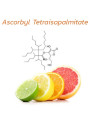
Based on the following ingredients and percentages: Dipalmitoyl Hydroxyproline (DPHP) = 2% and Perfect-C (Ascorbyl Tetraisopalmitate) = 5%, I have the following questions regarding their use in an oil formula: 1) Can these two ingredients be combined in an oil formula at the percentages listed above? 2) If these two ingredients are in an oil formula, is Vitamin E needed (I'm unsure because the formula is anhydrous)? If Vitamin E is needed, what percentage should be used for effectiveness without being too sticky? 3) If they can be combined, what should the pH of the oil formula be?
Answer
Formulation with DPHP and Perfect-C in Oil
Here are the answers to your questions regarding the use of Dipalmitoyl Hydroxyproline (DPHP) and Perfect-C (Ascorbyl Tetraisopalmitate) in an oil-based formula:
Can DPHP (2%) and Perfect-C (5%) be used together in an oil formula?
Yes, Dipalmitoyl Hydroxyproline (DPHP) at 2% and Perfect-C (Ascorbyl Tetraisopalmitate) at 5% can be combined in an oil-based formula. Both ingredients are oil-soluble, and their proposed percentages are within the recommended usage rates. Note that DPHP requires heating to 80-85°C to dissolve in the oil phase. Perfect-C can also tolerate short-term heating, so they can be incorporated together in the heated oil phase.If using these two in an oil formula, is Vitamin E needed? If so, what percentage for effectiveness and non-stickiness?
While Perfect-C has antioxidant properties, adding Vitamin E is beneficial in an oil formula to help protect the oils and other ingredients from oxidation, improving the formula's stability and shelf life. For Vitamin E (Tocopheryl Acetate), a concentration between 0.1% and 0.5% is effective for both anti-oxidation of the formula and potential skin benefits without causing excessive stickiness. Using more than 0.5% Tocopheryl Acetate may result in a sticky feel. Vitamin E (dl-alpha tocopherol) is another option with higher bioavailability, typically used at 0.1-2%, but stickiness should be evaluated at higher percentages.If combined in an oil formula, what should the pH be?
pH is a measure applicable to water-based solutions. A pure oil formula (anhydrous) does not have a measurable pH. Therefore, the concept of pH does not apply to your oil formula.
Related Products Mentioned
Vitamin E (Tocopheryl Acetate)
Vitamin E (dl-alpha tocopherol)