Formulating Gel/Serum with Aloe Vera Gel Lite or Double Hyaluron Liquid Base
Question
I ordered Aloe Vera Gel (Lite) base and would like to know if the following ingredients can be mixed well into it: DMAE (SkinTight MD), Vitamin B5, Pal-GHK, Acetyl Hexapeptide-8, and Orange Oil. Will the resulting texture be a clear gel? Also, the Aloe Vera Gel (Lite) base already contains a preservative; is it sufficient, or do I need to add more? Alternatively, if I use Double Hyaluron Liquid as the base instead of Aloe Vera Gel (Lite), can I add the following ingredients, and will it be suitable: DMAE (SkinTight MD), Vitamin B5, Pal-GHK, Acetyl Hexapeptide-8, Orange Oil, Mild Preserved Eco, น้ำกลั่น (Distilled Water), Dimethyl Isosorbide, Xanthan Gum (ชนิดเจลใส - clear gel type), Disodium EDTA, and Sodium Metabisulfite? If not suitable, please suggest a revised formula.
Answer
Formulation Advice for Gel Bases
Here is information regarding your formulation questions using Aloe Vera Gel (Lite) and Double Hyaluron Liquid bases:
1. Mixing into Aloe Vera Gel (Lite) Base
- Compatible Ingredients: DMAE, Matrixyl 3000, Acetyl Hexapeptide-8, and Vitamin B5 (Panthenol) are water-soluble and should mix well into the Aloe Vera Gel (Lite) base. The base already contains Vitamin B5.
- Incompatible Ingredients: Orange Oil (if oil-soluble) will likely not mix well without a solubilizer, resulting in a cloudy or separated product. The Aloe Vera Gel (Lite) base is also explicitly incompatible with Xanthan Gum and other gel-making ingredients.
- Resulting Texture: If you add only the compatible water-soluble ingredients, the gel texture should be maintained. However, adding oil without a solubilizer will make the gel cloudy or cause separation, not a clear gel.
2. Preservative in Aloe Vera Gel (Lite) Base
- The Aloe Vera Gel (Lite) base contains Phenoxyethanol at 0.40% as a preservative.
- Adding multiple ingredients can introduce contamination and dilute the preservative's effectiveness.
- It is recommended to add an additional broad-spectrum preservative, such as Mild Preserved Eco (typically 1.0-1.5%), or a preservative booster to ensure the final formulation is adequately protected against microbial growth. Always perform challenge testing on your finished product.
3. Using Double Hyaluron Liquid as Base
- Double Hyaluron Liquid is a suitable water-based base for serums and gels.
- Most of the ingredients you listed (DMAE, Vitamin B5/Pantolactone, Matrixyl 3000, Acetyl Hexapeptide-8, Mild Preserved Eco, Distilled Water, Dimethyl Isosorbide, Xanthan Gum, Disodium EDTA, Sodium Metabisulfite) are compatible with this base.
- Orange Oil: Still requires a suitable solubilizer to mix into this water-based base and maintain clarity.
- Xanthan Gum: Adding Xanthan Gum will increase the viscosity of the Double Hyaluron Liquid, creating a thicker gel. The clear gel type should maintain clarity.
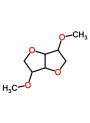
- Dimethyl Isosorbide (DMI): Compatible and can enhance penetration of other actives.
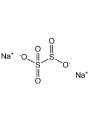
- Disodium EDTA & Sodium Metabisulfite: Compatible for stability and antioxidant benefits.
- Mild Preserved Eco: Can be added to supplement the existing Phenoxyethanol preservative, but consider total preservative concentration.
Suggested Formulation Approach with Double Hyaluron Liquid Base:
This base is more suitable for your desired ingredients.
- Combine Double Hyaluron Liquid base and Distilled Water (if needed).
- Add Disodium EDTA and Sodium Metabisulfite.
- If using Xanthan Gum, disperse and hydrate it properly before adding.
- Add water-soluble actives (DMAE, Pantolactone, Matrixyl 3000, Acetyl Hexapeptide-8) below 40°C.
- If using Orange Oil, pre-mix with a solubilizer before adding.
- Add Dimethyl Isosorbide.
- Add Mild Preserved Eco.
- Mix until uniform and adjust pH if necessary.
This approach allows for a stable and effective anti-aging and hydrating gel/serum. Always test your final product for stability and preservation.
Related Products Mentioned
Acetyl Hexapeptide-8 (eq Argireline)
Pal-GHK, Pal-GQPR (eq Matrixyl 3000)
Disodium EDTA
Double Hyaluron Liquid
DMAE (SkinTight MD™) Liquid
Aloe Vera Gel (Lite)
Mild Preserved Eco™ (Preservative-Free)
Dimethyl Isosorbide (DMI)
Sodium Metabisulfite (Germany)