Formulating Lightweight Physical Sunscreen with Silicone/Isododecane Base and Water-Soluble Actives
Question
How can I formulate a lightweight, non-sticky physical sunscreen using a base of Cyclomethicone + Isododecane? I also want to add water-soluble active ingredients like Safe-B3™ (Vitamin B3, Niacinamide) and Centella Asiatica Extract (Madecassoside 90%). What are the considerations and challenges in achieving the desired texture with this formulation approach, especially regarding the water-soluble components?
Answer
Gel Sunscreen Formulation
Yes, it is possible to create a gel-like physical sunscreen formulation using the ingredients you mentioned, although achieving a very light, non-sticky texture requires careful balancing, as discussed in the previous replies.
Physical sunscreens, which use ingredients like Titanium Dioxide and Zinc Oxide, work by sitting on the skin's surface to block UV rays. Unlike chemical sunscreens that dissolve, these mineral powders need to be well-dispersed in the formula. This is often easier to achieve in oil or silicone bases than in purely water-based gels.
Your proposed formula utilizes a combination of ingredients that can help create a lighter texture:
- Titanium Dioxide Nanosil and Zinc Oxide (Ultra-Fine, Non-Yellow, Non-Coated, USP): These are the physical sunscreen active ingredients.
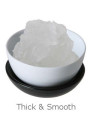
- Silicone Gel (Thick & Smooth, Cyclopentasiloxane Base) and Isododecane (Germany): These ingredients form the oil/silicone phase. Isododecane is a lightweight, volatile emollient that evaporates quickly, contributing to a non-greasy feel. Silicone Gel helps improve spreadability and gives a smooth, light texture, and it is compatible with Isododecane.
- Safe-B3™ (Vitamin B3, Niacinamide) and Centella Asiatica Extract (Madecassoside 90%): These are water-soluble nourishing ingredients.
- Water: The base for the water-soluble ingredients.
- Satin Mousse: Information about this specific ingredient is not available.
The combination of the silicone gel base and Isododecane will help make the texture lighter and less sticky compared to a formula relying solely on traditional oils or a high water content with poorly dispersed powders. However, because physical filters need proper dispersion in the oil/silicone phase, incorporating a significant water phase with water-soluble actives like Vitamin B3 and Centella Asiatica Extract might make it more challenging to achieve the absolute lightest, fastest-absorbing texture compared to a formula that minimizes or eliminates the water phase.
Regarding adding more nourishing ingredients, you can include other ingredients, but you should prioritize those that are compatible with the oil/silicone phase or carefully consider the total water content. As the previous staff reply suggested, reducing the water phase and focusing on the silicone/isododecane base can help maintain a lighter, less sticky feel. Adding too many water-soluble ingredients might require more emulsifiers or gelling agents, which could potentially increase stickiness or affect the stability and texture of the physical sunscreen dispersion.
In summary, your proposed ingredient list can indeed result in a sunscreen with a lighter texture than many traditional physical sunscreens, thanks to the silicone and Isododecane. You can add other nourishing ingredients, but be mindful of their solubility and impact on the overall texture and stability, especially if they require a large water phase.
Related Products Mentioned
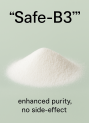
Safe-B3™ (Vitamin B3, Niacinamide)
Isododecane (Germany)